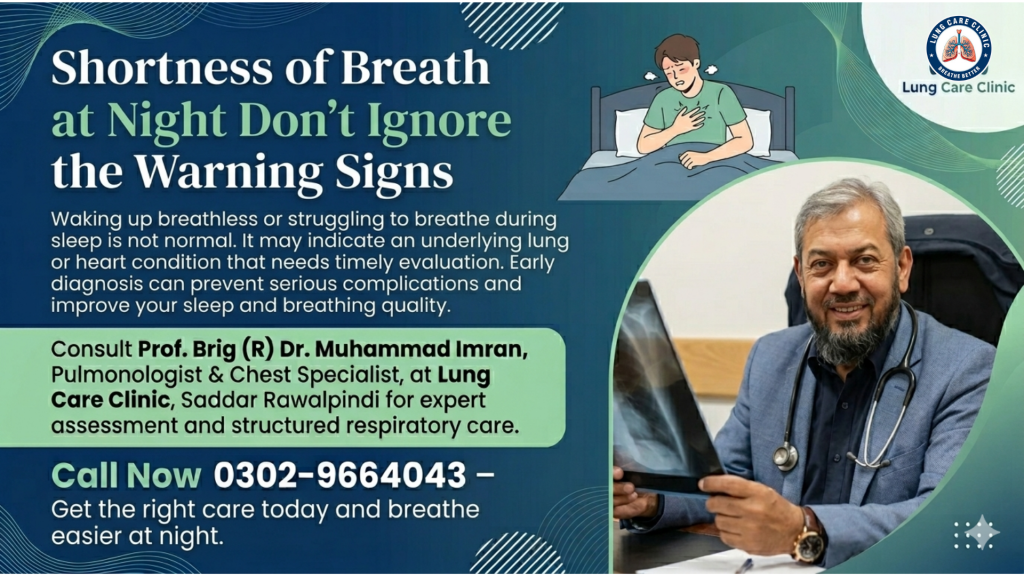
Shortness of breath at night can feel frightening.
Often, people wake up suddenly and struggle to breathe.Sometimes, this happens once.
However, repeated episodes can signal a serious issue.
Therefore, it is important to understand the cause.
What Is Shortness of Breath at Night?
Shortness of breath at night means difficulty breathing during sleep.
In other words, you may wake up gasping for air.
Sometimes, symptoms appear after lying down.
As a result, sleep becomes disturbed.
Common Causes
Lung Conditions
Shortness of breath at night may be linked to lung problems.
For example, asthma can worsen during sleep.
In addition, airway inflammation can reduce airflow.
Heart-Related Issues
Sometimes, heart conditions can cause symptoms.
As a result, fluid may build up in the lungs.
Therefore, breathing becomes harder at night.
Sleep Apnea
Sleep apnea is a common cause of nighttime breathing issues.
In this condition, breathing stops briefly during sleep.
As a result, you wake up suddenly.
Anxiety and Stress
In some cases, anxiety may trigger breathing discomfort.
For instance, stress can affect breathing patterns.
Symptoms to Watch
People may notice:
- Waking up suddenly with breathing difficulty
- Chest tightness at night
- Difficulty lying flat
- Poor sleep quality
In addition, fatigue may occur during the day.
When to See a Specialist
Although mild symptoms may occur, some need attention.
Seek help if:
- Shortness of breath at night happens frequently
- Symptoms are getting worse
- You feel chest pain
- You experience dizziness
In such cases, early diagnosis is important.
Diagnosis
Doctors evaluate symptoms carefully.
First, they review your history.
Then, they perform a physical exam.
After that, tests may be recommended, such as:
- Chest X-ray
- Lung function test
- Sleep study
As a result, the exact cause is identified
Treatment Options
Treatment depends on the cause.
For lung conditions, inhalers may help.
On the other hand, sleep apnea may need special devices.In addition, lifestyle changes improve breathing.
Therefore, proper diagnosis is essential.
Prevention Tips
You can reduce symptoms with simple steps.
For example:
- Sleep with your head slightly elevated
- Avoid smoking
- Maintain a healthy weight
- Manage stress
Moreover, regular checkups help prevent complications.
When to Consult a Specialist
If you experience shortness of breath at night, do not ignore it.
Instead, seek expert care early.
Consult Prof. Brig (R) Dr. Muhammad Imran
Pulmonologist & Chest Specialist
Lung Care Clinic, Saddar Rawalpindi
Call Now: 0302-9664043
Shortness of breath at night can affect your sleep and health.
While some causes are mild, others are serious.Therefore, early evaluation is important.
Ultimately, proper treatment helps you breathe and sleep better.