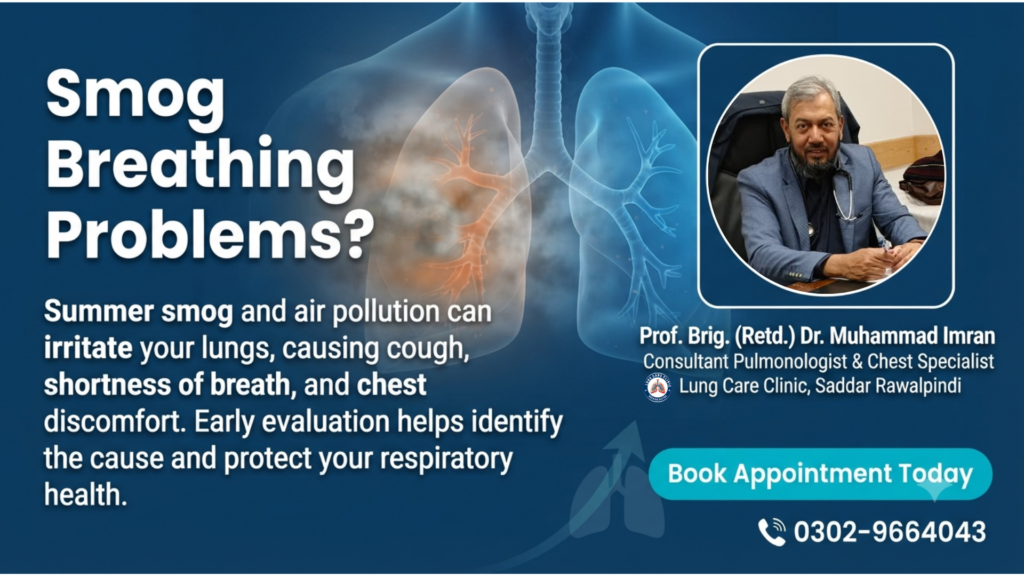
Smog Breathing Problems become increasingly common during the summer months when rising temperatures, vehicle emissions, industrial pollution, and stagnant air combine to reduce air quality. Smog is a mixture of pollutants, including ground-level ozone, fine particulate matter, smoke, and harmful gases that can irritate the respiratory system. While healthy individuals may experience temporary discomfort, people with asthma, Chronic Obstructive Pulmonary Disease (COPD), allergies, or other lung diseases are at a much higher risk of developing serious breathing difficulties.
Understanding Smog Breathing Problems is essential for protecting your lungs and recognizing when medical evaluation is necessary. Early identification of symptoms and appropriate preventive measures can help reduce respiratory complications during periods of poor air quality.
What Are Smog Breathing Problems?
Smog Breathing Problems refer to respiratory symptoms that develop or worsen after exposure to polluted outdoor air. Smog contains microscopic particles and gases that can enter the lungs and irritate the airways.
When inhaled, these pollutants may cause inflammation, narrowing of the air passages, and increased mucus production. As a result, many people notice coughing, wheezing, chest discomfort, or difficulty breathing, especially during hot weather.
Symptoms may appear immediately after exposure or gradually worsen after spending several hours outdoors.
Why Does Summer Increase Smog Levels?
Hot weather creates ideal conditions for smog formation. Strong sunlight reacts with pollutants released by vehicles, factories, and other sources, producing ground-level ozone. At the same time, warm, stagnant air traps pollutants close to the ground instead of allowing them to disperse.
This combination increases the concentration of harmful particles in the air, making breathing more difficult for many individuals.
How Does Smog Affect the Lungs?
The lungs are constantly exposed to the air we breathe. During periods of heavy smog, harmful particles and gases enter the respiratory tract and irritate the delicate lining of the airways.
This irritation may lead to:
- Airway inflammation
- Increased mucus production
- Narrowing of the bronchial tubes
- Reduced oxygen exchange
- Worsening of existing lung diseases
Repeated exposure over time may also contribute to long-term lung damage.
Common Symptoms of Smog Breathing Problems
People exposed to poor air quality may experience one or more of the following symptoms:
- Persistent cough
- Wheezing
- Shortness of breath
- Chest tightness
- Chest irritation
- Sore throat
- Burning sensation in the nose or throat
- Increased mucus production
- Fatigue during physical activity
The severity of symptoms often depends on the level of pollution, duration of exposure, and the individual’s overall lung health.
Common Causes of Smog Breathing Problems
Several pollutants contribute to respiratory irritation during the summer.
Ground-Level Ozone
Ground-level ozone is one of the main components of summer smog. It irritates the airways and may cause coughing, wheezing, and difficulty breathing, particularly during outdoor exercise.
Fine Particulate Matter (PM2.5)
These tiny particles are small enough to reach deep into the lungs. Exposure may trigger inflammation and worsen asthma, COPD, and other respiratory conditions.
Vehicle Emissions
Traffic-related pollution contains harmful gases and particles that contribute significantly to poor air quality in urban areas.
Industrial Pollution
Factories and industrial activities release pollutants that can irritate the lungs, particularly when weather conditions prevent them from dispersing.
Wildfire Smoke and Burning Waste
Smoke from fires or open burning contains fine particles and toxic gases that may cause immediate respiratory symptoms and worsen chronic lung diseases.
Who Is Most at Risk?
Although anyone can experience respiratory discomfort during periods of poor air quality, some groups are more vulnerable.
Higher-risk individuals include:
- People with asthma
- Individuals with COPD
- Older adults
- Young children
- Allergy sufferers
- Smokers
- People with Interstitial Lung Disease (ILD)
- Individuals with heart disease
- Outdoor workers who spend long hours outside
These individuals should take extra precautions whenever smog levels are elevated and seek medical advice if symptoms persist or worsen.
How Can You Protect Yourself from Smog Breathing Problems?
Reducing exposure to polluted air is one of the most effective ways to protect your lungs during periods of heavy smog.
Monitor Air Quality
Check the daily Air Quality Index (AQI) before planning outdoor activities. If air pollution levels are high, limit outdoor exposure, particularly during the afternoon when ground-level ozone is usually at its highest.
Avoid Outdoor Exercise During Heavy Smog
Running, cycling, or strenuous physical activity increases the amount of polluted air entering the lungs. Exercise indoors when air quality is poor.
Keep Windows Closed
During heavy smog, keep doors and windows closed to reduce the amount of polluted outdoor air entering your home. If using air conditioning, ensure the filters are cleaned regularly.
Wear a Protective Mask
When outdoor exposure cannot be avoided, wearing a properly fitted N95 or equivalent mask may help reduce inhalation of fine particulate matter.
Stay Well Hydrated
Drinking enough water helps keep the airways moist and supports normal mucus clearance, which may reduce irritation caused by polluted air.
Manage Existing Lung Conditions
People with asthma, COPD, or other chronic respiratory diseases should continue taking prescribed medications and carry rescue inhalers if advised by their pulmonologist.
When Should You See a Pulmonologist?
Occasional throat irritation may improve once air quality improves, but persistent respiratory symptoms should never be ignored.
Consult a pulmonologist if you experience:
- Persistent cough lasting more than three weeks
- Wheezing that occurs repeatedly
- Shortness of breath during routine activities
- Chest tightness or chest discomfort
- Increased use of asthma inhalers
- Symptoms that worsen during periods of poor air quality
- Coughing up blood
- Fever along with breathing difficulty
Early evaluation can help identify whether pollution is aggravating an existing condition or whether another respiratory disease is responsible.
How Are Smog Breathing Problems Evaluated?
Depending on your symptoms, your pulmonologist may recommend:
- Detailed medical history and physical examination
- Chest X-ray
- Spirometry (lung function test)
- Oxygen saturation assessment
- Allergy evaluation when appropriate
- Blood tests
- HRCT chest if clinically indicated
These investigations help determine whether symptoms are related to asthma, COPD, allergies, respiratory infection, Interstitial Lung Disease (ILD), or another underlying lung condition.
Treatment Options
Treatment depends on the underlying cause and severity of symptoms. Your pulmonologist may recommend:
- Bronchodilator inhalers to open narrowed airways
- Inhaled medications for asthma or COPD management
- Allergy treatment when environmental allergens contribute to symptoms
- Pulmonary rehabilitation in selected patients with chronic lung disease
- Lifestyle modifications to reduce pollution exposure
- Regular follow-up to monitor lung function and symptom control
Self-medicating or delaying treatment may allow respiratory symptoms to worsen, especially in individuals with chronic lung diseases.
Smog Breathing Problems are becoming increasingly common during the summer because of rising temperatures, traffic emissions, industrial pollution, and poor air quality. While healthy individuals may experience temporary irritation, people with asthma, COPD, allergies, or other respiratory conditions are at greater risk of significant breathing difficulties.
Recognizing the symptoms early, reducing exposure to polluted air, and seeking timely medical care can help protect your lungs and prevent complications. If you experience persistent cough, wheezing, chest tightness, or shortness of breath during periods of heavy smog, consult a pulmonologist for a comprehensive respiratory evaluation.
Prof. Brig. (Retd.) Dr. Muhammad Imran
Consultant Pulmonologist & Chest Specialist
Lung Care Clinic, Saddar Rawalpindi
0302-9664043