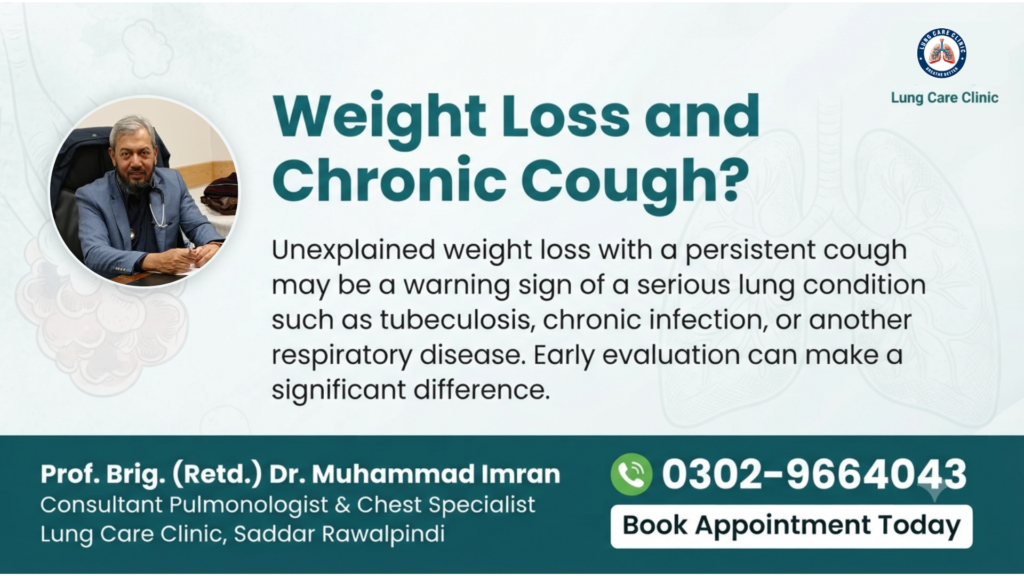
Weight Loss and Chronic Cough occurring together should never be ignored. While a cough caused by a common cold usually improves within a few weeks, a cough that persists for more than eight weeks especially when accompanied by unexplained weight loss may indicate an underlying respiratory condition that requires medical evaluation. Persistent coughing places stress on the body, but significant weight loss is often a warning sign that something more serious may be affecting your lungs or overall health.
Understanding Weight Loss and Chronic Cough can help you recognize early warning signs and seek timely medical care before complications develop. Early diagnosis is especially important because many lung diseases respond better when identified in their initial stages.
Can a Chronic Cough Cause Weight Loss?
A chronic cough alone does not usually cause major weight loss. However, ongoing coughing can reduce appetite, interfere with sleep, and increase the body’s energy requirements. When weight loss occurs together with a persistent cough, it often suggests that an underlying illness is affecting the body.
Conditions such as chronic lung infections, tuberculosis (TB), bronchiectasis, Interstitial Lung Disease (ILD), and lung cancer may all contribute to both symptoms.
If you notice unexplained weight loss along with a cough that does not improve, medical assessment is recommended.
What Is Considered a Chronic Cough?
A cough that lasts for more than eight weeks in adults is generally considered chronic.
Unlike temporary coughs caused by viral infections, a chronic cough often indicates persistent irritation or disease affecting the respiratory system.
It may be:
- Dry and irritating
- Productive with mucus
- Worse at night
- Triggered by physical activity
- Accompanied by breathlessness or wheezing
Persistent coughing should always be evaluated if it continues despite treatment.
Common Causes of Weight Loss and Chronic Cough
Several respiratory conditions can cause both Weight Loss and Chronic Cough.
Tuberculosis (TB)
Tuberculosis remains one of the most important causes of chronic cough associated with weight loss.
Common symptoms include:
- Persistent cough lasting more than two weeks
- Fever
- Night sweats
- Fatigue
- Loss of appetite
- Unexplained weight loss
- Coughing up blood in some cases
Early diagnosis is essential to prevent complications and reduce transmission.
Chronic Lung Infections
Some bacterial or fungal lung infections may persist for weeks or months if left untreated.
Symptoms often include:
- Persistent cough
- Fever
- Thick sputum
- Fatigue
- Reduced appetite
- Gradual weight loss
Prompt treatment usually improves both respiratory symptoms and overall health.
Bronchiectasis
Bronchiectasis is a chronic condition in which damaged airways become widened and repeatedly infected.
Patients commonly experience:
- Daily cough
- Large amounts of mucus
- Frequent chest infections
- Breathlessness
- Fatigue
- Weight loss in advanced disease
Regular medical care helps reduce infections and preserve lung function.
Interstitial Lung Disease (ILD)
Interstitial Lung Disease causes progressive scarring of lung tissue, making breathing increasingly difficult.
Symptoms may include:
- Persistent dry cough
- Progressive shortness of breath
- Fatigue
- Reduced exercise tolerance
- Unintentional weight loss
Early diagnosis allows better disease management.
Lung Cancer
Although many chronic coughs are not caused by cancer, unexplained weight loss combined with a persistent cough should always be investigated.
Additional warning signs may include:
- Chest pain
- Shortness of breath
- Coughing up blood
- Persistent fatigue
- Hoarseness
Early evaluation greatly improves treatment options.
Other Symptoms That May Accompany Weight Loss and Chronic Cough
People experiencing Weight Loss and Chronic Cough may also notice:
- Persistent fatigue
- Fever
- Night sweats
- Breathlessness
- Wheezing
- Chest discomfort
- Reduced appetite
- Thick mucus production
- Coughing up blood
The presence of multiple symptoms increases the importance of prompt medical evaluation.
Who Is at Higher Risk?
Some individuals are more likely to develop chronic respiratory conditions associated with weight loss.
Higher-risk groups include:
- Smokers
- Older adults
- People with weakened immune systems
- Individuals with previous tuberculosis
- Patients with chronic lung diseases
- People with occupational dust or chemical exposure
- Individuals with a family history of lung disease
Anyone in these groups who develops persistent cough together with unexplained weight loss should consult a pulmonologist without delay.
When Should You See a Pulmonologist?
A cough that lasts for more than eight weeks should always be assessed, especially when it occurs together with unexplained weight loss. Delaying medical evaluation may allow the underlying condition to progress and make treatment more difficult.
Consult a pulmonologist if you experience:
- Persistent cough lasting more than eight weeks
- Unexplained weight loss
- Coughing up blood
- Shortness of breath
- Chest pain
- Wheezing
- Fever or recurring chest infections
- Night sweats
- Persistent fatigue
- Loss of appetite
These symptoms do not always indicate a serious illness, but they should never be ignored.
How Are Weight Loss and Chronic Cough Evaluated?
Identifying the underlying cause is essential because treatment varies depending on the diagnosis.
Your pulmonologist may recommend:
- Detailed medical history and physical examination
- Chest X-ray
- High-Resolution CT (HRCT) Chest when required
- Spirometry (Pulmonary Function Test)
- Sputum examination
- Tuberculosis (TB) testing when indicated
- Blood investigations
- Bronchoscopy in selected cases
- Oxygen saturation assessment
These investigations help determine whether the symptoms are related to tuberculosis, chronic lung infection, bronchiectasis, Interstitial Lung Disease (ILD), lung cancer, COPD, or another respiratory condition.
Treatment for Weight Loss and Chronic Cough
Treatment focuses on addressing the underlying cause rather than simply suppressing the cough.
Depending on the diagnosis, management may include:
- Antibiotics for bacterial lung infections
- Anti-tuberculosis treatment when TB is confirmed
- Inhaled medications for asthma or COPD
- Pulmonary rehabilitation
- Nutritional advice to restore healthy weight
- Bronchodilators when airway narrowing is present
- Oxygen therapy if oxygen levels are low
- Specialist management for Interstitial Lung Disease (ILD) or lung cancer
Avoid self-medicating with cough syrups for prolonged symptoms, as they may delay the diagnosis of serious respiratory diseases.
Can Weight Loss Be Prevented?
Weight loss caused by an untreated lung disease usually improves once the underlying condition is properly managed.
To support recovery:
- Eat a balanced, protein-rich diet
- Drink enough fluids
- Avoid smoking
- Follow prescribed medications regularly
- Attend scheduled follow-up appointments
- Seek medical advice if symptoms worsen or new symptoms develop
Maintaining good nutrition also helps strengthen the immune system and supports lung healing.
Weight Loss and Chronic Cough should never be considered a normal consequence of aging or a lingering cold. While some causes are relatively mild, these symptoms may also indicate serious respiratory conditions such as tuberculosis (TB), chronic lung infections, bronchiectasis, Interstitial Lung Disease (ILD), or lung cancer.
Early diagnosis is the key to successful treatment. If you have a persistent cough lasting more than eight weeks, particularly when accompanied by unexplained weight loss, fever, night sweats, or breathlessness, consult a pulmonologist without delay.
Timely evaluation can identify the cause, guide appropriate treatment, and help protect your long-term lung health.
Prof. Brig. (Retd.) Dr. Muhammad Imran
Consultant Pulmonologist & Chest Specialist
Lung Care Clinic, Saddar Rawalpindi
0302-9664043