Loud, chronic snoring is often dismissed as a harmless annoyance, but when accompanied by sudden gasping, choking, or pauses in breathing, it can signal a serious medical condition known as Obstructive Sleep Apnea (OSA). Seeking timely sleep apnea treatment in rawalpindi is essential for restoring healthy nighttime breathing and protecting your long-term cardiovascular health.
When throat muscles relax excessively during sleep, the upper airway narrows or collapses completely, momentarily stopping airflow. These repetitive breathing interruptions starve the body of oxygen, force the brain to wake up briefly to reopen the airway, and place immense stress on the heart and respiratory system.
What Is Obstructive Sleep Apnea?
Obstructive Sleep Apnea occurs when the soft tissue at the back of the throat relaxes and physically blocks the passage of air into the lungs. While central sleep apnea involves the brain failing to send proper signals to breathing muscles, OSA is primarily a structural and physical airway blockage.
During an apnea event, a person may stop breathing for anywhere from ten seconds to over a minute. The brain senses dropping oxygen levels and briefly rouses the individual from deep sleep—often accompanied by a loud snort, gasp, or choking sound—so that muscle tone returns and normal breathing resumes. Because these awakenings occur in seconds, most people have no memory of them the next morning.
Key Signs and Symptoms of Sleep Apnea
Recognizing the warning signs of sleep apnea helps ensure early diagnosis and intervention. Symptoms typically affect nighttime sleep patterns as well as daytime performance.
| Symptom Category | Common Manifestations | Health Impact |
| Nighttime Signs | Loud habitual snoring, sudden choking/gasping, restless tossing | Disrupted sleep architecture and severe night-time hypoxia |
| Morning Symptoms | Dry mouth, sore throat, morning headaches | Upper airway drying and oxygen level drops overnight |
| Daytime Effects | Excessive daytime fatigue, brain fog, irritability | Increased risk of work or driving accidents, reduced focus |
| Cardiovascular Signs | Hard-to-control high blood pressure, racing heartbeat | Systemic vascular strain and elevated stress hormones |
Dangers of Untreated Airway Blockage
Leaving upper airway collapse unmanaged can have far-reaching consequences beyond daytime tiredness. Repeated drops in blood oxygen saturation levels trigger a surge of adrenaline and stress hormones, placing severe strain on the circulatory system.
Over time, untreated sleep apnea increases the risk of developing:
- Uncontrolled Hypertension: Persistent arterial stiffness and nighttime blood pressure spikes.
- Cardiovascular Disease: Higher likelihood of irregular heartbeats (arrhythmias), heart attacks, and heart failure.
- Type 2 Diabetes: Increased insulin resistance caused by chronic sleep fragmentation and metabolic disruption.
- Pulmonary Hypertension: Elevated pressure in the blood vessels supplying the lungs due to recurrent nighttime oxygen dips.
Medical Evaluation & Management Options
Effective management begins with a detailed clinical assessment by a chest specialist to determine airway patency, body mass index (BMI), neck circumference, and pulmonary health.
Medical Assessment and Airway Evaluation
A pulmonologist conducts a physical exam of the upper respiratory tract, evaluating nasal alignment, tonsil size, and soft palate tissue to identify physical obstruction points.
Continuous Positive Airway Pressure (CPAP) Therapy
CPAP therapy remains the gold standard treatment for moderate to severe OSA. A CPAP device delivers a gentle, continuous stream of pressurized room air through a mask, acting as a “pneumatic splint” that keeps the upper airway open during sleep.
Lifestyle Modifications and Positional Therapy
For mild airway collapse, targeted lifestyle adjustments provide significant relief. These include weight management, avoiding alcohol or sedatives before bedtime, and positional adjustments to prevent sleeping flat on one’s back.
Specialist Respiratory Assessment at Lung Care Clinic
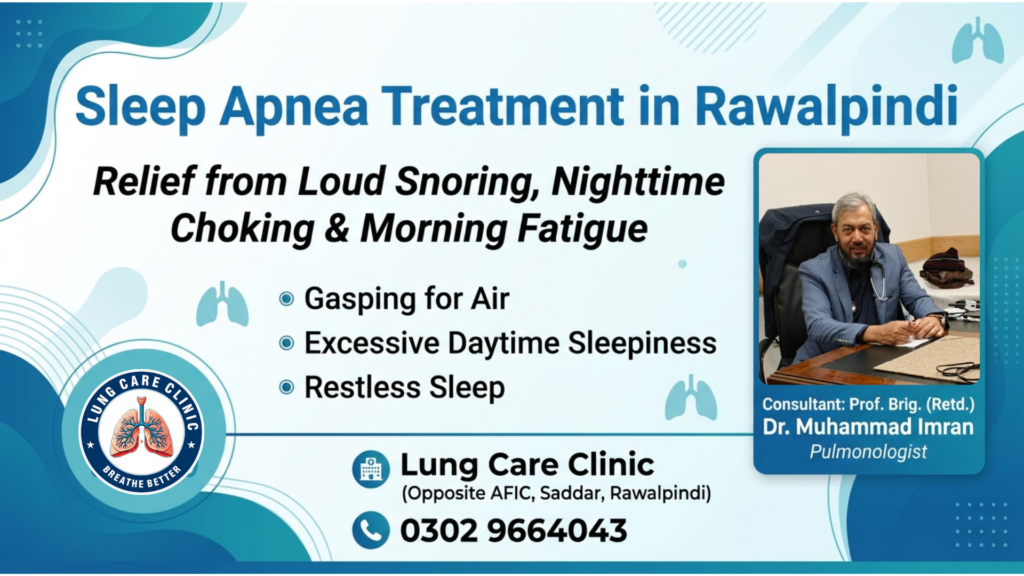
If you or a family member experience loud snoring, nighttime gasping, or chronic fatigue, obtaining a professional clinical evaluation is a crucial step toward recovery. At Lung Care Clinic in Saddar, Rawalpindi, patients receive thorough diagnostic guidance and individualized treatment planning to manage upper airway issues and associated chest conditions.
All clinical evaluations are led by Prof. Brig. (Retd.) Dr. Muhammad Imran, a distinguished pulmonologist and chest specialist with over 35 years of clinical, academic, and military healthcare leadership across premier institutions including PEMH and AFIC.
Specialized Services Offered:
- Comprehensive Pulmonary Evaluation: Assessing lung function, oxygen saturation, and upper airway dynamics.
- Asthma and COPD Management: Customizing inhaler protocols and respiratory therapy plans.
- Diagnostic Bronchoscopy: Performing accurate airway procedures using modern, high-standard diagnostic equipment.
Location, Timings & Appointment Details
For expert consultation regarding chronic snoring, nighttime choking, or persistent breathing difficulties:
- Clinic Address: Kohistan Tower, Mahfooz Road (Opposite AFIC), Saddar, Rawalpindi
- Consultant: Prof. Brig. (Retd.) Dr. Muhammad Imran (Pulmonologist)
- Appointment Line: 0302 9664043
- Operating Hours: Monday to Saturday | 10:00 AM – 8:00 PM
Frequently Asked Questions (FAQs)
What is the difference between simple snoring and sleep apnea?
Simple snoring occurs when tissues vibrate as air flows through a narrow throat. Sleep apnea involves actual pauses in breathing where the airway becomes completely or partially blocked, leading to oxygen drops and sudden gasping.
Can losing weight eliminate sleep apnea?
In many cases, reducing weight decreases fatty deposits around the neck and upper airway, significantly lessening tissue collapse during sleep and improving breathing quality.
How does a chest specialist help with sleep apnea symptoms?
A pulmonologist evaluates underlying lung mechanics, checks for co-existing asthma or COPD, assesses oxygen levels, and recommends targeted therapies such as CPAP or airway management.
How do I schedule a consultation with Dr. Muhammad Imran?
You can book an appointment directly by calling 0302 9664043 Monday through Saturday.