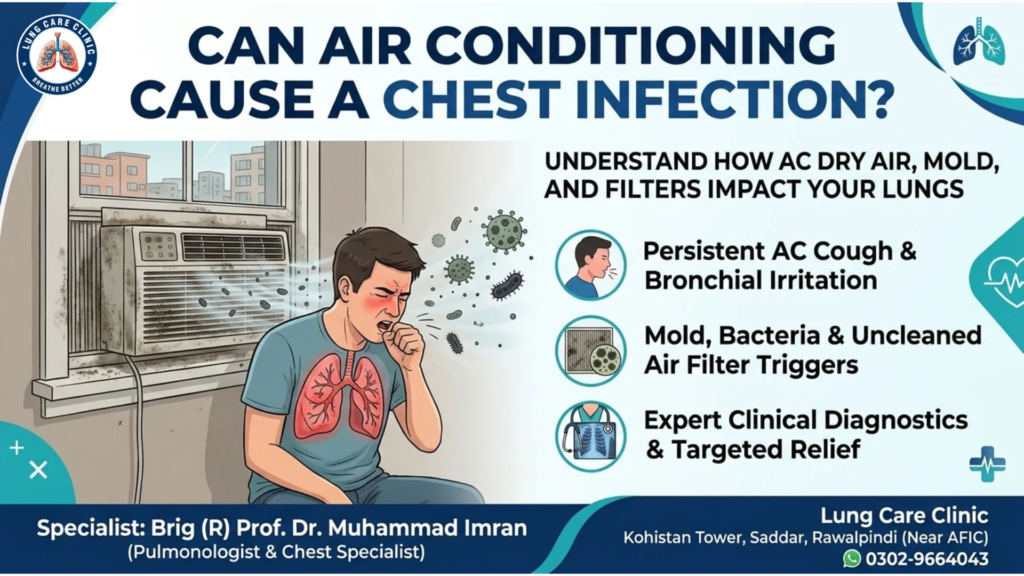
Many people experience a scratchy throat, persistent coughing, or chest tightness after sitting in air-conditioned rooms. Understanding whether can air conditioning give you a chest infection helps patients take proactive steps toward protecting their respiratory health during warm weather months.
Modern cooling systems make indoor spaces comfortable. However, poorly maintained air conditioners can circulate harmful irritants, bacteria, and mold spores throughout indoor environments.
Can Air Conditioning Give You a Chest Infection?
Air conditioning units regulate room temperatures by extracting moisture and cooling ambient air. While this process creates a refreshing atmosphere, it can also affect your respiratory tract in several ways.
Primary factors connecting air conditioning to lung infections include:
- Low Humidity and Dry Air: Air conditioners strip moisture from indoor air. Breathing dry air dries out the mucus membranes lining your nasal passages and bronchial tubes. Thin, dry mucus traps pathogens less effectively, allowing viruses and bacteria to penetrate deep into your lungs.
- Accumulated Mold and Bacteria: Moisture collects inside AC cooling coils, drain pans, and air ducts. Without regular servicing, micro-organisms like Legionella pneumophila, Aspergillus mold, and bacterial colonies thrive inside dark air ducts.
- Circulating Airborne Contaminants: Centralized or split units continuously recirculate the same indoor air. Uncleaned filters fail to trap dust mites, pollen, and pet dander, increasing bronchial inflammation.
- Sudden Temperature Shifts: Moving rapidly from hot outdoor temperatures into freezing air-conditioned rooms causes sudden airway constriction. This sudden thermal shift triggers bronchial spasms and weakens local lung immunity.
Common Symptoms of AC-Induced Respiratory Issues
Breathing cold, dry air or airborne contaminants leads to noticeable respiratory symptoms. Identifying these signs early prevents minor bronchial irritation from developing into severe lung infections.
Frequent symptoms associated with air conditioning exposure include:
- Persistent dry cough that worsens in cold rooms
- Chest tightness or shallow breathing
- Sore throat and nasal congestion
- Wheezing or whistling sounds during breathing
- Low-grade fever and body chills
- Increased mucus production or yellow sputum
- General fatigue and headache
If your symptoms linger beyond three to five days or worsen over time, seeking a professional medical evaluation becomes necessary.
Types of Respiratory Infections Linked to Air Conditioning
Exposure to poorly maintained cooling units can lead to specific respiratory conditions:
Acute Bronchitis
Airway irritation caused by cold air or inhaled dust can inflame the mucous membranes lining your bronchial tubes. Acute bronchitis produces a deep cough, chest soreness, and thick phlegm.
Bacterial Pneumonia
Poorly maintained cooling towers and industrial air duct systems can harbor Legionella bacteria. Inhaling microscopic water droplets contaminated with this bacteria causes Legionnaires’ disease—a severe form of bacterial pneumonia characterized by high fever, severe cough, and shortness of breath.
Hypersensitivity Pneumonitis
Inhaling airborne mold spores or fungal fragments growing inside damp AC units triggers an allergic reaction in the lung tissues. This allergic inflammation causes shortness of breath, chronic coughing, and fever.
How to Prevent Chest Infections from Air Conditioning
You do not need to avoid air conditioning entirely to maintain healthy lungs. Following practical preventative measures significantly reduces your risk of respiratory illness.
Essential Prevention Tips:
- Clean AC Filters Regularly: Wash or replace air filters every 30 to 45 days during peak usage seasons.
- Schedule Professional Servicing: Arrange annual maintenance for cooling coils, drain lines, and air ducts to eliminate hidden mold growth.
- Maintain Moderate Temperatures: Keep indoor temperatures at a comfortable level (24°C to 26°C) rather than extreme cold settings.
- Use a Room Humidifier: Running a cool-mist humidifier restores healthy indoor moisture levels, keeping your nasal passages moist.
- Stay Well Hydrated: Drinking adequate water throughout the day keeps your airway mucus thin and effective at trapping airborne germs.
- Ventilate Indoor Spaces: Open windows periodically to introduce fresh outdoor air and prevent stale air recirculating.
When to Consult a Pulmonologist
While mild airway dryness improves with proper hydration and temperature adjustments, certain symptoms indicate a more serious underlying infection requiring medical care.
You should seek immediate medical evaluation if you experience:
- Cough lasting longer than two to three weeks
- High fever accompanying respiratory symptoms
- Difficulty breathing or shortness of breath
- Coughing up blood-streaked phlegm
- Severe chest pain during deep breathing or coughing
Why Choose Lung Care Clinic in Saddar, Rawalpindi?
Diagnosing and treating complex chest infections requires an experienced specialist, an accurate clinical evaluation, and personalized patient care. Located centrally at Kohistan Tower in Saddar, Rawalpindi (Opposite AFIC), Lung Care Clinic provides expert respiratory consultations and comprehensive pulmonary care.
Brig (R) Prof. Dr. Muhammad Imran, a distinguished pulmonologist and chest specialist with decades of clinical and military medical experience, offers direct consultant care. He evaluates complex respiratory symptoms, provides diagnostic clarity, and develops tailored treatment plans for every patient.
Frequently Asked Questions
Can cold AC air cause pneumonia directly?
Cold air itself does not contain viruses or bacteria. However, cold, dry air weakens your respiratory tract’s natural mucosal barrier, making your lungs more susceptible to invading airborne pathogens.
How do dirty AC filters affect lung health?
Dirty filters collect dust, pollen, and mold. When the blower runs, it circulates these allergens throughout the room, triggering airway inflammation, asthma attacks, or bronchial infections.
What is the ideal room temperature for healthy breathing?
Maintaining indoor temperatures between 24°C and 26°C prevents extreme temperature shocks while keeping humidity at comfortable, healthy levels for your lungs.
For expert pulmonary evaluations, chest infection diagnostics, and personalized treatment plans, visit Lung Care Clinic at Kohistan Tower, Saddar, Rawalpindi (Opposite AFIC), or call 0302-9664043.