
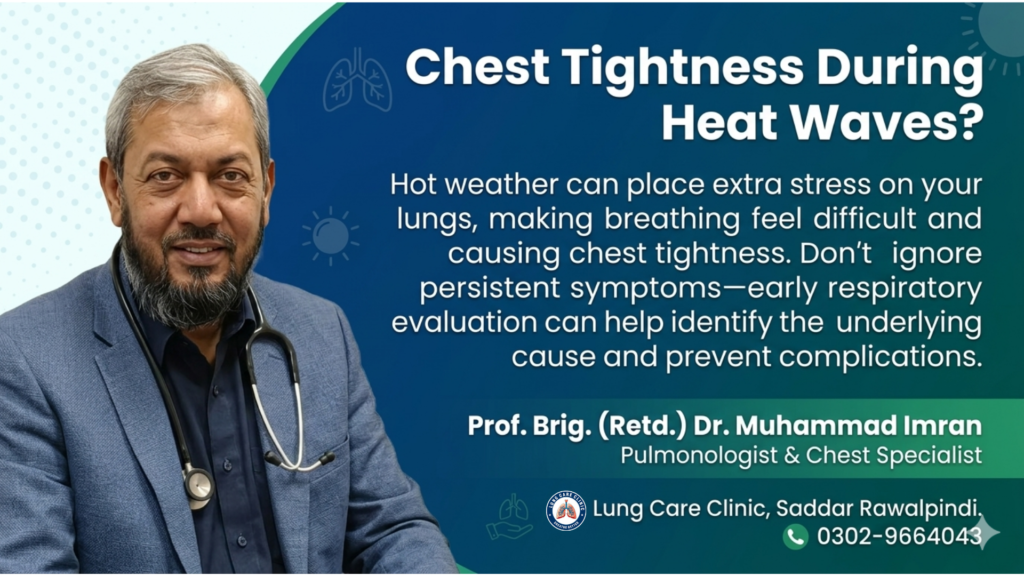
Many people notice a feeling of chest tightness when temperatures rise during the summer months. While occasional discomfort may be related to heat exposure, persistent or worsening chest tightness should never be ignored. Hot weather can place additional stress on the respiratory system, making breathing more difficult for individuals with existing lung conditions and sometimes revealing previously undiagnosed respiratory problems.
Understanding why chest tightness occurs during heat waves can help you determine when simple precautions are enough and when professional medical evaluation is necessary.
How Hot Weather Affects Breathing
During a heat wave, the body works harder to regulate its temperature. Increased humidity, poor air quality, and higher concentrations of airborne pollutants can irritate the airways and make breathing less comfortable.
When the lungs are exposed to hot, dry, or polluted air, the airways may become inflamed or constricted. This can create sensations such as:
- Chest tightness
- Difficulty taking deep breaths
- Shortness of breath
- Wheezing
- Persistent coughing
These symptoms may become more noticeable during outdoor activities or prolonged exposure to extreme temperatures.
Common Lung-Related Causes of Chest Tightness in Hot Weather
Asthma
Hot weather is a well-known trigger for asthma symptoms. Heat, humidity, and air pollution can irritate sensitive airways, causing them to narrow.
People with asthma may experience:
- Chest tightness
- Wheezing
- Coughing
- Breathlessness
If chest tightness occurs regularly during summer, asthma may be an underlying cause that requires proper diagnosis and management.
Chronic Obstructive Pulmonary Disease (COPD)
Individuals with COPD often struggle during heat waves because hot air can make breathing more difficult. The combination of high temperatures and reduced air quality can worsen symptoms and increase the risk of flare-ups.
Common symptoms include:
- Tightness in the chest
- Increased mucus production
- Fatigue
- Shortness of breath
Respiratory Infections
Although respiratory infections are more common during colder months, they can still occur in summer. Infections affecting the lungs or airways may cause inflammation that leads to chest discomfort and tightness.
If chest tightness is accompanied by fever, cough, or mucus production, medical evaluation is recommended.
Allergies and Air Pollution
Summer often brings increased exposure to pollen, dust, and environmental pollutants. These irritants can inflame the airways and trigger respiratory symptoms, particularly in individuals with allergies or sensitive lungs.
Heat waves may also increase ozone levels, which can worsen breathing difficulties and chest discomfort.
Can Dehydration Cause Chest Tightness?
Yes. Dehydration is common during extreme heat and can contribute to breathing discomfort. When the body loses excessive fluids, mucus in the airways may become thicker, making it harder to breathe comfortably.
Staying adequately hydrated helps support normal respiratory function and may reduce heat-related symptoms.
When Should You Be Concerned?
While mild discomfort may improve after resting in a cooler environment, certain symptoms require prompt medical attention:
- Persistent chest tightness
- Severe shortness of breath
- Wheezing that worsens
- Chest pain
- Dizziness or fainting
- Blue lips or fingertips
- Symptoms that interfere with daily activities
Ignoring these warning signs can delay diagnosis of potentially serious respiratory conditions.
How to Reduce Chest Tightness During Heat Waves
To protect your lungs during periods of extreme heat:
- Stay indoors during peak afternoon temperatures.
- Use air conditioning or fans when possible.
- Drink plenty of water throughout the day.
- Monitor local air quality reports.
- Avoid strenuous outdoor exercise during hot weather.
- Follow prescribed treatment plans if you have asthma or COPD.
- Seek medical advice if symptoms persist or worsen.
Chest tightness in hot weather is not always harmless. While heat, humidity, and dehydration can contribute to breathing discomfort, recurring symptoms may indicate an underlying lung condition that requires professional evaluation. Early diagnosis can help prevent complications and improve quality of life.
If you are experiencing chest tightness, shortness of breath, persistent cough, or other respiratory symptoms during summer, consult Prof. Brig. (Retd.) Dr. Muhammad Imran at Lung Care Clinic, Rawalpindi. The clinic provides comprehensive respiratory assessments, lung function testing, asthma evaluation, COPD management, and advanced pulmonary care.
Lung Care Clinic, Rawalpindi
Prof. Brig. (Retd.) Dr. Muhammad Imran – Pulmonologist & Chest Specialist
0302-9664043