Wheezing in Hot Weather is a common problem for many people during the summer months. Wheezing is a high-pitched whistling sound that occurs when air flows through narrowed or inflamed airways. Although some people notice wheezing only after spending time outdoors in the heat, others may experience it during exercise, exposure to humidity, or when seasonal allergens are present.
Hot weather can place extra stress on the respiratory system. High temperatures, humidity, dust, air pollution, dehydration, and pollen may all contribute to airway irritation. While occasional wheezing may improve after resting or moving to a cooler environment, persistent Wheezing in Hot Weather should never be ignored because it may indicate asthma, Chronic Obstructive Pulmonary Disease (COPD), allergies, or another underlying lung condition.
Understanding why wheezing occurs during hot weather can help you recognize the symptoms early and seek appropriate medical care before the condition worsens.
What Is Wheezing?
Wheezing is an abnormal breathing sound produced when the airways become narrowed. It is usually heard while breathing out, although some people also wheeze while breathing in.
Wheezing itself is not a disease. Instead, it is a symptom that indicates irritation, inflammation, or narrowing of the airways.
Some people experience wheezing only occasionally, while others may develop repeated episodes that interfere with daily activities.
Why Does Hot Weather Trigger Wheezing?
Several environmental changes occur during summer that can affect breathing.
Hot temperatures increase breathing rate and may irritate sensitive airways. High humidity makes the air feel heavier, making it more difficult for some individuals to breathe comfortably. In addition, summer often brings higher pollen counts, increased dust exposure, smoke, and air pollution, all of which may trigger respiratory symptoms.
For people with asthma or chronic lung disease, these factors can increase airway inflammation and result in wheezing.
Common Causes of Wheezing in Hot Weather
Asthma
Asthma is one of the most common causes of Wheezing in Hot Weather. Heat, humidity, pollen, smoke, and rapid temperature changes may all trigger asthma attacks.
People with asthma may also experience:
- Persistent cough
- Chest tightness
- Shortness of breath
- Difficulty exercising
- Night-time breathing symptoms
Proper asthma control helps reduce the frequency of summer flare-ups.
Seasonal Allergies
Pollen from grasses, trees, and weeds is more common during warmer months. When inhaled, these allergens may inflame the airways and trigger wheezing in sensitive individuals.
Common allergy symptoms include:
- Sneezing
- Runny nose
- Itchy eyes
- Throat irritation
- Dry cough
- Wheezing
Managing allergies can significantly improve breathing comfort during summer.
Chronic Obstructive Pulmonary Disease (COPD)
People with COPD often notice worsening symptoms during periods of extreme heat. High temperatures and poor air quality may increase airway irritation and breathing difficulty.
Additional symptoms may include:
- Chronic cough
- Excess mucus
- Fatigue
- Reduced exercise tolerance
Regular medical follow-up and avoiding excessive heat exposure are important parts of COPD management.
Air Pollution
Summer frequently brings increased levels of dust, vehicle emissions, smoke, and ozone pollution. These pollutants irritate the respiratory tract and may cause wheezing, especially in individuals with pre-existing lung conditions.
Limiting outdoor exposure during periods of poor air quality may help reduce symptoms.
Dehydration
Hot weather causes excessive sweating, which increases the risk of dehydration. When the body loses fluids, airway secretions may become thicker, making breathing less comfortable.
Staying hydrated supports normal airway function and may reduce respiratory irritation.
Respiratory Infections
Some viral or bacterial infections begin with mild coughing and later progress to wheezing, particularly in children, older adults, and individuals with weakened immune systems.
Other symptoms may include:
- Fever
- Persistent cough
- Thick mucus
- Chest discomfort
- Fatigue
Early treatment reduces the risk of complications.
Symptoms That May Accompany Wheezing
People experiencing Wheezing in Hot Weather may also notice:
- Shortness of breath
- Chest tightness
- Persistent cough
- Difficulty taking deep breaths
- Fatigue
- Reduced ability to exercise
- Rapid breathing
- Mild chest discomfort
If these symptoms occur repeatedly or worsen despite rest, professional medical evaluation is recommended to identify the underlying cause.
Who Is More Likely to Experience Wheezing in Hot Weather?
Some people are more likely to develop wheezing during the summer because their lungs are more sensitive to environmental changes.
Higher-risk groups include:
- People with asthma
- Individuals with Chronic Obstructive Pulmonary Disease (COPD)
- Allergy sufferers
- Older adults
- Young children
- Smokers
- People exposed to dust, smoke, or industrial pollutants
- Individuals with previous respiratory infections
These individuals should be especially cautious during periods of extreme heat or poor air quality.
How Can You Prevent Wheezing in Hot Weather?
Simple preventive measures can help reduce airway irritation and improve breathing during the summer.
Avoid Outdoor Activities During Peak Heat
Try to stay indoors during the hottest part of the day, especially between late morning and afternoon. If you must go outside, choose cooler hours such as early morning or evening.
Stay Hydrated
Drink water regularly throughout the day. Proper hydration helps maintain healthy airway moisture and keeps mucus thin, making it easier to breathe.
Monitor Air Quality
Check daily air quality reports before spending long periods outdoors. On days with high pollution or heavy pollen counts, reduce outdoor exposure whenever possible.
Manage Asthma and COPD Properly
People with asthma or COPD should continue taking prescribed medications exactly as directed. Carry your rescue inhaler if recommended by your healthcare provider and never stop maintenance medication without medical advice.
Reduce Exposure to Allergens
Keep windows closed during high pollen days, shower after spending time outdoors, and wash clothes to remove pollen and dust that may trigger respiratory symptoms.
Avoid Smoking and Secondhand Smoke
Cigarette smoke can worsen airway inflammation and increase the frequency of wheezing episodes, particularly during hot weather.
When Should You See a Pulmonologist?
Occasional mild wheezing after heat exposure may improve after resting in a cool environment. However, persistent or recurrent wheezing requires medical evaluation.
Consult a pulmonologist if you experience:
- Wheezing that occurs repeatedly
- Shortness of breath that limits normal activities
- Chest tightness or chest pain
- Persistent cough lasting more than three weeks
- Wheezing that wakes you during the night
- Coughing up blood
- Fever with breathing difficulty
- Symptoms that do not improve with prescribed medication
Early diagnosis helps identify the cause and allows treatment before serious complications develop.
How Is the Cause Diagnosed?
Depending on your symptoms, a pulmonologist may recommend:
- Detailed medical history and physical examination
- Chest X-ray
- Spirometry (lung function test)
- Oxygen saturation assessment
- Allergy evaluation when appropriate
- Blood tests
- HRCT chest or additional investigations if required
These tests help determine whether wheezing is caused by asthma, COPD, allergies, respiratory infection, or another lung condition.
Wheezing during hot weather should never be ignored, especially if it occurs repeatedly or is accompanied by shortness of breath, chest tightness, or persistent coughing. Although heat, humidity, dehydration, allergies, and air pollution are common triggers, wheezing may also be an early sign of asthma, COPD, or another respiratory disease. Early diagnosis and proper treatment can help control symptoms, improve breathing, and prevent future flare-ups.
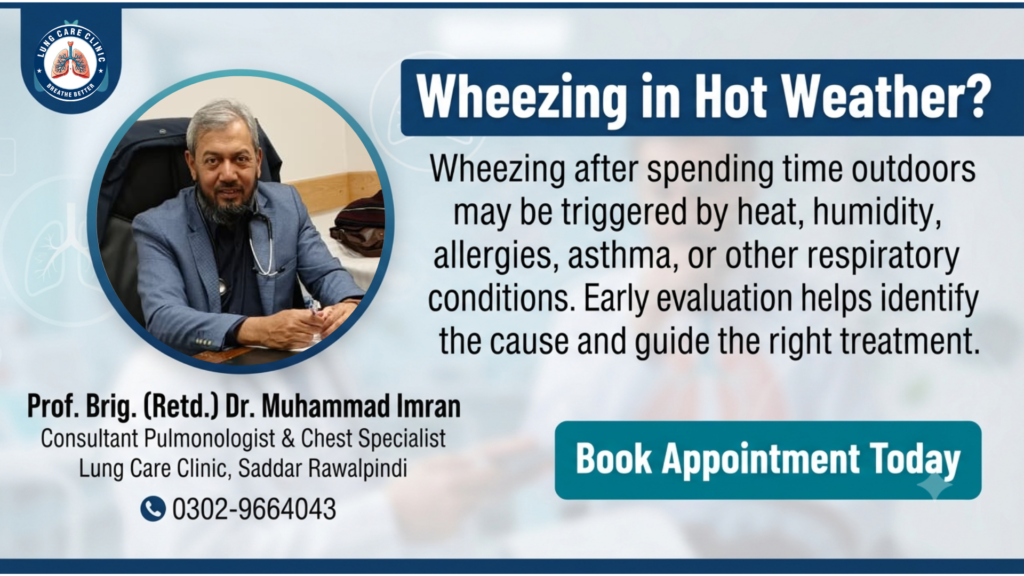
If you are experiencing persistent wheezing or breathing difficulties during the summer, consult Prof. Brig. (Retd.) Dr. Muhammad Imran for a comprehensive respiratory evaluation and personalized treatment plan.
Prof. Brig. (Retd.) Dr. Muhammad Imran
Consultant Pulmonologist & Chest Specialist
Lung Care Clinic, Saddar Rawalpindi
0302-9664043