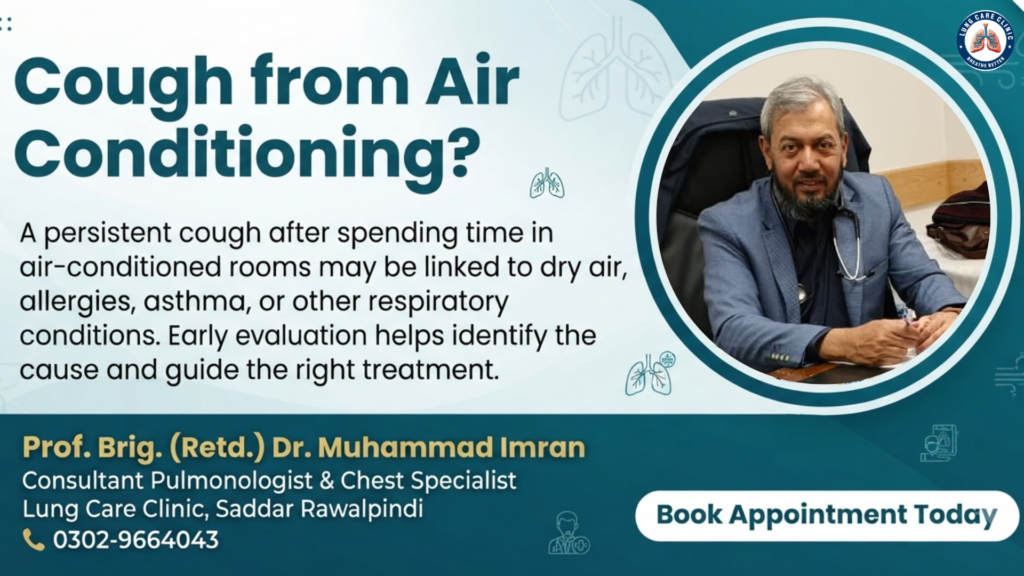
Cough from Air Conditioning is a common problem, especially during the summer when people spend long hours in air-conditioned homes, offices, and vehicles. While air conditioning provides relief from hot weather, it can sometimes irritate the respiratory tract and trigger coughing. Dry air, cold air exposure, dust, mold, allergies, asthma, and poor indoor air quality are among the most common reasons.
Understanding why Cough from Air Conditioning occurs can help you identify the cause, reduce exposure to triggers, and know when it is time to seek medical advice.
Can Air Conditioning Cause a Cough?
Yes. Air conditioning itself does not directly cause illness, but it can create conditions that irritate the throat and airways.
Cold, dry air may remove moisture from the respiratory tract, making the throat feel dry and increasing the urge to cough. In addition, poorly maintained air conditioning systems may circulate dust, mold spores, bacteria, or other airborne particles that can trigger respiratory symptoms in sensitive individuals.
Common Causes of Cough from Air Conditioning
Several factors may contribute to coughing after spending time in air-conditioned environments.
Dry Air
Air conditioners reduce indoor humidity. When humidity becomes too low, the throat and airways may dry out, causing irritation and coughing.
People may also notice:
- Dry throat
- Hoarseness
- Frequent throat clearing
- Mild chest discomfort
Drinking adequate water and maintaining appropriate indoor humidity can help reduce symptoms.
Cold Air Exposure
Sudden exposure to cold air may irritate sensitive airways. Some people develop coughing almost immediately after entering a cold room from a hot outdoor environment.
Individuals with asthma are particularly sensitive to rapid temperature changes.
Allergies
Dirty air conditioner filters can collect dust, pollen, mold spores, and other allergens. When these particles circulate indoors, they may trigger allergic reactions.
Common allergy symptoms include:
- Sneezing
- Runny nose
- Itchy eyes
- Dry cough
- Throat irritation
Regular cleaning and maintenance of air conditioning systems help improve indoor air quality.
Asthma
Air conditioning may trigger asthma symptoms in some individuals. Cold, dry air can cause the airways to narrow, leading to coughing and breathing difficulty.
Symptoms of asthma include:
- Persistent cough
- Wheezing
- Chest tightness
- Shortness of breath
Following the prescribed asthma treatment plan helps reduce flare-ups.
Chronic Obstructive Pulmonary Disease (COPD)
People living with COPD often have sensitive airways. Exposure to dry or cold air may worsen coughing and increase breathing discomfort.
Additional symptoms may include:
- Chronic cough
- Excess mucus
- Breathlessness
- Reduced exercise tolerance
Maintaining stable indoor temperatures and following medical advice are important for symptom control.
Poor Indoor Air Quality
Air conditioners that are not cleaned regularly may circulate dust, bacteria, mold, and other pollutants. Continuous exposure can irritate the respiratory system, particularly in people with pre-existing lung diseases.
Routine servicing of air conditioning units is essential for maintaining healthy indoor air.
Symptoms That May Accompany Cough from Air Conditioning
People experiencing coughing after air conditioning exposure may also notice:
- Dry throat
- Hoarseness
- Chest irritation
- Wheezing
- Shortness of breath
- Frequent throat clearing
- Runny nose
- Itchy eyes
The pattern of symptoms often helps determine whether the cause is dryness, allergies, asthma, or another respiratory condition.
Who Is More Likely to Experience Cough from Air Conditioning?
Some people are more sensitive to cold or dry air and are therefore more likely to develop coughing after spending time in air-conditioned environments.
Higher-risk groups include:
- People with asthma
- Individuals with COPD
- Allergy sufferers
- Older adults
- Young children
- Smokers
- People with chronic sinus problems
- Individuals with weakened immune systems
These individuals should pay particular attention to persistent cough or breathing difficulties associated with air conditioning.
How Can You Reduce Cough from Air Conditioning?
Simple measures can help reduce airway irritation and improve indoor air quality.
Keep Air Conditioner Filters Clean
Dust, pollen, mold, and other particles can accumulate inside air conditioning systems. Cleaning or replacing filters regularly helps reduce airborne irritants.
Avoid Extremely Cold Temperatures
Keep the air conditioner at a comfortable temperature rather than setting it excessively low. Sudden temperature changes can irritate sensitive airways.
Stay Well Hydrated
Drink enough water throughout the day to keep your throat and airways moist. Good hydration can reduce dryness caused by air conditioning.
Maintain Indoor Humidity
If indoor air becomes too dry, using a humidifier may help maintain a healthier moisture level and reduce throat irritation.
Manage Existing Respiratory Conditions
People with asthma or COPD should continue using their prescribed medications and attend regular follow-up appointments. Well-controlled respiratory conditions are less likely to flare up in air-conditioned environments.
When Should You See a Pulmonologist?
Occasional coughing after exposure to cold air may not be serious, but persistent symptoms should be evaluated.
Consult a pulmonologist if you experience:
- A cough lasting more than three weeks
- Wheezing
- Shortness of breath
- Chest tightness
- Coughing up blood
- Fever with cough
- Frequent coughing whenever you use air conditioning
- Symptoms that interfere with daily activities or sleep
Early evaluation helps identify the underlying cause and allows timely treatment.
How Is the Cause Diagnosed?
Depending on your symptoms, a pulmonologist may recommend:
- Detailed medical history and physical examination
- Chest X-ray
- Spirometry (lung function test)
- Allergy assessment when appropriate
- Blood tests if needed
- Additional investigations based on clinical findings
These tests help determine whether the cough is related to allergies, asthma, infection, COPD, or another respiratory condition.
A cough that develops after using air conditioning should not always be dismissed as a minor inconvenience. While dry air, cold air exposure, and poor indoor air quality are common causes, persistent coughing may also indicate asthma, COPD, allergies, or another respiratory condition. Identifying the underlying cause early can help relieve symptoms and protect long-term lung health.
If you are experiencing a persistent cough, breathing difficulty, or repeated respiratory symptoms associated with air conditioning, consult Prof. Brig. (Retd.) Dr. Muhammad Imran for a comprehensive respiratory evaluation and personalized treatment.
Prof. Brig. (Retd.) Dr. Muhammad Imran
Consultant Pulmonologist & Chest Specialist
Lung Care Clinic, Saddar Rawalpindi
0302-9664043