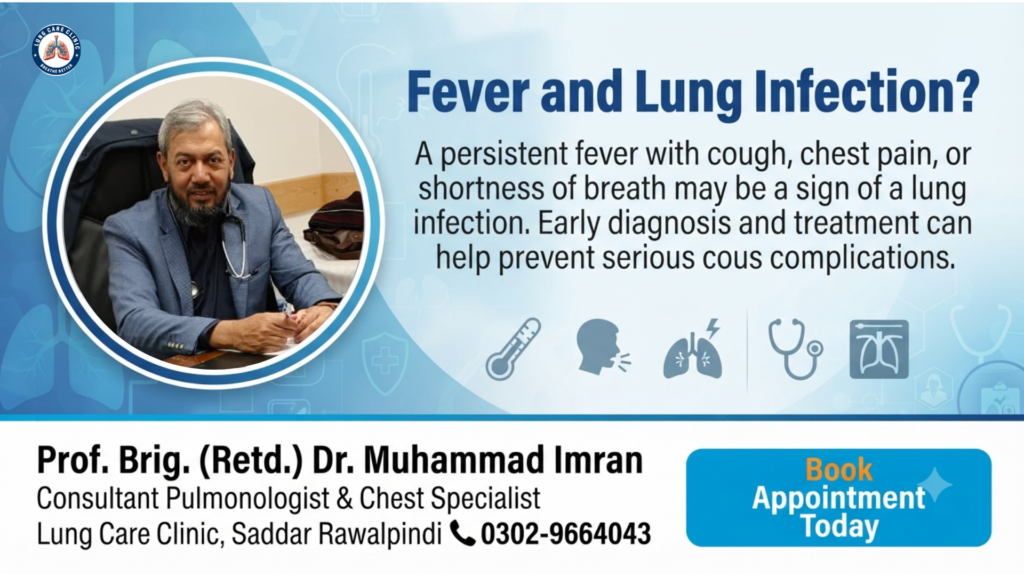
Fever and Lung Infection often occur together and may indicate that the body is fighting a serious respiratory illness. While a mild fever can develop with many viral infections, a persistent or high fever accompanied by cough, chest pain, shortness of breath, or excessive mucus should never be ignored. These symptoms may be associated with pneumonia, bronchitis, tuberculosis (TB), or other lung infections that require prompt medical evaluation.
Recognizing Fever and Lung Infection early is important because timely diagnosis and treatment can help prevent complications, improve recovery, and protect long-term lung health.
Can a Lung Infection Cause Fever?
Yes. Fever is one of the body’s natural responses to infection. When bacteria, viruses, or other microorganisms infect the lungs, the immune system releases chemicals that increase body temperature to help fight the infection.
Although fever is a common symptom, it should always be assessed alongside other respiratory complaints. A persistent fever with breathing problems may indicate a significant lung infection requiring medical attention.
Common Symptoms of Fever and Lung Infection
The symptoms depend on the type and severity of the infection. However, common signs include:
- Persistent fever
- Chills or shivering
- Persistent cough
- Cough with mucus
- Chest pain, especially while breathing or coughing
- Shortness of breath
- Wheezing
- Fatigue
- Loss of appetite
- Night sweats in some infections
If these symptoms continue for several days or worsen, they should be evaluated by a pulmonologist.
Common Causes of Fever and Lung Infection
Several respiratory diseases can cause both fever and lung inflammation.
Pneumonia
Pneumonia is one of the most common causes of Fever and Lung Infection. It occurs when the air sacs in the lungs become inflamed and fill with fluid or pus.
Common symptoms include:
- High fever
- Productive cough
- Chest pain
- Breathlessness
- Fatigue
Older adults, young children, and people with chronic diseases are at higher risk of developing severe pneumonia.
Acute Bronchitis
Bronchitis causes inflammation of the bronchial tubes, usually after a viral infection.
Symptoms may include:
- Persistent cough
- Mild to moderate fever
- Chest discomfort
- Wheezing
- Mucus production
Most viral cases improve with supportive care, although bacterial infections may require additional treatment.
Tuberculosis (TB)
Tuberculosis is a bacterial infection that primarily affects the lungs. It usually develops gradually and may remain unnoticed during its early stages.
Typical symptoms include:
- Persistent cough lasting more than two weeks
- Fever
- Night sweats
- Weight loss
- Fatigue
- Coughing up blood in advanced cases
Early diagnosis is essential to prevent complications and reduce transmission.
Lung Abscess
A lung abscess is a collection of pus inside the lung caused by bacterial infection.
Symptoms may include:
- Persistent fever
- Severe cough
- Foul-smelling sputum
- Chest pain
- Fatigue
This condition requires prompt medical treatment.
Viral Respiratory Infections
Certain viral infections, including influenza and other respiratory viruses, can also cause fever and inflammation of the lungs.
Symptoms often include:
- Fever
- Dry or productive cough
- Body aches
- Weakness
- Breathlessness
Some viral infections may progress to pneumonia, particularly in high-risk individuals.
Who Is More Likely to Develop Fever and Lung Infection?
Although anyone can develop a lung infection, some groups are more vulnerable.
Higher-risk individuals include:
- Older adults
- Young children
- Smokers
- People with asthma
- Individuals with Chronic Obstructive Pulmonary Disease (COPD)
- Patients with diabetes
- People with weakened immune systems
- Individuals with chronic heart or kidney disease
These individuals should seek medical attention promptly if fever is accompanied by respiratory symptoms.
When Should You See a Pulmonologist?
A mild fever caused by a common viral illness may improve within a few days. However, persistent Fever and Lung Infection symptoms should always be evaluated, especially if breathing becomes difficult.
Consult a pulmonologist if you experience:
- Fever lasting more than three days
- Persistent cough
- Thick yellow, green, or blood-stained sputum
- Shortness of breath
- Chest pain while breathing
- Wheezing
- High fever that does not respond to medication
- Recurrent lung infections
- Unexplained weight loss or night sweats
Seek emergency medical care immediately if severe breathlessness, confusion, bluish lips, or severe chest pain develops.
How Is Fever and Lung Infection Diagnosed?
Accurate diagnosis is important because different lung infections require different treatments.
Your pulmonologist may recommend:
- Detailed medical history and physical examination
- Chest X-ray
- High-Resolution CT (HRCT) Chest when required
- Blood tests
- Sputum examination
- Oxygen saturation assessment
- Spirometry (after recovery, if indicated)
- Tuberculosis testing when clinically suspected
These investigations help determine whether the infection is caused by bacteria, viruses, tuberculosis, or another respiratory condition.
Treatment for Fever and Lung Infection
Treatment depends on the underlying cause and the severity of the infection.
Depending on the diagnosis, management may include:
- Antibiotics for bacterial infections
- Antiviral treatment when appropriate
- Medicines to reduce fever
- Adequate hydration
- Rest and nutritional support
- Inhaled medications if wheezing or airway narrowing is present
- Oxygen therapy when oxygen levels are low
- Hospital admission for severe pneumonia or respiratory failure
Never start antibiotics without medical advice, as unnecessary use can contribute to antibiotic resistance and delay the correct diagnosis.
Can Lung Infections Be Prevented?
Although not every lung infection can be avoided, several preventive measures can reduce the risk.
You can help protect your lungs by:
- Washing your hands regularly
- Avoiding close contact with people who are ill
- Stopping smoking and avoiding secondhand smoke
- Staying up to date with recommended vaccinations
- Managing asthma or COPD properly
- Wearing a mask in crowded places when respiratory infections are common
- Seeking early medical care if respiratory symptoms worsen
People with chronic lung disease should attend regular follow-up appointments to monitor their respiratory health.
Fever and Lung Infection may be a sign of pneumonia, bronchitis, tuberculosis, or another serious respiratory illness. While fever alone is common in many infections, fever accompanied by persistent cough, chest pain, wheezing, or shortness of breath should never be ignored.
Early diagnosis allows timely treatment, reduces the risk of complications, and supports a faster recovery. If you or a family member has persistent fever along with breathing difficulties, consult a pulmonologist without delay.
Prof. Brig. (Retd.) Dr. Muhammad Imran
Consultant Pulmonologist & Chest Specialist
Lung Care Clinic, Saddar Rawalpindi
0302-9664043