Low Oxygen Symptoms should never be ignored, especially if they occur together with breathlessness, chest discomfort, or persistent fatigue. Oxygen is essential for every organ in the body, and when oxygen levels fall below normal, the brain, heart, muscles, and other tissues cannot function efficiently. Although some people notice symptoms immediately, others may develop gradual changes that become more noticeable during physical activity.
Understanding Low Oxygen Symptoms can help you recognize early warning signs, seek timely medical care, and prevent serious complications. An oxygen level check is a simple, painless test that provides valuable information about how well your lungs are supplying oxygen to your body.
What Are Low Oxygen Symptoms?
Low Oxygen Symptoms occur when the amount of oxygen in the blood is lower than normal. This condition is known medically as hypoxemia.
Healthy lungs transfer oxygen from the air into the bloodstream. However, when lung function is affected by disease or injury, oxygen delivery to the body may decrease.
Low oxygen levels may develop suddenly during an acute illness or gradually because of chronic respiratory conditions.
Why Is Oxygen Important?
Every cell in the body depends on oxygen to produce energy. When oxygen levels fall, organs must work harder to maintain normal function.
If low oxygen persists, it may lead to:
- Fatigue
- Reduced physical performance
- Poor concentration
- Heart strain
- Organ damage in severe cases
Early identification allows treatment before complications develop.
Common Low Oxygen Symptoms
The symptoms vary depending on how low the oxygen level becomes and the underlying cause.
Common Low Oxygen Symptoms include:
- Shortness of breath
- Rapid breathing
- Persistent fatigue
- Chest tightness
- Difficulty exercising
- Dizziness or lightheadedness
- Headache
- Confusion
- Bluish lips or fingertips (cyanosis)
- Fast heartbeat
Some individuals notice symptoms only while walking or climbing stairs, while others may experience breathlessness even at rest.
Why Do Low Oxygen Levels Cause Breathlessness?
When oxygen levels decrease, the body automatically increases breathing rate in an attempt to bring more oxygen into the lungs. As a result, many people feel breathless, especially during physical activity.
Breathlessness is often one of the earliest signs that an oxygen level assessment may be needed.
Common Causes of Low Oxygen Symptoms
Several medical conditions can reduce oxygen levels in the blood.
Chronic Obstructive Pulmonary Disease (COPD)
COPD damages the airways and air sacs in the lungs, making oxygen transfer less efficient.
People with COPD may experience:
- Chronic cough
- Wheezing
- Breathlessness
- Fatigue
- Reduced exercise tolerance
Regular oxygen assessment is an important part of COPD management.
Asthma
Severe or poorly controlled asthma can narrow the airways and temporarily reduce oxygen levels during an asthma attack.
Symptoms often include:
- Wheezing
- Chest tightness
- Persistent cough
- Shortness of breath
Early treatment helps restore normal breathing.
Pneumonia
Pneumonia causes inflammation and fluid accumulation within the lungs, reducing oxygen exchange.
In addition to breathlessness, patients may experience:
- Fever
- Productive cough
- Chest pain
- Fatigue
Oxygen monitoring is commonly performed during pneumonia treatment.
Interstitial Lung Disease (ILD)
Interstitial Lung Disease causes scarring of lung tissue, making it difficult for oxygen to pass into the bloodstream.
Patients often notice:
- Progressive shortness of breath
- Dry cough
- Fatigue
- Reduced exercise capacity
Regular oxygen level monitoring helps assess disease severity.
Pulmonary Embolism
A blood clot in the lungs can suddenly reduce oxygen levels and requires immediate medical attention.
Symptoms may include:
- Sudden breathlessness
- Chest pain
- Rapid heartbeat
- Dizziness
This is a medical emergency.
Heart Conditions
Certain heart diseases reduce the amount of oxygen-rich blood reaching the body, leading to symptoms similar to lung disease.
A thorough medical evaluation helps determine whether the lungs, heart, or both are responsible.
Who Is More Likely to Develop Low Oxygen Symptoms?
Some people are at greater risk of developing low oxygen levels.
Higher-risk groups include:
- People with asthma
- Individuals with COPD
- Patients with Interstitial Lung Disease (ILD)
- Older adults
- Smokers
- Individuals with pneumonia
- People with chronic heart disease
- Patients recovering from severe respiratory infections
These individuals should seek medical evaluation if breathlessness or other symptoms become persistent or worsen over time.
Why Is an Oxygen Level Check Important?
An oxygen level check is a quick, painless, and non-invasive test that measures the amount of oxygen circulating in your blood. It is usually performed using a pulse oximeter placed on your fingertip.
For people experiencing Low Oxygen Symptoms, this simple assessment helps determine whether the lungs are delivering enough oxygen to the body.
An oxygen level assessment may help:
- Detect low blood oxygen early
- Evaluate the severity of respiratory disease
- Monitor asthma and COPD
- Assess pneumonia recovery
- Guide treatment decisions
- Determine whether oxygen therapy is required
Early testing can prevent serious complications and ensure timely medical care.
When Should You Have Your Oxygen Levels Checked?
You should consider an oxygen level assessment if you experience:
- Breathlessness while walking
- Shortness of breath at rest
- Persistent fatigue without explanation
- Wheezing
- Chest tightness
- Chronic cough
- Bluish lips or fingertips
- Recovery after pneumonia or another serious lung infection
People with chronic lung diseases should also have their oxygen levels monitored regularly as advised by their pulmonologist.
How Are Low Oxygen Symptoms Evaluated?
If you have persistent Low Oxygen Symptoms, your pulmonologist may recommend additional investigations to identify the underlying cause.
These may include:
- Detailed medical history and physical examination
- Pulse oximetry (oxygen saturation test)
- Chest X-ray
- Spirometry (lung function test)
- Arterial blood gas analysis (when necessary)
- HRCT chest if clinically indicated
- Blood tests
- Additional cardiac evaluation if required
These investigations help determine whether symptoms are caused by asthma, COPD, pneumonia, Interstitial Lung Disease (ILD), heart disease, or another medical condition.
Treatment for Low Oxygen Symptoms
Treatment depends on the underlying cause rather than the oxygen level alone.
Your pulmonologist may recommend:
- Inhaled medications for asthma or COPD
- Treatment for respiratory infections
- Pulmonary rehabilitation
- Oxygen therapy when medically indicated
- Lifestyle modifications, including smoking cessation
- Regular monitoring of lung function and oxygen saturation
Self-medicating or delaying medical evaluation may allow the condition to worsen.
When Should You See a Pulmonologist?
Occasional breathlessness after heavy physical activity may not be serious. However, persistent or worsening Low Oxygen Symptoms require prompt medical attention.
Consult a pulmonologist if you experience:
- Shortness of breath that is becoming more frequent
- Breathlessness while walking short distances
- Persistent fatigue
- Wheezing
- Chest tightness
- Oxygen saturation lower than recommended by your healthcare provider
- Bluish lips or fingertips
- Symptoms that interfere with daily activities
Seek emergency medical care immediately if severe breathlessness develops suddenly or is accompanied by chest pain, confusion, or loss of consciousness.
Low Oxygen Symptoms may be an early warning sign of asthma, COPD, pneumonia, Interstitial Lung Disease (ILD), heart disease, or other serious medical conditions. Breathlessness, fatigue, wheezing, chest tightness, and reduced exercise tolerance should never be ignored.
A simple oxygen level assessment can provide valuable information about your lung function and help guide timely diagnosis and treatment. Early medical evaluation improves outcomes and helps protect long-term respiratory health.
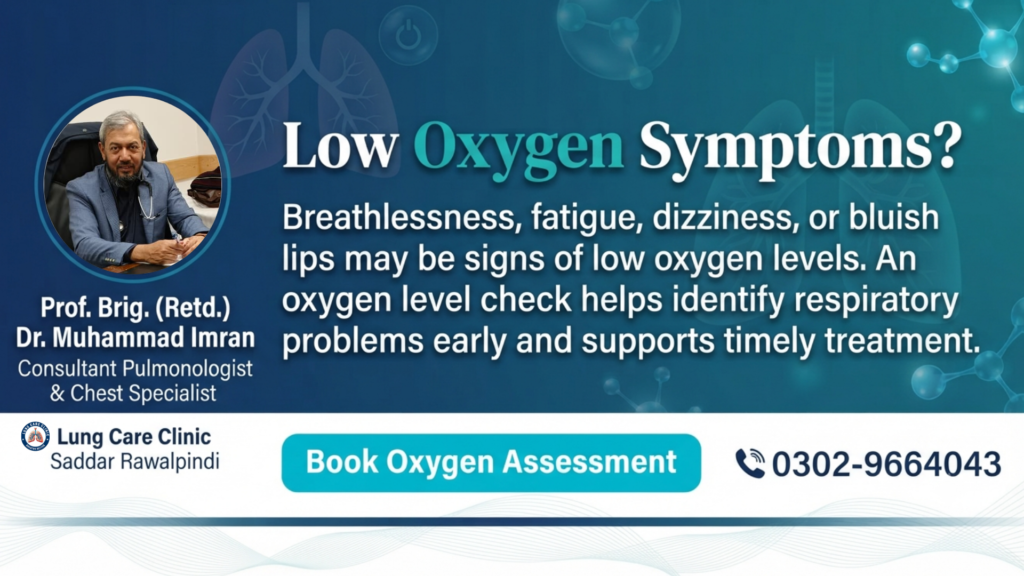
If you are experiencing persistent breathlessness or other Low Oxygen Symptoms, consult Prof. Brig. (Retd.) Dr. Muhammad Imran for a comprehensive respiratory evaluation and personalized treatment plan.
Prof. Brig. (Retd.) Dr. Muhammad Imran
Consultant Pulmonologist & Chest Specialist
Lung Care Clinic, Saddar Rawalpindi
0302-9664043