Bronchoscopy Cost Rawalpindi is a common concern for patients who need further evaluation of a lung or airway problem. Bronchoscopy allows a specialist to examine the breathing passages with a thin, flexible camera called a bronchoscope. During the procedure, the doctor may also collect mucus, fluid, or tissue samples when necessary.
Patients often have several questions before undergoing bronchoscopy. For example, they may want to know why the doctor recommends the procedure, how the procedure works, whether it causes pain, how long it takes, how they should prepare, what recovery involves, and how much the procedure may cost.
However, bronchoscopy does not have one fixed price for every patient. The total cost can vary according to the type of procedure, sedation or anesthesia, biopsy or sample collection, laboratory testing, facility charges, and other medical requirements.
What Is a Bronchoscopy?
A bronchoscopy allows a doctor to examine the airways with a bronchoscope.
The bronchoscope usually contains a small camera and light at its tip. The doctor carefully guides this flexible tube through the nose or mouth and into the breathing passages.
As a result, the specialist can examine areas that a routine physical examination cannot fully assess.
During bronchoscopy, the doctor may examine:
- The trachea
- The main bronchi
- Larger airways
- Abnormal mucus or secretions
- Narrowed areas of the airway
- Possible airway blockages
- Other visible airway abnormalities
If necessary, the doctor can also pass specialized instruments through the bronchoscope to collect samples.
Why Might a Doctor Recommend Bronchoscopy?
Doctors may recommend bronchoscopy when other investigations have not provided enough information or when direct airway examination can add useful information.
For example, a pulmonologist may consider bronchoscopy for:
- Persistent or unexplained cough
- Coughing blood
- Abnormal findings on chest imaging
- Suspected airway obstruction
- Persistent or unusual lung infection
- Unexplained lung abnormalities
- Suspected tuberculosis in selected cases
- Evaluation of certain lung diseases
- Collection of respiratory samples
- Tissue sampling when appropriate
- Investigation of an abnormal area seen on imaging
However, not every patient with a cough, infection, or abnormal scan needs bronchoscopy.
Instead, the doctor considers the patient’s symptoms, medical history, examination findings, imaging results, and previous investigations before recommending the procedure.
Bronchoscopy Cost Rawalpindi – What Determines the Price?
The Bronchoscopy Cost Rawalpindi can vary from one patient to another and from one facility to another.
Several factors can influence the final amount.
Type of Bronchoscopy
First, the type of bronchoscopy can affect the cost. A straightforward diagnostic flexible bronchoscopy may have different charges from a procedure that requires additional interventions or extensive sampling.
Sedation or Anesthesia
Second, the sedation or anesthesia approach can affect the total charges.
Some patients undergo flexible bronchoscopy with local anesthetic and sedation. In other situations, the medical team may use a different anesthesia approach depending on the procedure and clinical requirements.
Biopsy or Sample Collection
Third, additional sample collection can increase the total cost.
If the doctor needs tissue, fluid, or another sample, the laboratory may charge separately for testing. Therefore, a bronchoscopy that includes biopsy or specialized sampling may cost more than a basic examination.
Laboratory Testing
Samples collected during bronchoscopy may require further testing.
Depending on the clinical question, the laboratory may perform microbiological, cytological, pathological, or other specialized tests.
Therefore, patients should ask whether laboratory charges form part of the quoted procedure cost.
Facility and Monitoring Charges
Finally, facility-related costs can affect the overall amount.
These costs may include procedure-room services, monitoring, recovery facilities, medical staff, and other resources required during the procedure.
For this reason, patients should ask the facility exactly what the quoted amount includes.
What Happens During a Bronchoscopy?
Before the procedure, the doctor reviews the patient’s medical history and explains the planned examination.
The medical team may ask about:
- Current medicines
- Blood-thinning medicines
- Allergies
- Previous reactions to anesthesia
- Heart conditions
- Lung conditions
- Recent infections
- Previous imaging
- Other important medical problems
The team will also provide instructions about eating, drinking, and medication before the procedure.
During a flexible bronchoscopy, the doctor may use a local anesthetic to numb the nose and throat. The medical team may also use sedation when appropriate.
Next, the doctor carefully introduces the bronchoscope through the nose or mouth and guides it into the airways.
The specialist then examines the airways and collects samples if the clinical situation requires them.
Is Bronchoscopy Painful?
Many patients worry about pain before a bronchoscopy.
Fortunately, doctors generally use local anesthetic and, when appropriate, sedation to improve patient comfort during flexible bronchoscopy.
You may still experience temporary sensations such as coughing, throat irritation, pressure, or an urge to cough.
However, each patient’s experience can differ.
Before the procedure, discuss the planned sedation and anesthesia approach with your doctor. The medical team can also explain what sensations you may experience during the examination.
How Long Does Bronchoscopy Take?
The procedure time varies according to what the doctor needs to examine or perform.
For example, a straightforward diagnostic bronchoscopy may take less time than a procedure that includes biopsy or extensive sample collection.
In addition, patients usually spend more time at the facility than the actual procedure duration because preparation, sedation, monitoring, and recovery also require time.
Therefore, arrange your schedule so you have enough time for the complete visit rather than only the examination itself.
What Can Bronchoscopy Detect?
Bronchoscopy provides useful information about the airways and allows doctors to collect samples for further testing.
Depending on the patient’s condition, bronchoscopy can help investigate:
- Airway narrowing
- Airway obstruction
- Abnormal secretions
- Bleeding from the airways
- Persistent infection
- Certain lung abnormalities
- Abnormal findings on chest imaging
- Suspected tumors or other lesions
However, bronchoscopy does not diagnose every lung condition on its own.
Instead, the specialist interprets bronchoscopy findings alongside imaging, laboratory results, symptoms, and medical history.
Bronchoscopy and Lung Biopsy
Bronchoscopy can also help doctors collect samples from selected areas of the respiratory system.
When appropriate, the doctor can use specialized instruments through the bronchoscope to obtain tissue or other samples.
The laboratory can then examine these samples using the appropriate testing method.
For example, a doctor may recommend tissue sampling when imaging or other clinical findings require further investigation.
However, the exact sampling method depends on the location and nature of the abnormality.
Bronchoscopy for Persistent Cough
A persistent cough can have many causes.
For example, asthma, COPD, allergies, reflux, respiratory infections, medication effects, and other conditions can cause chronic cough.
Therefore, doctors do not automatically recommend bronchoscopy for every patient with a persistent cough.
However, when a cough remains unexplained after appropriate initial evaluation, or when imaging shows an abnormality, a pulmonologist may consider bronchoscopy as part of a broader diagnostic plan.
The specialist first evaluates the patient’s overall clinical picture before deciding whether the procedure can provide useful information.
Bronchoscopy for Coughing Blood
Coughing blood can occur for several different reasons.
In selected situations, doctors may use bronchoscopy to investigate unexplained or significant bleeding from the respiratory tract.
The procedure allows the specialist to inspect the airways and, when possible, identify a potential source of bleeding.
However, the doctor considers several factors before recommending bronchoscopy. These factors may include the amount of bleeding, the patient’s condition, imaging findings, and other clinical information.
Therefore, anyone who experiences significant, recurrent, or unexplained coughing of blood should seek prompt medical evaluation.
How to Prepare for a Bronchoscopy
Your doctor will give you specific preparation instructions before the procedure.
Depending on the planned examination, you may need to avoid food and drinks for a specified period.
You should also provide the medical team with a complete list of your medicines.
This information becomes particularly important if you take:
- Blood thinners
- Diabetes medicines
- Blood pressure medicines
- Aspirin or other medicines that affect bleeding
- Medicines that have previously caused allergic reactions
Do not stop prescribed medicines on your own.
Instead, ask your doctor whether you need to change or temporarily stop any medicine before the procedure.
Also, tell the medical team about previous anesthesia problems, allergies, and significant medical conditions.
What Should You Bring to Your Appointment?
Bring any relevant medical records to your consultation or procedure appointment.
For example, you may bring:
- Previous chest X-rays
- CT scans
- Blood test reports
- Sputum reports
- Previous prescriptions
- Current medication lists
- Previous bronchoscopy reports
- Other relevant medical records
These documents help the specialist understand your medical history and the reason for considering bronchoscopy.
What Happens After Bronchoscopy?
After the procedure, the medical team usually monitors you while the effects of sedation or anesthesia wear off.
You may experience temporary throat irritation or coughing.
If you received sedation, the medical team may advise you to arrange transportation home and avoid driving until it is safe to do so.
In addition, follow the instructions your healthcare team gives you about eating, drinking, medicines, and normal activities.
If the doctor collected samples, some results may become available quickly. However, pathology or specialized laboratory tests may take longer.
Your doctor can explain when you should expect the different results.
Possible Risks of Bronchoscopy
Bronchoscopy is an established diagnostic procedure, but every medical procedure carries some risk.
Possible effects or complications can include:
- Temporary cough
- Sore throat
- Minor bleeding
- Fever
- Infection
- Breathing difficulties
- Low oxygen levels
- Airway irritation
- Rarely, pneumothorax or other complications depending on the procedure
The risk depends partly on the type of bronchoscopy and whether the doctor performs biopsy or another intervention.
Therefore, discuss the expected benefits, possible risks, and alternatives with your doctor before the procedure.
When Should You Contact a Doctor After Bronchoscopy?
Your healthcare team will tell you which symptoms require medical attention after the procedure.
Contact your doctor promptly if you develop concerning symptoms such as:
- Significant or increasing coughing of blood
- Severe shortness of breath
- Chest pain
- Persistent high fever
- Significant weakness
- New or worsening breathing difficulty
- Other symptoms specifically identified by your medical team
If you develop severe or rapidly worsening symptoms, seek urgent medical attention rather than waiting for a routine follow-up.
Bronchoscopy Cost in Rawalpindi: What Should You Confirm?
Before booking a bronchoscopy, ask the provider what the quoted cost includes.
For example, confirm the following:
- Is the specialist consultation included?
- Does the price include sedation?
- Are anesthesia charges separate?
- Does the facility charge separately?
- Are biopsy charges included?
- Are laboratory or pathology charges included?
- Does sample processing cost extra?
- Are medicines or recovery-room charges included?
- Does the price include a follow-up consultation?
These questions can help you understand the actual expected cost.
Most importantly, do not rely on an old online price as the final charge. Procedure requirements can change, and different patients may need different services.
Therefore, confirm the current charges directly with the relevant clinic or procedure facility before booking.
Bronchoscopy Procedure in Rawalpindi
Patients searching for a Bronchoscopy Procedure Rawalpindi may first benefit from a specialist consultation.
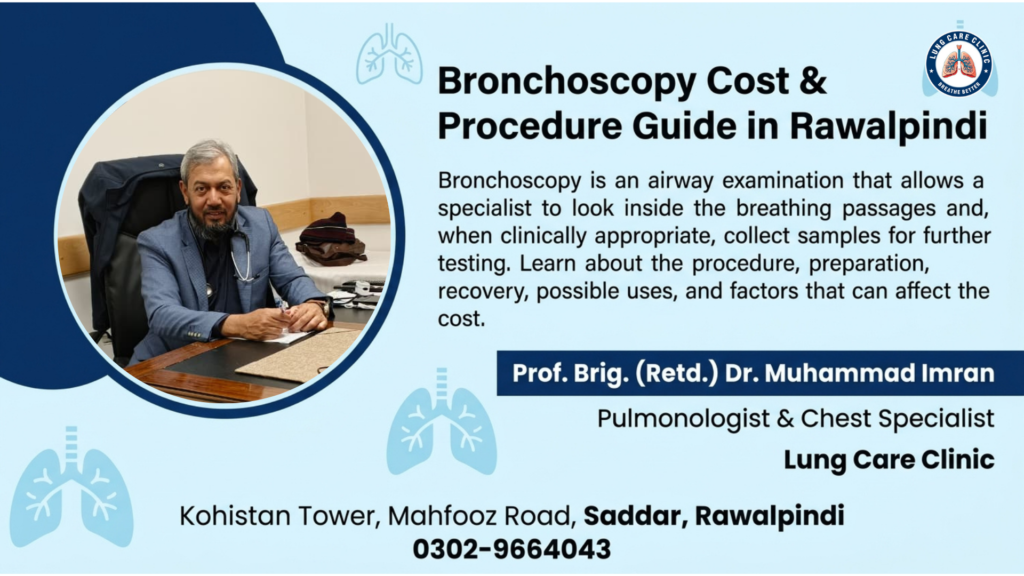
At Lung Care Clinic, Prof. Brig. (Retd.) Dr. Muhammad Imran, Pulmonologist & Chest Specialist, evaluates patients with respiratory symptoms and lung-related concerns.
During a consultation, the doctor can review symptoms, previous imaging, laboratory reports, medical history, and the clinical reason for considering bronchoscopy.
If bronchoscopy appears appropriate, the specialist can explain the purpose of the procedure and guide the patient regarding preparation, possible sample collection, recovery, and follow-up.
Patients can also ask about current procedure charges and confirm which services the quoted amount covers before scheduling.
Is Bronchoscopy Suitable for Every Patient?
No. Bronchoscopy is a specialized diagnostic procedure, so doctors recommend it only when the expected clinical value justifies the examination.
For some patients, a doctor may obtain enough information through history, physical examination, spirometry, imaging, blood tests, sputum testing, or other investigations.
For other patients, bronchoscopy may provide information that less invasive tests cannot provide.
Therefore, the decision should remain individualized.
Your pulmonologist can explain why the procedure may help in your particular situation and whether other investigations should come first.
Bronchoscopy can provide valuable information when a doctor needs to examine the airways directly or collect samples for further investigation.
The Bronchoscopy Cost Rawalpindi varies because each procedure may involve different requirements. Sedation, anesthesia, biopsy, laboratory testing, facility charges, and other services can influence the final amount.
Therefore, patients should confirm the current charges and ask exactly what the quoted cost includes before booking.
If your doctor has recommended bronchoscopy because of a persistent cough, coughing blood, an abnormal chest scan, suspected infection, airway obstruction, or another respiratory concern, discuss the purpose of the procedure carefully.
A specialist consultation can help determine whether bronchoscopy is appropriate and what preparation you may need.
Prof. Brig. (Retd.) Dr. Muhammad Imran
Pulmonologist & Chest Specialist
Lung Care Clinic
Kohistan Tower, Mahfooz Road, Military Hospital Rd, Opposite AFIC, Saddar, Rawalpindi.
0302-9664043
Serving patients from Rawalpindi & Islamabad.