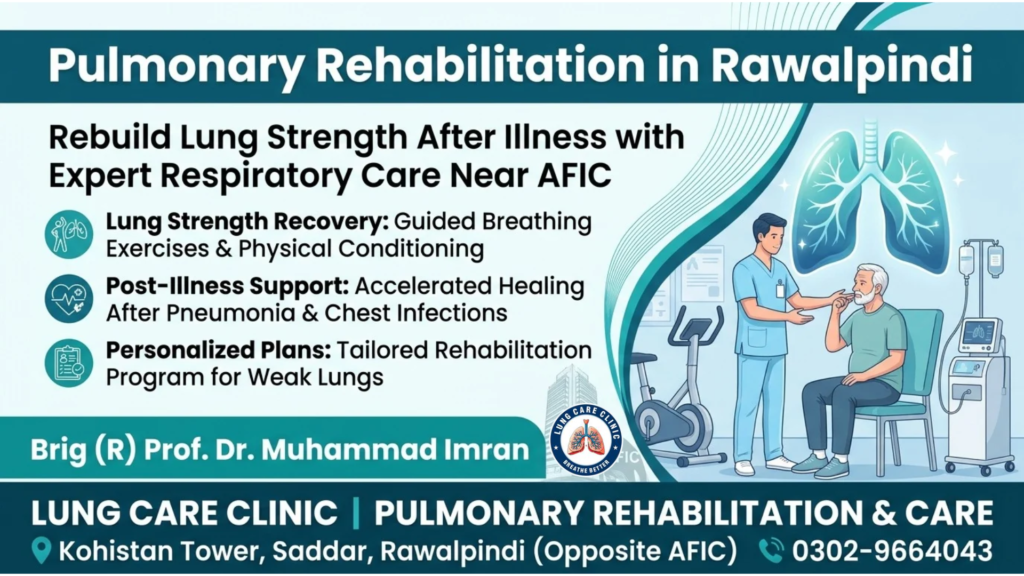
Recovering from a severe respiratory illness, pneumonia, or chronic chest infection requires time, structured guidance, and consistent physical effort. Even after an infection clears, patients frequently experience lingering fatigue, breathlessness, and reduced stamina during everyday activities. Pulmonary rehabilitation in Rawalpindi provides a structured, medical pathway to restore lung capacity, improve physical endurance, and enhance overall respiratory health.
Respiratory rehabilitation combines targeted breathing exercises, physical conditioning, and patient education. Understanding how specialized recovery programs work helps individuals rebuild lung strength safely under expert clinical supervision.
Understanding the Need for Pulmonary Recovery
When lungs undergo severe inflammation from pneumonia, bronchitis, or chronic respiratory conditions, elastic tissue experiences strain. Airway passages become sensitive, and respiratory muscles weaken due to prolonged inactivity during illness.
Attempting to resume normal physical activities too quickly can trigger breathlessness, anxiety, and exhaustion. A structured pulmonary rehabilitation program bridges the gap between acute medical treatment and full functional recovery.
Key goals of pulmonary recovery include:
- Strengthening Respiratory Muscles: Enhancing the efficiency of the diaphragm and intercostal muscles used during breathing.
- Improving Oxygen Utilization: Training the body to use oxygen more effectively during light physical exertion.
- Reducing Breathlessness: Teaching specialized breathing techniques that control shortness of breath during daily tasks.
- Restoring Confidence: Helping patients resume routine activities without the fear of sudden respiratory distress.
Core Components of Pulmonary Rehabilitation
Comprehensive pulmonary rehabilitation involves a multidisciplinary approach tailored to each patient’s individual lung capacity and overall health status.
Controlled Breathing Exercises
Specialized breathing techniques form the foundation of lung rehabilitation. Methods such as pursed-lip breathing and diaphragmatic breathing slow down the breathing rate, keep airways open longer, and improve oxygen exchange in the alveoli.
Gradual Physical Conditioning
Supervised physical exercise helps combat the muscle deconditioning that occurs during prolonged illness. Low-impact aerobic conditioning improves cardiovascular endurance without placing excessive strain on compromised lungs.
Energy Conservation Techniques
Patients learning to manage chronic fatigue receive instruction on pacing daily activities, organizing living spaces, and minimizing unnecessary breathlessness during household tasks.
Nutritional and Lifestyle Guidance
Proper nutrition supports tissue repair and immune function. Guidance on maintaining a healthy weight reduces the metabolic workload on the respiratory system.
Essential Breathing Exercises for Weak Lungs
Practicing targeted breathing techniques daily helps expand lung volume and clear trapped mucus from the bronchial tubes.
- Pursed-Lip Breathing: Inhale slowly through your nose for two seconds with your mouth closed. Purse your lips as if whistling, and exhale slowly through your mouth for four seconds. This technique keeps airways open longer and eases shortness of breath.
- Diaphragmatic Breathing (Belly Breathing): Place one hand on your chest and the other on your abdomen. Inhale deeply through your nose, feeling your belly rise while your chest remains relatively still. Exhale slowly through pursed lips.
- Active Cycle of Breathing Techniques: Combines breathing control, thoracic expansion exercises, and forced expiration techniques to mobilize and clear accumulated lung secretions safely.
Who Benefits Most from Pulmonary Rehabilitation?
While beneficial for numerous chronic conditions, pulmonary rehabilitation is particularly valuable for specific patient groups:
- Post-Pneumonia Recovery: Individuals recovering from severe lung infections who struggle with persistent weakness and breathlessness.
- Chronic Bronchitis Management: Patients with persistent airway inflammation seeking to improve daily stamina and reduce flare-ups.
- Post-Hospitalization Support: Anyone discharged after prolonged respiratory illness who requires structured physical conditioning.
- Aging Adults: Older individuals experiencing age-related decline in respiratory muscle strength and lung elasticity.
Expert Pulmonary Care at Lung Care Clinic Near AFIC, Rawalpindi
Accessing professional guidance for lung recovery ensures safety and measurable progress. Located conveniently at Kohistan Tower, Saddar, Rawalpindi (Opposite AFIC), Lung Care Clinic offers comprehensive pulmonary evaluation and recovery support.
Under the expert clinical guidance of Brig (R) Prof. Dr. Muhammad Imran, a senior pulmonologist and chest specialist, patients receive accurate diagnostic assessments, personalized rehabilitation plans, and expert instruction in breathing exercises.
Frequently Asked Questions
How long does a pulmonary rehabilitation program take?
Program duration varies depending on individual health needs, but noticeable improvements in stamina and breathing control typically occur within 6 to 8 weeks of consistent practice.
Can breathing exercises be performed safely at home?
Yes. Once proper technique is taught and cleared by a chest specialist, many breathing exercises can be practiced safely at home on a daily basis.
When should I consult a pulmonologist regarding lingering breathlessness?
If shortness of breath persists for more than three weeks following a chest infection, or if it interferes with routine daily activities, a professional specialist evaluation is strongly recommended.
For expert pulmonary rehabilitation guidance, lung strength evaluations, and comprehensive respiratory care, visit Lung Care Clinic at Kohistan Tower, Saddar, Rawalpindi (Opposite AFIC), or call 0302-9664043.