Recovering from a respiratory illness requires patience, proper medication, and adequate rest. However, when a cough or shortness of breath persists well beyond normal expectations, patients often wonder about typical chest infection recovery times. Understanding normal healing timelines helps individuals determine when standard rest is sufficient and when professional evaluation by a chest specialist becomes necessary.
Chest infections affect the airways and lung tissues, leading to inflammation, mucus production, and temporary breathing difficulties. Knowing how viral and bacterial infections differ in duration ensures timely medical intervention and prevents chronic pulmonary complications.
Understanding Chest Infections and Healing Timelines
Chest infections broadly encompass acute bronchitis and pneumonia, both of which inflame the bronchial tubes or air sacs. The body’s immune system works steadily to clear mucus, repair damaged epithelial lining, and restore normal airflow.
However, the timeline of recovery depends heavily on the underlying pathogen, age, overall immune health, and pre-existing respiratory conditions like asthma or chronic bronchitis.
Key factors influencing recovery duration include:
- Pathogen Type: Viral infections typically resolve with supportive care, whereas bacterial infections frequently require targeted antibiotic therapy.
- Age and Immunity: Older adults and immunocompromised individuals experience slower tissue regeneration and prolonged recovery phases.
- Pre-Existing Lung Health: Individuals with underlying airway inflammation require extended monitoring to prevent secondary complications.
- Environmental Exposure: Continued exposure to urban pollution, dust, or tobacco smoke significantly delays natural healing.
Viral Versus Bacterial Chest Infection Recovery
Distinguishing between viral and bacterial respiratory illnesses is essential for appropriate treatment planning and realistic recovery expectations.
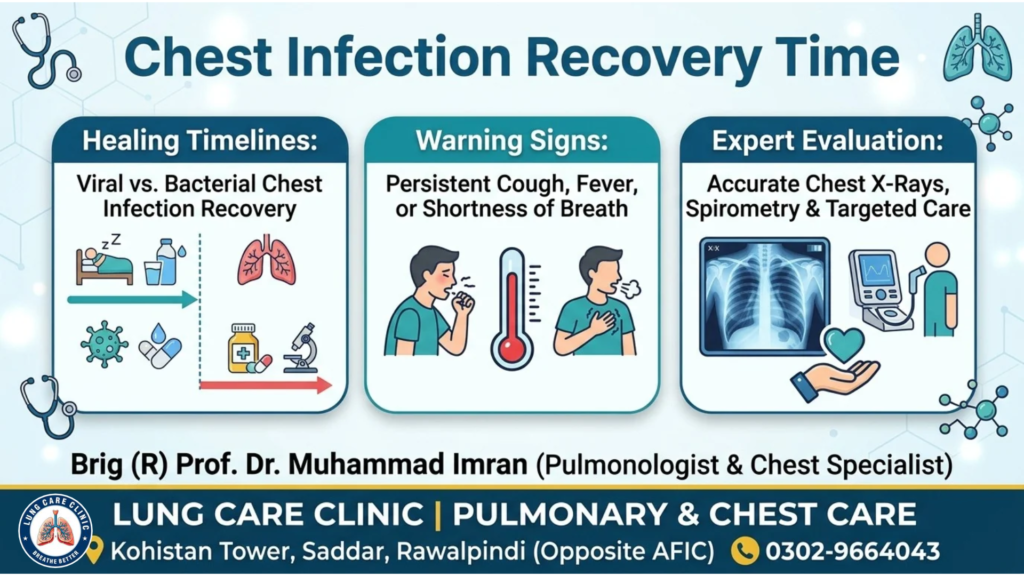
Viral Chest Infection Recovery Time
Most acute bronchitis cases stem from viral pathogens.
- Timeline: Acute symptoms such as fever and body aches peak within 3 to 5 days and resolve completely within 7 to 10 days.
- Lingering Symptoms: A dry or mild productive cough can persist for up to 3 weeks as the bronchial lining heals and remains hypersensitive.
Bacterial Chest Infection Recovery Time
Bacterial infections, including certain forms of community-acquired pneumonia, involve heavier inflammation and thick purulent discharge.
- Timeline: Symptoms improve steadily within 48 to 72 hours after initiating appropriate antibiotic therapy.
- Complete Recovery: Full restoration of energy levels and normal breathing capacity can take 4 to 6 weeks, requiring careful follow-up evaluation.
Warning Signs: When to See a Chest Specialist
While mild coughs gradually improve with rest and hydration, certain red flags indicate that a simple infection has progressed or requires specialist intervention.
Crucial warning signs requiring a pulmonologist consultation include:
- Prolonged Cough: A persistent cough lasting longer than three weeks without progressive improvement.
- Severe Shortness of Breath: Difficulty breathing during minimal physical exertion or routine daily activities.
- Chest Pain: Sharp or persistent discomfort in the chest wall when breathing deeply or coughing.
- Recurrent Fevers: High fevers that subside temporarily before returning alongside worsened respiratory symptoms.
- Blood-Stained Sputum: Coughing up pink-tinged or blood-streaked mucus, requiring immediate diagnostic imaging.
Diagnostic Evaluation for Prolonged Chest Infections
When chest infections fail to follow normal healing timelines, advanced diagnostic assessments help identify hidden complications or underlying chronic conditions.
Essential diagnostic tools include:
- Digital Chest X-Ray: Visualizes lung parenchyma to rule out persistent consolidation, fluid accumulation, or structural abnormalities.
- Spirometry Testing: Measures airflow restriction and evaluates whether post-infection bronchial hyperreactivity mimics asthma.
- Sputum Analysis: Identifies specific bacterial strains or secondary pathogens responsible for treatment resistance.
Expert Pulmonary Care at Lung Care Clinic Near AFIC, Rawalpindi
Patients experiencing prolonged respiratory illness or delayed recovery require structured clinical oversight. Located conveniently at Kohistan Tower, Saddar, Rawalpindi (Opposite AFIC), Lung Care Clinic offers comprehensive diagnostic and therapeutic services.
Under the expert guidance of Brig (R) Prof. Dr. Muhammad Imran, a senior pulmonologist and chest specialist, patients receive precise evaluations, accurate chest imaging reviews, and personalized recovery plans.
Frequently Asked Questions
How long does a normal cough last after a chest infection?
A post-viral cough can linger for 2 to 3 weeks as the bronchial airways remain sensitive. However, a cough lasting beyond 3 weeks without improvement warrants specialist evaluation.
Can a chest infection resolve without antibiotics?
Yes. The vast majority of acute chest infections are viral in origin and resolve with supportive care, hydration, and rest. Antibiotics are ineffective against viral pathogens.
When should I get a chest X-ray for a persistent cough?
If your cough is accompanied by unexplained weight loss, night sweats, high fever, sharp chest pain, or lasts longer than 3 weeks, a chest X-ray is recommended.
For expert evaluation of lingering coughs, chest infection recovery guidance, and comprehensive pulmonary care, visit Lung Care Clinic at Kohistan Tower, Saddar, Rawalpindi (Opposite AFIC), or call 0302-9664043.