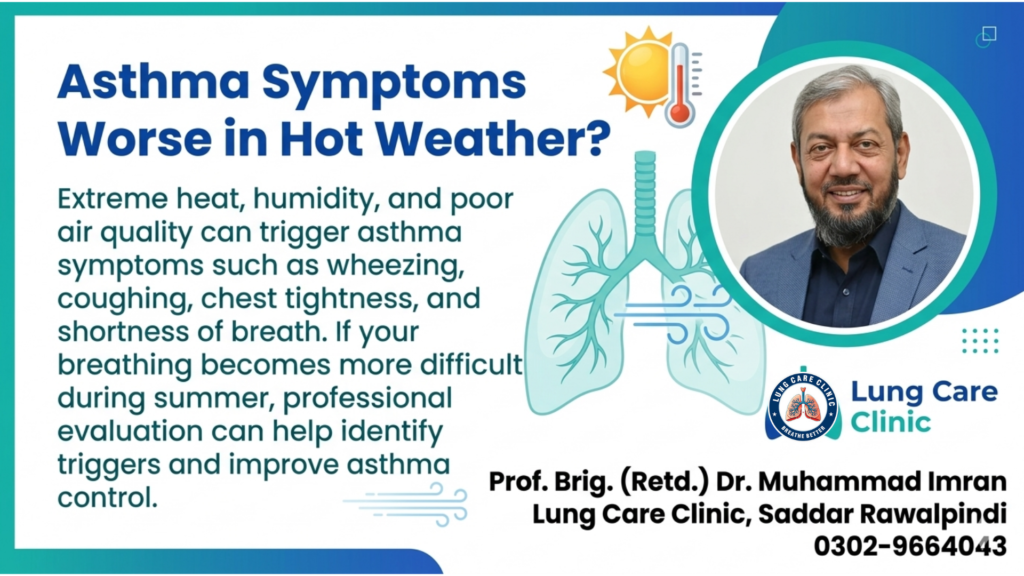
Many people with asthma notice that their breathing becomes more difficult during the summer months. If you have ever wondered whether asthma is worse in hot weather, the answer is yes. Extreme heat can trigger asthma symptoms and make existing respiratory problems harder to control.
Understanding how hot weather affects the lungs can help asthma patients take preventive measures and avoid serious flare-ups.
How Does Hot Weather Affect Asthma?
When temperatures rise, the air becomes hotter and often more humid. These conditions can irritate the airways and make breathing more difficult for people with asthma.
Hot weather can contribute to:
- Increased airway inflammation
- Narrowing of the bronchial tubes
- Greater exposure to air pollutants
- Higher levels of pollen and allergens
- Increased breathing rate during outdoor activities
As a result, asthma symptoms may become more frequent or severe during periods of extreme heat.
Common Asthma Symptoms in Hot Weather
People with asthma may experience:
- Shortness of breath
- Wheezing
- Persistent coughing
- Chest tightness
- Difficulty exercising outdoors
- Increased use of rescue inhalers
- Nighttime breathing problems
Symptoms can vary from mild discomfort to severe asthma attacks requiring urgent medical attention.
Why Does Heat Trigger Asthma Symptoms?
Several factors contribute to worsening asthma during hot weather.
High Humidity
Humidity can make the air feel heavier and harder to breathe. Moist air may increase airway irritation and make asthma symptoms more noticeable.
Air Pollution
Hot summer days often lead to increased levels of smog and ground-level ozone. These pollutants can irritate sensitive airways and trigger asthma flare-ups.
Increased Allergens
Summer can bring higher concentrations of pollen, mold spores, and other airborne allergens. Individuals with allergic asthma may be especially vulnerable.
Dehydration
Hot weather increases fluid loss through sweating. Dehydration can affect overall respiratory health and may contribute to discomfort while breathing.
Who Is Most at Risk?
Certain individuals are more likely to experience worsening asthma symptoms during extreme heat, including:
- Children with asthma
- Older adults
- People with poorly controlled asthma
- Individuals with allergic asthma
- Patients with coexisting lung diseases
- People who spend long hours outdoors
These groups should take extra precautions during heat waves and periods of poor air quality.
Tips to Protect Yourself During Hot Weather
Managing asthma during summer requires a proactive approach.
Consider the following precautions:
- Stay indoors during peak afternoon heat
- Monitor local air quality reports
- Keep rescue inhalers readily available
- Stay well hydrated throughout the day
- Avoid strenuous outdoor exercise in extreme temperatures
- Use prescribed asthma medications regularly
- Keep indoor environments cool and well ventilated
Following your asthma management plan can help reduce the risk of heat-related symptom flare-ups.
When Should You See a Specialist?
If your asthma symptoms become more frequent during hot weather or if you notice increasing shortness of breath, wheezing, or chest tightness despite treatment, professional evaluation is recommended.
Persistent symptoms may indicate uncontrolled asthma or another underlying respiratory condition requiring further assessment.
Extreme heat can make asthma symptoms worse by increasing airway irritation, exposure to pollutants, and breathing difficulties. Recognizing these triggers and taking preventive measures can help you stay active and healthy throughout the summer season.
If you are experiencing worsening asthma symptoms in hot weather, consult Prof. Brig. (Retd.) Dr. Muhammad Imran at Lung Care Clinic, Saddar Rawalpindi. As an experienced pulmonologist and chest specialist, he provides comprehensive evaluation and personalized treatment plans for asthma and other respiratory conditions.
Lung Care Clinic, Saddar Rawalpindi
Prof. Brig. (Retd.) Dr. Muhammad Imran
Pulmonologist & Chest Specialist
0302-9664043