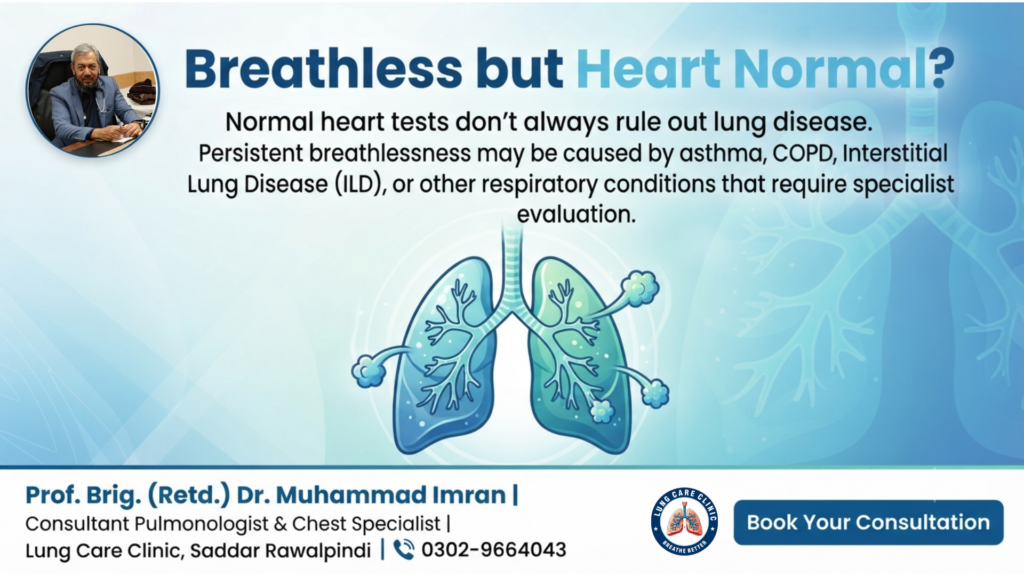
Feeling short of breath can be frightening, especially when routine heart tests such as an ECG or echocardiogram are reported as normal. Many people assume that if the heart is healthy, the cause of their breathing difficulty must be minor. However, being Breathless but Heart Normal does not necessarily mean everything is fine. Breathlessness can also result from several lung conditions that require proper diagnosis and treatment.
If you continue to experience difficulty breathing despite normal heart investigations, it is important to consult a pulmonologist. Identifying the underlying cause early can improve your breathing, prevent complications, and protect your long-term lung health.
Can You Be Breathless Even When Your Heart Is Normal?
Yes. Although heart disease is a common cause of breathlessness, the lungs are equally important in supplying oxygen to the body.
When lung function is affected, breathing may become difficult even if heart tests are completely normal.
The lungs, airways, and breathing muscles all work together to deliver oxygen. Problems affecting any part of this system can lead to persistent breathlessness.
Common Lung Causes of Being Breathless but Heart Normal
Several respiratory conditions may explain why someone feels Breathless but Heart Normal.
Asthma
Asthma causes inflammation and narrowing of the airways.
People with asthma may experience:
- Shortness of breath
- Wheezing
- Chest tightness
- Persistent cough
- Breathlessness during exercise
Some individuals only develop symptoms occasionally, making diagnosis more challenging without specialist assessment.
Chronic Obstructive Pulmonary Disease (COPD)
COPD gradually reduces airflow through the lungs.
Typical symptoms include:
- Progressive breathlessness
- Chronic cough
- Excess mucus
- Wheezing
- Reduced exercise tolerance
Early diagnosis allows treatment that can improve symptoms and slow disease progression.
Interstitial Lung Disease (ILD)
Interstitial Lung Disease causes scarring of lung tissue, making it difficult for oxygen to move into the bloodstream.
Patients commonly notice:
- Persistent breathlessness
- Dry cough
- Fatigue
- Difficulty walking long distances
Because symptoms often develop gradually, they may initially be mistaken for aging or poor fitness.
Lung Infections
Pneumonia and other respiratory infections can temporarily reduce lung function and oxygen exchange.
Symptoms often include:
- Breathlessness
- Fever
- Persistent cough
- Chest pain
- Fatigue
Some patients continue experiencing shortness of breath even after the infection has improved.
Bronchiectasis
Bronchiectasis causes permanent widening of the airways and repeated chest infections.
Patients may develop:
- Persistent cough
- Thick mucus
- Recurrent chest infections
- Breathlessness
- Wheezing
Specialist treatment can help reduce infections and improve breathing.
Other Causes of Breathlessness
Not every case of breathlessness is caused by lung disease.
Other possible causes include:
- Severe anemia
- Obesity
- Poor physical fitness
- Anxiety after medical causes have been excluded
- Certain medications
A comprehensive medical evaluation helps determine the exact reason for persistent symptoms.
Symptoms That May Accompany Breathlessness
People who are Breathless but Heart Normal may also experience:
- Wheezing
- Persistent cough
- Chest tightness
- Fatigue
- Difficulty climbing stairs
- Reduced exercise capacity
- Frequent chest infections
- Low oxygen levels in some lung diseases
These associated symptoms provide important clues about the underlying condition.
Who Should Consult a Pulmonologist?
You should consider seeing a pulmonologist if:
- Your heart tests are normal but breathlessness continues
- You experience persistent cough
- Wheezing develops repeatedly
- Breathlessness limits daily activities
- You have asthma or COPD
- You smoke or previously smoked
- You have repeated chest infections
- Your symptoms continue despite routine treatment
A detailed respiratory evaluation can identify lung conditions that may not be detected during routine cardiac assessment.
How Is Breathlessness Diagnosed When Heart Tests Are Normal?
If you remain Breathless but Heart Normal, further evaluation of your lungs is essential. A pulmonologist will review your symptoms, medical history, smoking history, occupational exposures, and previous investigations before recommending additional tests.
Depending on your condition, the following investigations may be advised:
- Physical examination
- Pulse oximetry (oxygen saturation assessment)
- Spirometry (Pulmonary Function Test)
- Chest X-ray
- High-Resolution CT (HRCT) Chest
- Blood investigations
- Sputum examination when infection is suspected
- Six-minute walk test in selected patients
- Bronchoscopy if clinically indicated
These tests help identify conditions such as asthma, Chronic Obstructive Pulmonary Disease (COPD), Interstitial Lung Disease (ILD), bronchiectasis, pneumonia, pulmonary fibrosis, or other respiratory disorders.
Treatment for Breathlessness
Treatment depends on the underlying cause rather than the symptom itself.
Your pulmonologist may recommend:
- Inhaled medications for asthma or COPD
- Antibiotics for confirmed bacterial lung infections
- Medicines to reduce airway inflammation
- Pulmonary rehabilitation
- Oxygen therapy when oxygen levels are low
- Smoking cessation support
- Lifestyle modifications, including regular exercise and weight management when appropriate
Avoid self-medicating or relying only on cough syrups or inhalers without a confirmed diagnosis, as this may delay appropriate treatment.
When Should You Seek Immediate Medical Care?
Although many causes of breathlessness are manageable, some symptoms require urgent medical attention.
Seek emergency medical care if you develop:
- Severe or sudden shortness of breath
- Chest pain
- Bluish lips or fingertips
- Confusion or extreme drowsiness
- Coughing up blood
- Rapid worsening of breathing difficulty
Prompt treatment can be lifesaving in serious respiratory conditions.
Why Early Specialist Evaluation Matters
Many lung diseases begin with mild breathlessness that gradually becomes worse over time.
Early consultation with a pulmonologist can help:
- Identify the correct diagnosis
- Begin appropriate treatment sooner
- Prevent disease progression
- Improve exercise capacity
- Reduce future hospital admissions
- Protect long-term lung function
Even when heart investigations are normal, persistent breathing difficulty should never be ignored.
Being Breathless but Heart Normal does not mean your symptoms are imaginary or unimportant. Breathlessness may be caused by asthma, COPD, Interstitial Lung Disease (ILD), bronchiectasis, lung infections, pulmonary fibrosis, or other respiratory conditions that require specialist evaluation.
If you continue to experience shortness of breath despite normal heart tests, consult a pulmonologist for a comprehensive respiratory assessment. Early diagnosis and appropriate treatment can significantly improve your breathing, daily activities, and overall quality of life.
Prof. Brig. (Retd.) Dr. Muhammad Imran
Consultant Pulmonologist & Chest Specialist
Lung Care Clinic, Saddar Rawalpindi
0302-9664043