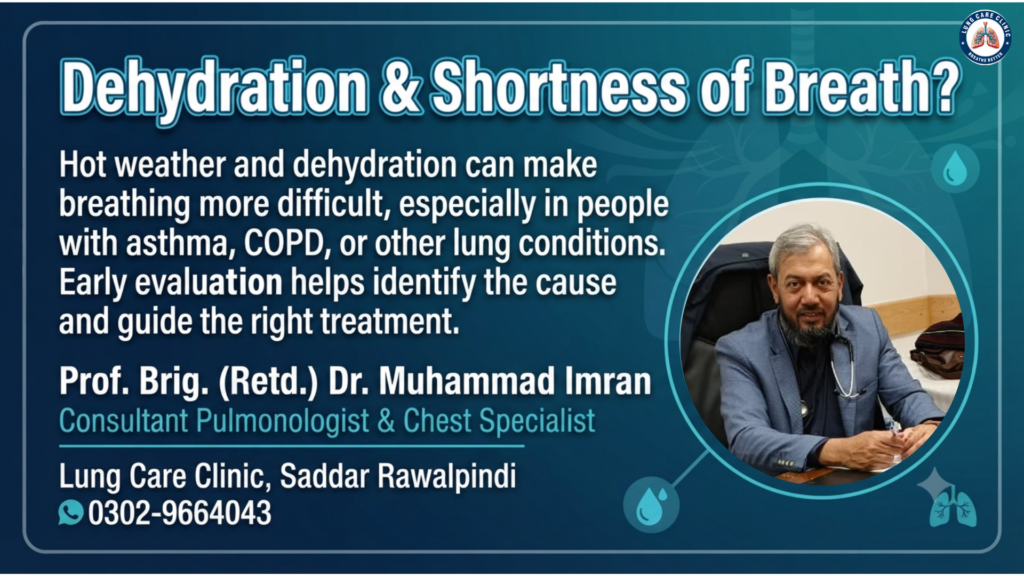
Dehydration and Shortness of Breath can occur together, particularly during the hot summer months. High temperatures increase fluid loss through sweating, and if those fluids are not replaced, the body may struggle to function efficiently. As dehydration becomes more severe, the heart and lungs must work harder to deliver oxygen throughout the body, leading to breathing difficulty and fatigue. Although dehydration is a common cause, these symptoms may also be linked to asthma, Chronic Obstructive Pulmonary Disease (COPD), heat exhaustion, or other medical conditions.
Understanding the relationship between Dehydration and Shortness of Breath can help you recognize early warning signs and seek timely medical attention when needed.
What Is Dehydration?
Dehydration occurs when the body loses more fluids than it takes in. Water is essential for maintaining blood circulation, regulating body temperature, and supporting normal lung function. Even mild dehydration can affect physical performance, while severe dehydration can lead to serious health complications.
People are more likely to become dehydrated during summer because of excessive sweating, prolonged outdoor activities, fever, vomiting, or inadequate fluid intake.
Can Dehydration Cause Shortness of Breath?
Yes. Dehydration and Shortness of Breath are closely connected in some situations. When the body loses too much fluid, blood volume decreases. This means the heart has to pump harder to circulate oxygen-rich blood to the body’s tissues. As a result, breathing may become faster or more difficult, especially during physical activity.
Dehydration can also make airway secretions thicker, which may be particularly troublesome for individuals with asthma or chronic lung disease.
Common Causes of Dehydration and Shortness of Breath
Several conditions may contribute to these symptoms.
Hot Weather and Heat Exhaustion
Hot temperatures increase sweating, leading to significant fluid and electrolyte loss. Without adequate hydration, heat exhaustion can develop.
Common symptoms include:
- Excessive sweating
- Weakness
- Dizziness
- Fatigue
- Rapid breathing
- Shortness of breath
If untreated, heat exhaustion may progress to heat stroke, which requires immediate emergency care.
Asthma
People with asthma are often more sensitive to hot and humid weather. Dehydration may worsen airway irritation, while heat and allergens can trigger asthma symptoms.
Signs of asthma include:
- Wheezing
- Chest tightness
- Persistent cough
- Difficulty breathing
Maintaining adequate hydration and following prescribed asthma treatment can help reduce flare-ups.
Chronic Obstructive Pulmonary Disease (COPD)
Individuals with COPD already have reduced airflow due to chronic lung damage. Dehydration can make mucus thicker and more difficult to clear, increasing breathing difficulty.
Additional symptoms may include:
- Chronic cough
- Chest congestion
- Fatigue
- Reduced exercise tolerance
Proper hydration and regular medical follow-up are important for COPD management.
Respiratory Infections
Fever caused by respiratory infections increases fluid loss from the body. At the same time, lung inflammation can reduce breathing efficiency, causing both dehydration and shortness of breath.
Patients may also experience:
- Persistent cough
- Thick mucus
- Fever
- Chest discomfort
- General weakness
Early treatment helps reduce complications.
Heart Conditions
Certain heart diseases reduce the heart’s ability to pump blood efficiently. Combined with dehydration, this may lead to breathlessness, fatigue, and reduced physical capacity.
A medical evaluation is essential if these symptoms occur repeatedly or worsen over time.
Symptoms That May Accompany Dehydration and Shortness of Breath
In addition to breathing difficulty, dehydration may cause:
- Extreme thirst
- Dry mouth
- Dark-colored urine
- Dizziness
- Fatigue
- Headache
- Muscle cramps
- Rapid heartbeat
- Reduced sweating in severe cases
If these symptoms appear together, increasing fluid intake may help in mild cases. However, persistent or severe symptoms require prompt medical attention.
Who Is More Likely to Experience Dehydration and Shortness of Breath?
Some people are more vulnerable to these symptoms, especially during periods of extreme heat.
Higher-risk groups include:
- Older adults
- Young children
- People with asthma
- Individuals with COPD
- People with heart disease
- Outdoor workers
- Athletes
- Individuals who do not drink enough fluids
- Patients recovering from fever, vomiting, or diarrhea
These individuals should take extra precautions to stay hydrated and avoid prolonged heat exposure.
How Can You Prevent Dehydration and Shortness of Breath?
Simple preventive measures can help lower the risk of dehydration and breathing problems during the summer.
Drink Water Regularly
Do not wait until you feel thirsty. Drinking water consistently throughout the day helps maintain normal blood circulation and supports healthy lung function.
Limit Heat Exposure
Avoid outdoor activities during the hottest hours of the day. If you must go outside, wear lightweight clothing and take regular breaks in shaded or air-conditioned areas.
Replace Lost Fluids
After excessive sweating or physical activity, replace lost fluids with water or oral rehydration solutions when appropriate.
Manage Existing Lung Conditions
People with asthma or COPD should continue taking their prescribed medications and follow their treatment plans. Good disease control reduces the likelihood of breathing difficulties during hot weather.
Avoid Smoking and Air Pollution
Cigarette smoke, dust, and polluted air can irritate the airways and make breathing more difficult, particularly when combined with dehydration.
When Should You See a Pulmonologist?
Although mild dehydration often improves with adequate fluid intake, persistent Dehydration and Shortness of Breath should never be ignored.
Seek medical evaluation if you experience:
- Shortness of breath that does not improve after resting
- Persistent fatigue or weakness
- Chest tightness or wheezing
- Difficulty breathing during routine activities
- Persistent cough
- Fever with breathing difficulty
- Confusion or severe dizziness
- Symptoms that continue despite drinking enough fluids
Early diagnosis helps identify the underlying cause and allows timely treatment before complications develop.
How Is the Cause Diagnosed?
A pulmonologist may recommend several investigations depending on your symptoms, including:
- Detailed medical history and physical examination
- Chest X-ray
- Spirometry (lung function test)
- Oxygen saturation assessment
- Blood tests
- Additional investigations if asthma, COPD, infection, or another condition is suspected
These tests help determine whether dehydration alone is responsible or if another respiratory condition requires treatment.
Dehydration and Shortness of Breath can be more than a temporary reaction to hot weather. While dehydration commonly contributes to breathing difficulty during the summer, these symptoms may also indicate asthma, COPD, respiratory infections, heart disease, or other medical conditions. Recognizing the warning signs early and seeking professional medical care can help prevent complications and support better long-term respiratory health.
If you are experiencing persistent Dehydration and Shortness of Breath, recurrent breathing difficulty, or unexplained fatigue, consult Prof. Brig. (Retd.) Dr. Muhammad Imran for a comprehensive respiratory evaluation and personalized treatment plan.
Prof. Brig. (Retd.) Dr. Muhammad Imran
Consultant Pulmonologist & Chest Specialist
Lung Care Clinic, Saddar Rawalpindi
0302-9664043