
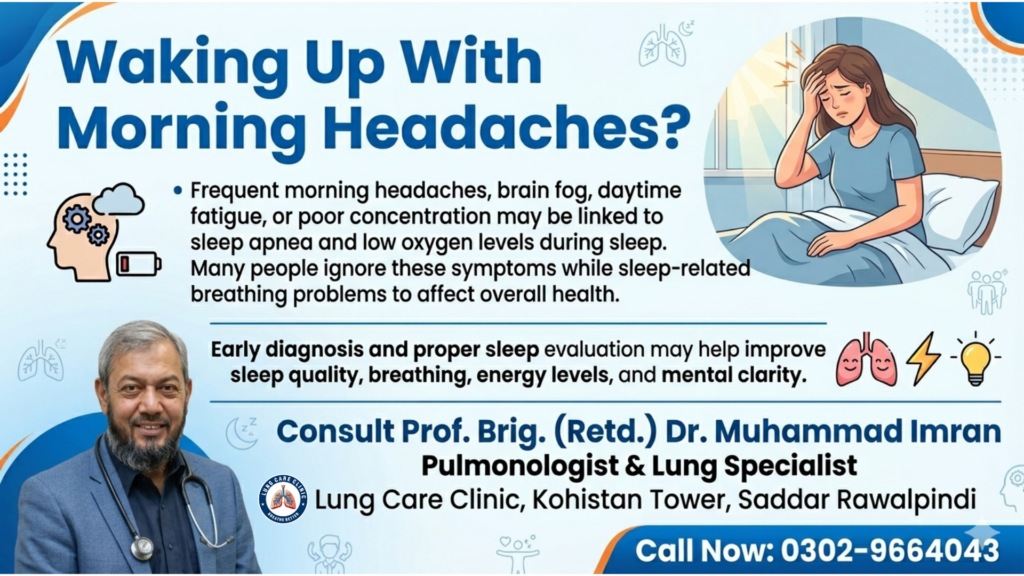
Morning headaches are a common problem for many people.
Some individuals wake up with pressure in the head, tiredness, or mental fog almost every day.
However, repeated morning headaches should not always be ignored.
In some cases, poor sleep quality and breathing problems during sleep may be responsible.
Sleep apnea is one of the most common causes of interrupted breathing at night.
Therefore, identifying sleep-related symptoms early is very important.
Also, untreated sleep apnea may affect oxygen levels, brain function, and overall health.
So, patients with frequent morning headaches may benefit from medical evaluation.
Why Do Morning Headaches Happen?
Morning headaches can happen for many reasons.
Stress, dehydration, poor sleep, and high blood pressure are common causes.
However, breathing problems during sleep may also contribute to headache symptoms.
When oxygen levels fall during the night, the body may react with headache and fatigue after waking up.
Moreover, interrupted sleep may reduce brain recovery and mental alertness.
Therefore, some people also experience brain fog and daytime tiredness.
How Sleep Apnea Causes Morning Headaches
Sleep apnea is a condition where breathing repeatedly stops during sleep.
Obstructive sleep apnea happens when the airway becomes blocked temporarily at night.
As a result, oxygen levels may decrease many times during sleep.
The brain briefly wakes the body to restart breathing.
Although patients may not fully remember these interruptions, sleep quality becomes poor.
Therefore, morning headaches and daytime fatigue may develop over time.
Many people with sleep apnea also experience loud snoring and gasping during sleep.
Common Symptoms Linked to Sleep Apnea
Loud Snoring
Persistent loud snoring is one of the most common warning signs.
Moreover, snoring may become worse over time.
Brain Fog
Poor sleep quality may affect concentration and memory.
As a result, mental alertness may decrease during the day.
Daytime Fatigue
Interrupted breathing during sleep may reduce energy levels.
Therefore, patients often feel tired despite sleeping for several hours.
Dry Mouth
Mouth breathing during sleep may cause dryness after waking up.
Gasping During Sleep
Some patients suddenly wake up feeling short of breath.
Furthermore, family members may notice breathing pauses during sleep.
Why Low Oxygen Levels Matter
The body depends on oxygen for proper brain and organ function.
When oxygen levels repeatedly fall during sleep, the body experiences stress.
Over time, untreated sleep apnea may increase the risk of:
- High blood pressure
- Heart disease
- Poor concentration
- Mood changes
- Memory problems
- Chronic fatigue
Therefore, persistent morning headaches should not be ignored.
Risk Factors for Sleep Apnea
Several factors may increase the risk of sleep-related breathing problems.
Excess Weight
Extra body weight may narrow the airway during sleep.
Smoking
Smoking irritates the airways and increases inflammation.
Therefore, breathing problems during sleep may become worse.
Aging
Airway muscles may weaken with age.
As a result, airway collapse during sleep becomes more likely.
Nasal Congestion
Blocked nasal passages may reduce airflow at night.
Family History
Some people inherit airway structures linked to sleep apnea.
How Doctors Diagnose Sleep Apnea
Doctors review sleep quality, snoring history, and breathing symptoms.
Family members may also describe loud snoring or interrupted breathing.
Some patients may need a sleep study to measure:
- Oxygen levels
- Airflow
- Heart rate
- Breathing patterns during sleep
Therefore, proper testing helps confirm the diagnosis and guide treatment.
Treatment for Morning Headaches Caused by Sleep Apnea
Improve Sleep Habits
Good sleep routines may support better breathing and rest.
Weight Management
Healthy weight reduction may improve airway function during sleep.
Avoid Smoking and Alcohol
Smoking and alcohol may worsen airway blockage during sleep.
CPAP Therapy
Some patients need CPAP therapy to keep the airway open during sleep.
However, treatment depends on symptom severity.
Seek Medical Care Early
Persistent morning headaches should never be ignored.
So, early respiratory evaluation is important.
When to Visit a Pulmonologist
Patients with frequent morning headaches and sleep problems should seek medical evaluation.
Visit a pulmonologist if:
- Morning headaches occur regularly
- Loud snoring becomes severe
- Daytime fatigue affects daily life
- Brain fog continues
- Breathing pauses occur during sleep
Therefore, professional respiratory care may help improve sleep quality and overall health.
Expert Sleep and Lung Care in Rawalpindi
People with sleep apnea symptoms, loud snoring, or breathing problems during sleep should seek professional respiratory evaluation.
Proper diagnosis helps identify sleep-related breathing disorders early.
Consult Prof. Brig. (Retd.) Dr. Muhammad Imran
Pulmonologist & Lung Specialist
Lung Care Clinic, Kohistan Tower, Saddar Rawalpindi
0302-9664043
Morning headaches may sometimes be linked to sleep apnea, poor sleep quality, or low oxygen levels during sleep.
However, early diagnosis and treatment may improve breathing, sleep, and mental clarity. Also, persistent headaches and brain fog should not be ignored.
Therefore, patients with sleep-related symptoms should seek expert pulmonology evaluation.