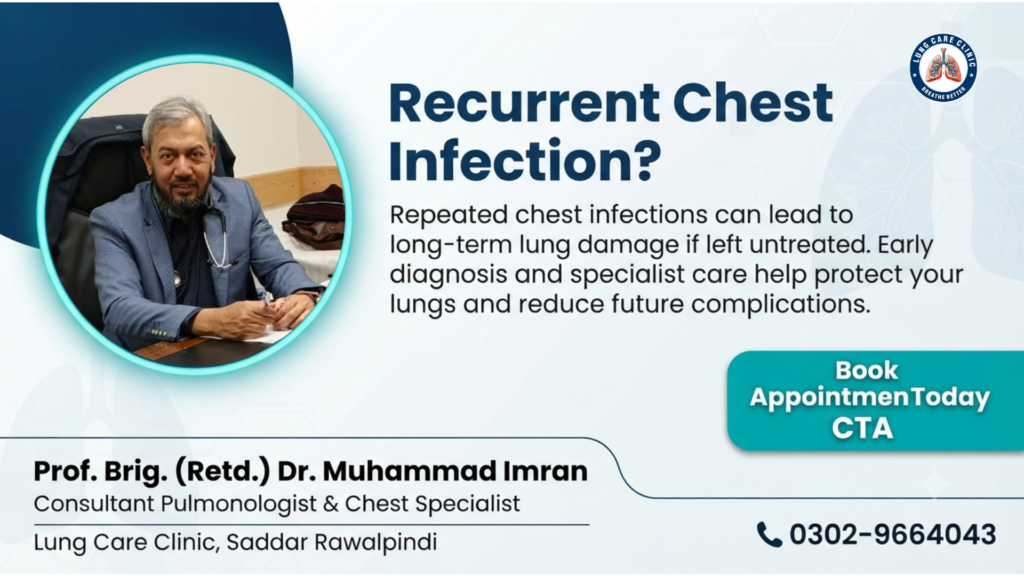
A Recurrent Chest Infection is more than just an occasional illness. If you experience repeated episodes of cough, fever, mucus production, chest discomfort, or breathing difficulty several times a year, it may indicate an underlying lung condition that requires medical attention. While most chest infections improve with appropriate treatment, infections that repeatedly return can gradually damage lung tissue and affect long-term respiratory health.
Understanding Recurrent Chest Infection is important because early diagnosis can help identify the underlying cause, reduce future infections, and protect lung function.
What Is a Recurrent Chest Infection?
A Recurrent Chest Infection refers to repeated respiratory infections that occur over time, often affecting the airways or lungs. Some people recover completely between episodes, while others continue to have ongoing cough and mucus production.
Repeated infections may involve:
- Bronchitis
- Pneumonia
- Bronchiectasis-related infections
- Tuberculosis (TB)
- Other chronic respiratory infections
If chest infections occur frequently or take a long time to recover, further medical evaluation is recommended.
Can Recurrent Chest Infections Damage the Lungs?
Yes. Every episode of infection causes inflammation within the respiratory system. If infections continue to occur repeatedly, persistent inflammation may gradually damage the airways and surrounding lung tissue.
Over time, repeated infections may lead to:
- Scarring of lung tissue
- Permanent airway damage
- Reduced lung function
- Chronic mucus production
- Increased susceptibility to future infections
Early diagnosis and treatment are essential to prevent long-term complications.
Common Symptoms of Recurrent Chest Infection
The symptoms vary depending on the cause and severity of the infection.
Common symptoms include:
- Persistent cough
- Repeated episodes of cough
- Thick yellow or green mucus
- Fever
- Chest discomfort
- Wheezing
- Shortness of breath
- Fatigue
- Difficulty performing daily activities
Some individuals may also experience coughing up blood or unintended weight loss, particularly if a more serious underlying condition is present.
Common Causes of Recurrent Chest Infection
Several respiratory conditions increase the risk of repeated chest infections.
Bronchiectasis
Bronchiectasis is one of the most common causes of Recurrent Chest Infection. In this condition, damaged airways become widened, allowing mucus to collect and bacteria to grow more easily.
Typical symptoms include:
- Daily cough
- Large amounts of mucus
- Frequent chest infections
- Breathlessness
- Fatigue
Early treatment helps reduce future infections and preserve lung function.
Chronic Obstructive Pulmonary Disease (COPD)
People with COPD are more vulnerable to bacterial and viral infections because damaged airways cannot clear mucus effectively.
Symptoms often include:
- Chronic cough
- Wheezing
- Breathlessness
- Repeated chest infections
Proper COPD management helps lower the frequency of infections.
Asthma
Poorly controlled asthma may increase the risk of respiratory infections due to ongoing airway inflammation.
Patients may notice:
- Persistent cough
- Wheezing
- Chest tightness
- Episodes of worsening symptoms after infections
Good asthma control reduces complications.
Pneumonia
Repeated episodes of pneumonia may indicate an underlying lung disease or weakened immune system.
Common symptoms include:
- Fever
- Productive cough
- Chest pain
- Shortness of breath
- Fatigue
Prompt treatment is important to prevent permanent lung damage.
Tuberculosis (TB)
Tuberculosis is another possible cause of persistent or recurrent respiratory symptoms.
Patients may experience:
- Persistent cough
- Fever
- Night sweats
- Weight loss
- Coughing up blood
Early diagnosis is essential for successful treatment.
Who Is at Higher Risk?
Certain individuals are more likely to develop Recurrent Chest Infection.
Higher-risk groups include:
- Smokers
- Older adults
- People with COPD
- Individuals with asthma
- Patients with bronchiectasis
- People with diabetes
- Individuals with weakened immune systems
- Patients with previous lung infections
- People exposed to dust, smoke, or industrial pollutants
These individuals should seek specialist care if chest infections continue to return despite treatment.
When Should You See a Pulmonologist?
Occasional chest infections may occur, especially during seasonal illnesses. However, repeated infections should never be considered normal.
Consult a pulmonologist if you experience:
- Two or more chest infections within a year
- A cough lasting longer than eight weeks
- Thick yellow, green, or foul-smelling sputum
- Persistent fever
- Shortness of breath
- Wheezing
- Chest pain
- Coughing up blood
- Unexplained weight loss
- Slow recovery after each infection
Early evaluation helps identify the underlying cause and reduces the risk of permanent lung damage.
How Is Recurrent Chest Infection Diagnosed?
Your pulmonologist will perform a detailed assessment to determine why infections continue to occur.
Investigations may include:
- Detailed medical history and physical examination
- Chest X-ray
- High-Resolution CT (HRCT) Chest
- Spirometry (Pulmonary Function Test)
- Sputum examination and culture
- Tuberculosis (TB) testing when indicated
- Blood investigations
- Bronchoscopy in selected patients
- Oxygen saturation assessment
These tests help diagnose conditions such as bronchiectasis, COPD, asthma, chronic infections, Interstitial Lung Disease (ILD), or structural abnormalities of the lungs.
Treatment for Recurrent Chest Infection
Treatment depends on the underlying cause and the severity of the condition.
Your pulmonologist may recommend:
- Antibiotics for bacterial infections
- Inhaled medications for asthma or COPD
- Airway clearance techniques to remove mucus
- Pulmonary rehabilitation
- Vaccination against influenza and pneumococcal disease when appropriate
- Smoking cessation support
- Bronchoscopy in selected cases
- Regular follow-up to monitor lung health
The goal is not only to treat the current infection but also to prevent future episodes and preserve lung function.
How Can You Prevent Recurrent Chest Infections?
Although not every infection can be prevented, several measures help lower the risk.
You can protect your lungs by:
- Stopping smoking
- Washing your hands regularly
- Staying physically active
- Drinking enough fluids
- Following prescribed treatment for asthma or COPD
- Receiving recommended vaccinations
- Avoiding exposure to dust, smoke, and air pollution
- Seeking medical care promptly when symptoms develop
People with chronic lung diseases should attend regular follow-up appointments even when they feel well.
A Recurrent Chest Infection should never be ignored. Repeated respiratory infections may gradually damage the lungs and could indicate an underlying condition such as bronchiectasis, COPD, asthma, tuberculosis (TB), or another chronic lung disease.
Recognizing the warning signs early and seeking specialist care can help reduce future infections, improve breathing, and protect long-term lung health.
If you continue to experience repeated chest infections, persistent cough, excessive mucus production, or breathlessness, consult a pulmonologist for a comprehensive respiratory evaluation and personalized treatment plan.
Prof. Brig. (Retd.) Dr. Muhammad Imran
Consultant Pulmonologist & Chest Specialist
Lung Care Clinic, Saddar Rawalpindi
0302-9664043