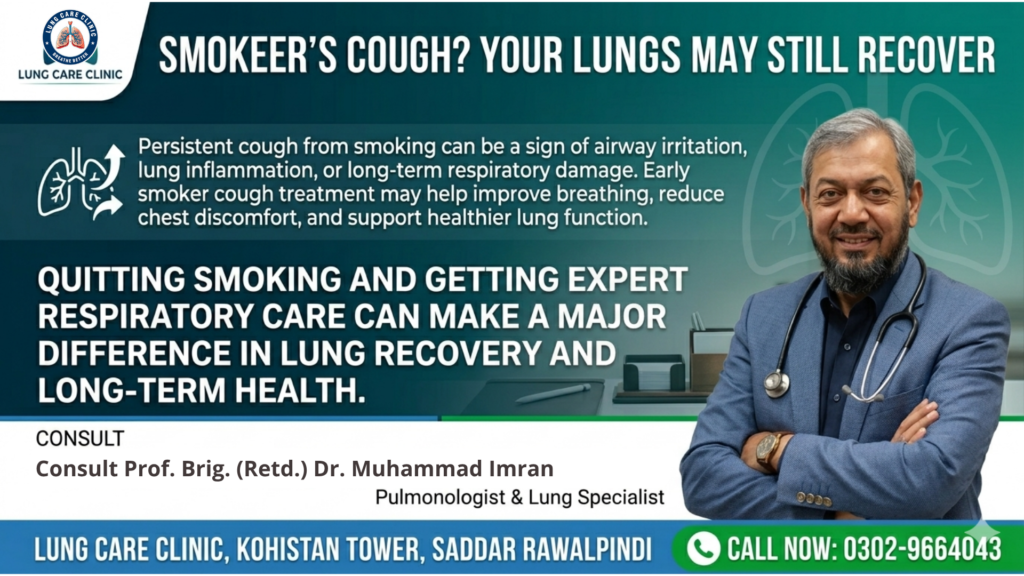
Smoker cough treatment is important for people who experience chronic cough, chest irritation, or breathing discomfort from smoking.
Many smokers develop persistent cough over time because smoke damages the airways and lungs.
At first, symptoms may appear mild.
However, long-term smoking can lead to serious respiratory problems.
Therefore, early treatment and smoking cessation are very important.
Also, the lungs may begin to recover after smoking stops.
So, proper respiratory care may help improve breathing and overall lung health.
What Is Smoker Cough?
Smoker cough is a chronic cough caused by irritation from cigarette smoke.
Smoking damages the natural cleaning system inside the airways.
As a result, mucus and harmful particles collect in the lungs.
Therefore, the body tries to clear the airways through coughing.
Some smokers notice cough mainly in the morning.
Others may experience cough throughout the day.
Moreover, smoker cough may become worse after years of smoking.
Common Symptoms of Smoker Cough
Persistent Cough
Chronic cough is the most common symptom.
Some people cough daily for months or years.
Mucus Production
Smoking may increase mucus inside the lungs.
As a result, thick phlegm may appear during coughing.
Chest Tightness
Some smokers develop chest discomfort or heaviness.
Furthermore, breathing may feel difficult during activity.
Wheezing
Damaged airways may cause wheezing sounds during breathing.
Therefore, smoker cough symptoms should not be ignored.
Shortness of Breath
Smoking reduces lung function over time.
In addition, climbing stairs or walking may become difficult.
Can Lungs Recover After Smoking?
The lungs can begin healing after smoking stops.
However, recovery depends on the duration and severity of smoking damage.
Within weeks, airway irritation may start improving.
Moreover, breathing comfort may slowly become better.
Some patients notice reduced coughing after quitting smoking.
Furthermore, oxygen levels and circulation may improve over time.
However, severe lung damage may not fully reverse in some cases.
Therefore, early smoking cessation is very important.
Smoker Cough Treatment Options
Stop Smoking
Quitting smoking is the most important step in treatment.
Without stopping smoking, airway irritation usually continues.
Drink More Fluids
Warm fluids may help loosen mucus and reduce throat irritation.
Moreover, proper hydration supports airway comfort.
Avoid Smoke Exposure
Secondhand smoke may worsen cough symptoms.
Therefore, clean indoor air is important for recovery.
Use Medicines Properly
Some patients may need inhalers or other respiratory medicines.
However, treatment depends on the underlying lung condition.
Pulmonary Evaluation
Persistent smoker cough may require lung function testing or chest imaging.
Therefore, medical evaluation helps identify serious respiratory disease early.
When Smoker Cough Becomes Serious
Some warning signs need urgent medical care.
Visit a pulmonologist if you have:
- Blood in cough
- Severe breathing difficulty
- Chest pain
- Weight loss
- Wheezing
- Long-lasting mucus production
- Frequent chest infections
Moreover, low oxygen symptoms require immediate medical attention.
When to Visit a Pulmonologist
Persistent cough from smoking should not be ignored.
Early respiratory evaluation may help prevent complications.
Visit a pulmonologist if:
- Cough lasts several weeks
- Breathing becomes difficult
- Symptoms worsen over time
- Daily activities become harder
- Chest infections become frequent
Therefore, proper diagnosis is important for long-term lung health.
Expert Lung Care in Rawalpindi
People with chronic cough, smoking-related breathing problems, or chest discomfort should seek professional respiratory care.
Proper diagnosis helps identify airway disease and lung damage early.
Consult Prof. Brig. (Retd.) Dr. Muhammad Imran
Pulmonologist & Lung Specialist
Lung Care Clinic, Kohistan Tower, Saddar Rawalpindi
0302-9664043