
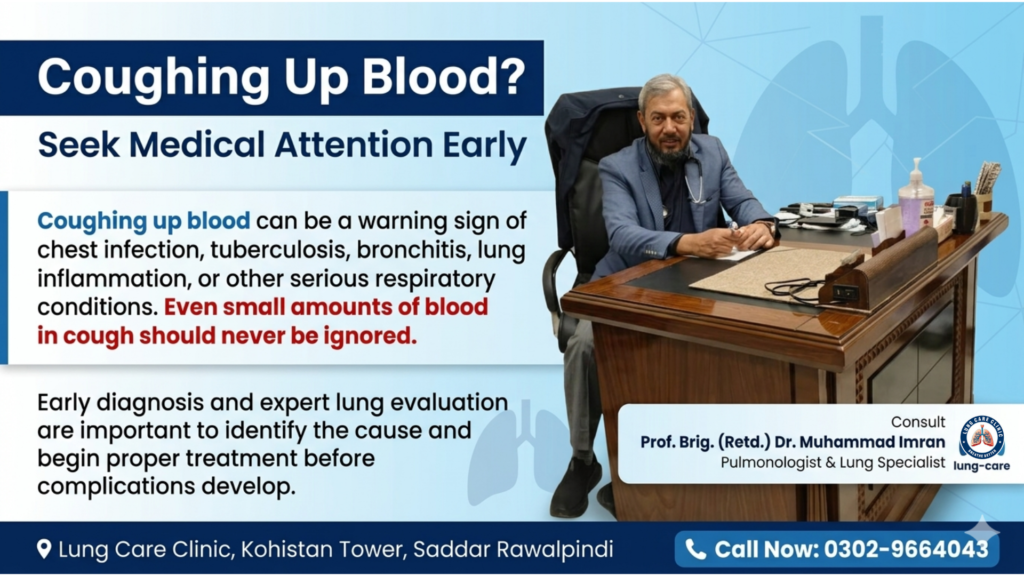
Coughing blood is a serious symptom that should never be ignored.
Some people notice small streaks of blood in mucus.
Others may cough larger amounts during illness.
Coughing blood may be linked to chest infection, bronchitis, tuberculosis, pneumonia, or other lung conditions.
Therefore, early medical evaluation is very important.
Also, timely diagnosis may help prevent serious complications.
So, patients should seek expert respiratory care if symptoms continue.
Common Causes of Coughing Blood
Chest Infection
Chest infections may irritate the airways and lungs.
As a result, severe coughing may damage small blood vessels.
Some patients may notice blood-streaked mucus during infection.
Moreover, fever and chest discomfort may also occur.
Bronchitis
Bronchitis causes swelling in the breathing tubes.
Persistent coughing may lead to airway irritation and mild bleeding.
Therefore, hemoptysis may appear in some bronchitis patients.
Tuberculosis (TB)
Tuberculosis is an important cause of coughing blood.
Patients may also develop weight loss, fever, and night sweats.
Furthermore, long-lasting cough is common in TB infection.
Pneumonia
Pneumonia may cause cough with mucus and breathing difficulty.
In severe cases, blood may appear in sputum.
Therefore, urgent medical care may be necessary.
Lung Cancer
Persistent coughing blood symptoms may sometimes be linked to lung cancer.
This risk becomes higher in smokers and older adults.
However, early diagnosis improves treatment outcomes significantly.
Pulmonary Embolism
A blood clot in the lungs may cause sudden chest pain and coughing blood.
Moreover, severe breathing difficulty may also occur.
This condition requires emergency medical attention.
Symptoms That Should Not Be Ignored
Some symptoms may suggest a serious respiratory condition.
Seek urgent medical care if you have:
- Heavy bleeding during cough
- Severe chest pain
- Difficulty breathing
- Fever
- Weight loss
- Night sweats
- Long-lasting cough
Furthermore, low oxygen symptoms need immediate medical evaluation.
How Doctors Diagnose Coughing Blood
Doctors first ask about symptoms and medical history.
They may also ask about smoking, infection, or TB exposure.
Moreover, chest examination helps identify breathing problems.
Some patients may need chest X-rays or CT scans.
In addition, sputum testing may help identify infection.
Therefore, proper diagnosis is important before starting treatment.
Treatment for Coughing Blood
Treat the Underlying Cause
Treatment depends on the reason for bleeding.
Some patients may need antibiotics or asthma treatment.
However, severe cases may require hospital care.
Avoid Smoking
Smoking worsens airway irritation and lung damage.
Therefore, avoiding smoke exposure is very important.
Stay Hydrated
Warm fluids may help reduce throat irritation and mucus thickness.
Seek Early Medical Care
Persistent coughing blood symptoms should never be ignored.
So, consult a pulmonologist as soon as possible.
When to Visit a Pulmonologist
Some symptoms require expert respiratory care immediately.
Visit a pulmonologist if:
- Blood appears repeatedly during cough
- Breathing becomes difficult
- Chest pain worsens
- Fever continues
- Symptoms last more than several days
Therefore, early diagnosis may help identify serious lung disease quickly.
Expert Lung Care in Rawalpindi
People with cough, breathing problems, or blood in sputum should seek professional respiratory evaluation.
Proper diagnosis helps identify infections and lung diseases early.
Consult Prof. Brig. (Retd.) Dr. Muhammad Imran
Pulmonologist & Lung Specialist
Lung Care Clinic, Kohistan Tower, Saddar Rawalpindi
0302-9664043
Coughing blood may be caused by infection, airway inflammation, tuberculosis, pneumonia, or other serious lung conditions.
However, early diagnosis and proper treatment may help prevent complications. Also, persistent coughing blood symptoms should never be ignored.
Therefore, patients should seek expert respiratory care immediately if symptoms continue.