
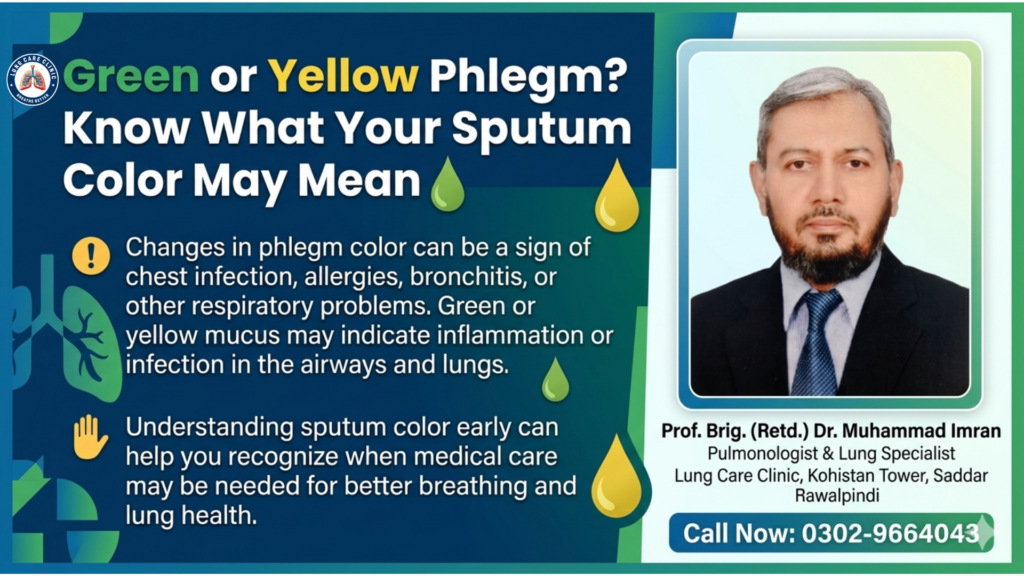
Green phlegm meaning is a common concern for people with cough and chest congestion.
Many people notice changes in mucus color during illness.
However, not every color change means a serious infection.
Phlegm helps clear dust, germs, and irritation from the airways.
Sometimes, mucus becomes yellow or green because of inflammation in the respiratory tract.
Therefore, understanding sputum color may help identify possible lung problems early.
Also, persistent cough with mucus should not be ignored.
So, early medical evaluation may help prevent complications.
What Does Green Phlegm Mean?
Green phlegm usually appears when the body responds to infection or airway inflammation.
White blood cells release enzymes that may change mucus color.
As a result, sputum may look green or thick during respiratory illness.
However, green mucus does not always mean a severe bacterial infection.
Moreover, viral infections may also cause green sputum.
Therefore, other symptoms are important when evaluating cough and mucus problems.
Causes of Yellow and Green Sputum
Chest Infection
Chest infections often cause cough with mucus.
Some patients develop thick yellow or green sputum.
Furthermore, fever and chest discomfort may also occur.
Bronchitis
Bronchitis causes airway inflammation and excess mucus production.
As a result, coughing and phlegm become more noticeable.
Moreover, smokers may develop chronic bronchitis symptoms.
Sinus Infection
Mucus from the nose and throat may become discolored during sinus infection.
Therefore, postnasal drip may also trigger cough and throat irritation.
Allergies and Air Pollution
Dust, smoke, and pollution may irritate the airways.
In addition, allergies may increase mucus production and throat discomfort.
Pneumonia
Pneumonia may cause severe cough with colored sputum.
However, patients may also develop fever, weakness, and breathing difficulty.
Therefore, urgent medical care may be necessary in serious cases.
When Phlegm Color Becomes Serious
Some symptoms should not be ignored.
Visit a doctor if you experience:
- Blood in mucus
- Severe breathing difficulty
- High fever
- Chest pain
- Persistent green sputum
- Wheezing
- Long-lasting cough
Furthermore, low oxygen levels require urgent medical attention.
Home Care for Mucus and Chest Congestion
Drink More Fluids
Warm fluids may help loosen mucus.
Moreover, hydration supports airway comfort.
Avoid Smoking
Smoking irritates the lungs and worsens mucus production.
Therefore, avoiding smoke exposure is important for recovery.
Use Steam Carefully
Warm steam may reduce throat and nasal irritation.
However, steam should be used safely to avoid burns.
Rest Properly
Good sleep supports the immune system.
In addition, rest may improve recovery from respiratory illness.
Seek Early Medical Care
Persistent cough with green sputum should not be ignored.
So, visit a pulmonologist if symptoms continue.
When to Visit a Pulmonologist
Some respiratory symptoms need expert evaluation.
Visit a pulmonologist if:
- Green mucus lasts more than several days
- Breathing becomes difficult
- Cough worsens over time
- Fever continues
- Chest pain develops
Therefore, early diagnosis may help prevent complications and improve lung health.
Expert Lung Care in Rawalpindi
People with cough, mucus, and breathing problems should seek professional respiratory care.
Proper evaluation helps identify infections and lung conditions early.
Consult Prof. Brig. (Retd.) Dr. Muhammad Imran
Pulmonologist & Lung Specialist
Lung Care Clinic, Kohistan Tower, Saddar Rawalpindi
0302-9664043
Green phlegm meaning may vary depending on the cause of respiratory symptoms.
However, persistent green or yellow mucus should not be ignored. Also, early medical care helps identify infection, inflammation, or lung disease quickly.
Therefore, patients with ongoing cough and mucus symptoms should seek expert respiratory evaluation.