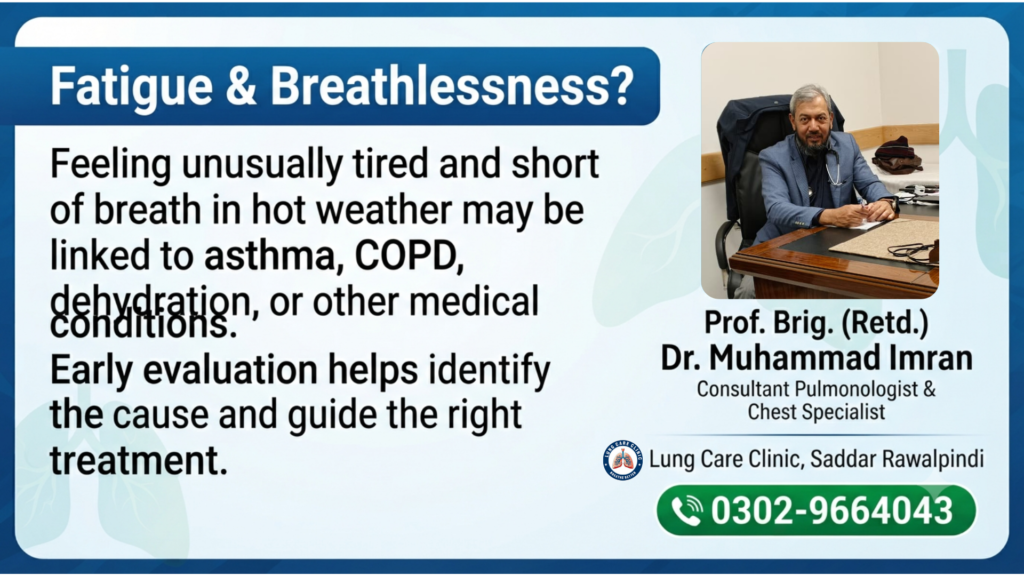
Fatigue and Breathlessness are common symptoms that many people experience during hot weather. Feeling unusually tired while also struggling to catch your breath is not always a normal response to heat. Although high temperatures and humidity can place extra stress on the body, these symptoms may also indicate an underlying respiratory or medical condition. Asthma, Chronic Obstructive Pulmonary Disease (COPD), dehydration, anemia, heat exhaustion, and heart or lung diseases are among the possible causes.
Understanding why Fatigue and Breathlessness occur can help you recognize when simple self-care is enough and when professional medical evaluation is necessary.
What Are Fatigue and Breathlessness?
Fatigue and Breathlessness refer to feeling physically exhausted while also experiencing difficulty breathing or becoming short of breath during normal daily activities. Some people notice these symptoms only during outdoor activities, while others experience them even at rest.
Occasional tiredness after strenuous activity is normal, but persistent fatigue combined with breathing difficulty should not be ignored.
Common Causes of Fatigue and Breathlessness
Several medical and environmental factors can contribute to these symptoms.
Heat Exhaustion
Hot weather increases the body’s workload as it tries to regulate body temperature. Excessive sweating causes fluid and electrolyte loss, which can lead to heat exhaustion.
Common symptoms include:
- Extreme tiredness
- Dizziness
- Heavy sweating
- Shortness of breath
- Weakness
- Headache
Without proper hydration and cooling, heat exhaustion may progress to heat stroke, which requires emergency medical attention.
Dehydration
During summer, the body loses significant amounts of water through sweating. Dehydration reduces blood volume, making the heart and lungs work harder to deliver oxygen throughout the body.
People who are dehydrated may experience:
- Fatigue
- Dry mouth
- Dizziness
- Muscle cramps
- Breathlessness during physical activity
Drinking enough water throughout the day is essential, especially in hot weather.
Asthma
People with asthma often notice worsening symptoms during hot and humid weather. Warm air, pollution, dust, and seasonal allergens can irritate sensitive airways, making breathing more difficult.
Asthma symptoms may include:
- Wheezing
- Chest tightness
- Persistent cough
- Shortness of breath
- Reduced exercise tolerance
Proper asthma management helps reduce flare-ups during the summer months.
Chronic Obstructive Pulmonary Disease (COPD)
COPD is another common cause of fatigue and breathing difficulty. Damaged airways reduce airflow, making everyday activities more physically demanding.
People living with COPD often report:
- Constant tiredness
- Persistent cough
- Breathlessness
- Increased mucus production
- Difficulty walking long distances
Regular treatment and pulmonary follow-up are important for maintaining lung function.
Anemia
Low hemoglobin levels reduce the amount of oxygen carried by the blood. As a result, muscles and organs receive less oxygen, causing both fatigue and shortness of breath.
Additional symptoms may include:
- Pale skin
- Rapid heartbeat
- Dizziness
- Reduced physical endurance
A medical evaluation can determine whether anemia is contributing to these symptoms.
Symptoms That May Accompany Fatigue and Breathlessness
Depending on the underlying cause, these symptoms may occur alongside:
- Chest tightness
- Wheezing
- Persistent cough
- Dizziness
- Headache
- Excessive sweating
- Fast heartbeat
- Difficulty performing routine activities
The severity and duration of symptoms often provide important clues about the underlying condition.
Who Is More Likely to Experience Fatigue and Breathlessness?
Some individuals are more likely to develop these symptoms during hot weather, including:
- People with asthma
- Individuals with COPD
- Older adults
- Children with chronic respiratory conditions
- People with anemia
- Smokers
- Individuals with heart disease
- Outdoor workers exposed to prolonged heat
- People who do not drink enough water
If you belong to any of these groups, it is important to monitor your symptoms carefully during the summer months.
How Can You Reduce Fatigue and Breathlessness?
Several practical measures can help reduce symptoms and support healthy lung function.
Stay Well Hydrated
Drink water regularly throughout the day, even if you do not feel thirsty. Proper hydration helps maintain normal circulation and supports efficient oxygen delivery.
Avoid Extreme Heat
Limit outdoor activities during the hottest hours of the day. When possible, remain in cool, well-ventilated environments and wear lightweight clothing.
Manage Existing Respiratory Conditions
If you have asthma or COPD, continue using your prescribed medications exactly as directed. Regular follow-up with your pulmonologist can help keep symptoms under control.
Improve Indoor Air Quality
Avoid cigarette smoke, dust, chemical fumes, and other airborne irritants that can worsen breathing problems.
Maintain a Healthy Lifestyle
Balanced nutrition, regular physical activity appropriate for your condition, adequate sleep, and stress management all contribute to better respiratory health and improved energy levels.
When Should You See a Pulmonologist?
Although temporary tiredness after physical activity or heat exposure can be normal, persistent symptoms should never be ignored.
Seek medical evaluation if you experience:
- Fatigue lasting several days without improvement
- Persistent shortness of breath
- Chest tightness or wheezing
- Difficulty walking short distances
- Breathlessness at rest
- Persistent cough
- Fever with breathing difficulty
- Symptoms that interfere with daily activities
Early diagnosis helps identify the underlying cause and allows treatment to begin before complications develop.
How Is the Cause Diagnosed?
A pulmonologist may recommend one or more investigations depending on your symptoms, including:
- Detailed medical history and physical examination
- Chest X-ray
- Spirometry (lung function test)
- Blood tests, including hemoglobin levels when appropriate
- Oxygen saturation assessment
- Additional investigations if another medical condition is suspected
These tests help determine the exact reason for fatigue and breathing difficulty and guide the most appropriate treatment plan.
Fatigue and Breathlessness should not be dismissed as simply a reaction to hot weather. While heat and dehydration can contribute to these symptoms, they may also indicate asthma, COPD, anemia, or other respiratory and medical conditions that require professional evaluation. Recognizing the warning signs early and seeking timely medical care can improve breathing, restore energy levels, and protect long-term lung health.
If you experience persistent Fatigue and Breathlessness, recurrent shortness of breath, or ongoing respiratory symptoms, consult Prof. Brig. (Retd.) Dr. Muhammad Imran for a comprehensive respiratory assessment and personalized treatment plan.
Prof. Brig. (Retd.) Dr. Muhammad Imran
Consultant Pulmonologist & Chest Specialist
Lung Care Clinic, Saddar Rawalpindi
0302-9664043