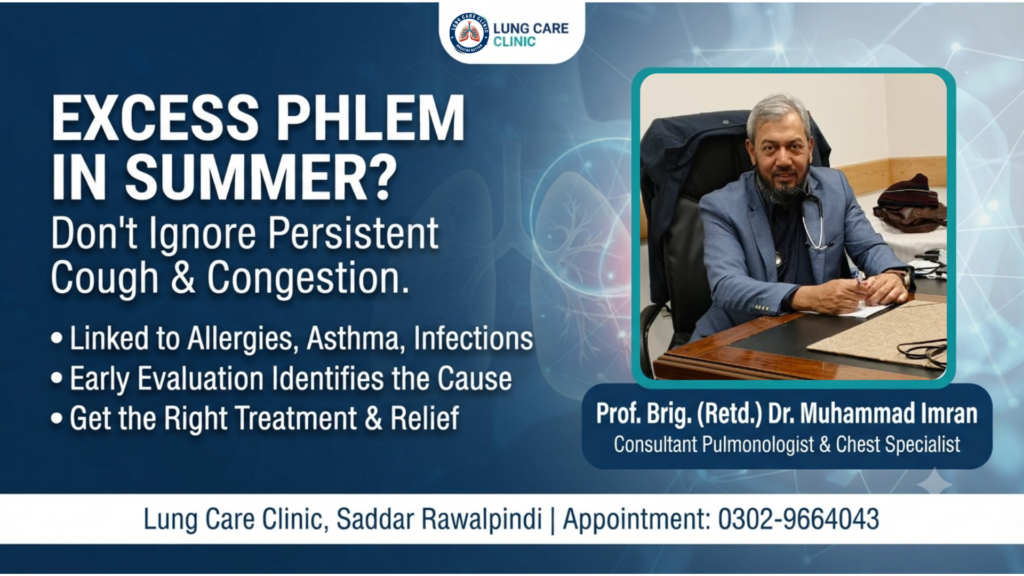
Excess Phlegm in Summer is a common complaint, especially during periods of high temperatures and humidity. While many people associate increased mucus production with winter illnesses, it can also occur during the summer months. Allergies, asthma, respiratory infections, dehydration, air pollution, and chronic lung diseases are among the most common reasons for excessive phlegm production. If the problem persists or is accompanied by breathing difficulties, it should not be ignored.
Understanding why Excess Phlegm in Summer occurs can help you recognize warning signs early and seek appropriate medical care before complications develop.
What Is Excess Phlegm in Summer?
Phlegm is a thick type of mucus produced by the lungs and airways. Its role is to trap dust, allergens, bacteria, and other harmful particles before they reach deeper parts of the respiratory system.
When the airways become irritated or inflamed, mucus production increases. This may lead to frequent throat clearing, coughing up mucus, or a feeling that mucus is constantly stuck in the chest or throat.
Common Causes of Excess Phlegm in Summer
Several medical and environmental factors can increase mucus production during hot weather.
Allergies
Summer brings higher levels of pollen, grass, mold spores, and other airborne allergens. These allergens can irritate the respiratory tract and stimulate excess mucus production.
People with allergies may also experience:
- Sneezing
- Runny nose
- Itchy eyes
- Throat irritation
- Persistent cough
Managing allergies effectively can significantly reduce mucus production.
Asthma
Asthma is another common cause of increased mucus production. Heat, humidity, dust, smoke, and seasonal allergens may trigger airway inflammation, leading to cough and excess phlegm.
Other symptoms include:
- Wheezing
- Chest tightness
- Shortness of breath
- Persistent cough
Proper asthma treatment helps reduce inflammation and control mucus production.
Respiratory Infections
Both viral and bacterial chest infections may cause thick mucus to accumulate in the airways.
Symptoms often include:
- Fever
- Persistent cough
- Yellow or green sputum
- Chest discomfort
- Fatigue
If symptoms continue for several days or become severe, medical evaluation is recommended.
Chronic Obstructive Pulmonary Disease (COPD)
People with COPD often produce larger amounts of mucus because chronic airway inflammation stimulates mucus-producing glands.
Patients with COPD may also notice:
- Chronic cough
- Breathlessness
- Wheezing
- Reduced exercise tolerance
Regular treatment and follow-up are important for controlling symptoms.
Dehydration
Hot weather increases fluid loss through sweating. When the body becomes dehydrated, mucus may become thicker and more difficult to clear from the lungs and airways.
Drinking enough water throughout the day helps keep mucus thinner and easier to remove.
Air Pollution and Dust
Summer often brings increased dust, smoke, and environmental pollution. These irritants can inflame the airways and trigger additional mucus production, especially in individuals with sensitive lungs.
Symptoms That May Accompany Excess Phlegm in Summer
People experiencing increased mucus production may also notice:
- Persistent cough
- Frequent throat clearing
- Thick mucus in the throat
- Chest congestion
- Wheezing
- Shortness of breath
- Difficulty breathing during physical activity
- Sore throat
The color and consistency of the mucus may vary depending on the underlying cause. Clear mucus is often associated with allergies, while yellow or green mucus may indicate an infection.
Who Is More Likely to Experience Excess Phlegm in Summer?
Some individuals have a higher risk of developing increased mucus production during hot weather.
Higher-risk groups include:
- People with asthma
- Individuals with COPD
- Allergy sufferers
- Smokers
- Older adults
- Children with respiratory conditions
- People exposed to dust, smoke, or air pollution
- Individuals with chronic lung diseases
These groups should pay close attention to persistent cough and excessive mucus, especially if symptoms interfere with daily activities.
How Can You Reduce Excess Phlegm in Summer?
Simple lifestyle measures can help reduce mucus production and support healthier lungs.
Stay Well Hydrated
Drink plenty of water throughout the day. Good hydration helps keep mucus thinner, making it easier to clear from the airways.
Limit Exposure to Allergens
Keep windows closed during periods of high pollen levels when possible, and avoid outdoor activities if air quality is poor.
Avoid Smoke and Dust
Cigarette smoke, dust, chemical fumes, and polluted air can irritate the airways and increase mucus production. Reducing exposure can improve respiratory comfort.
Manage Underlying Respiratory Conditions
People with asthma or COPD should continue taking their prescribed medications and attend regular follow-up appointments. Good disease control helps reduce airway inflammation and excessive mucus production.
Maintain Good Indoor Air Quality
Use clean indoor ventilation, reduce dust accumulation, and avoid exposure to strong fragrances or household chemicals that may trigger airway irritation.
When Should You See a Pulmonologist?
Although mild mucus production can occur occasionally, persistent or excessive phlegm should not be ignored.
Consult a pulmonologist if you experience:
- Excessive phlegm lasting more than three weeks
- Persistent cough
- Thick yellow, green, or blood-stained mucus
- Shortness of breath
- Wheezing
- Chest tightness
- Fever with cough
- Recurrent chest infections
- Difficulty performing normal daily activities
Early diagnosis allows the underlying cause to be identified and treated before complications develop.
How Is the Cause Diagnosed?
A pulmonologist may recommend several investigations depending on your symptoms, including:
- Detailed clinical examination
- Chest X-ray
- Spirometry (lung function testing)
- Sputum examination when appropriate
- Allergy assessment
- Additional laboratory or imaging tests if required
These investigations help determine the exact cause of excess mucus and guide the most effective treatment plan.
Final Thoughts
Excess Phlegm in Summer is not always a harmless seasonal symptom. Allergies, asthma, COPD, respiratory infections, dehydration, and environmental irritants can all contribute to increased mucus production. Persistent cough, chest congestion, or excessive phlegm should be evaluated to identify the underlying cause and prevent long-term respiratory complications.
If you are experiencing Excess Phlegm in Summer, persistent cough, or ongoing breathing difficulties, consult Prof. Brig. (Retd.) Dr. Muhammad Imran for a comprehensive respiratory evaluation and personalized treatment.
Prof. Brig. (Retd.) Dr. Muhammad Imran
Consultant Pulmonologist & Chest Specialist
Lung Care Clinic, Saddar Rawalpindi
0302-9664043