What Is ARDS?
Acute Respiratory Distress Syndrome (ARDS) is a serious condition in which the lungs become severely inflamed and have difficulty providing enough oxygen to the body. ARDS can develop after severe infections, pneumonia, sepsis, major injury, or other serious illnesses.
Many patients require intensive care, oxygen therapy, or mechanical ventilation during the acute phase. However, leaving the ICU does not always mean that recovery is complete.
ARDS recovery can continue for weeks, months, or longer. Some people regain much of their previous lung function, while others may experience ongoing breathlessness, weakness, fatigue, or reduced exercise capacity.
Understanding what to expect after severe illness can help patients and families plan appropriate follow-up care.
What Happens to the Lungs After ARDS?
During ARDS, inflammation and fluid accumulation can interfere with the normal exchange of oxygen in the lungs. Severe illness and prolonged mechanical ventilation may also contribute to physical weakness and reduced exercise capacity.
After the acute illness improves, the lungs may gradually recover. However, recovery is not always immediate.
Some patients may experience:
- Shortness of breath
- Reduced exercise tolerance
- Persistent cough
- Fatigue
- Weakness
- Difficulty returning to normal physical activity
- Reduced lung function
The degree of recovery varies between individuals. The severity and duration of ARDS, the underlying illness, age, general health, and other medical factors can all influence recovery.
How Long Does ARDS Recovery Take?
There is no single ARDS recovery time that applies to everyone.
Some people improve significantly within weeks, while others continue experiencing symptoms for several months. Recovery may involve more than the lungs. Muscle weakness, fatigue, sleep problems, anxiety, and reduced physical conditioning can also affect how quickly someone returns to normal activities.
Because recovery differs from person to person, follow-up should focus on the patient’s symptoms, functional ability, oxygen levels, and overall progress rather than a fixed timeline.
If breathlessness or exercise intolerance continues after discharge, a pulmonologist can determine whether additional evaluation is appropriate.
Can the Lungs Recover After ARDS?
The lungs can recover substantially after ARDS, but the extent of recovery varies.
Some patients regain near-normal respiratory function. Others may have persistent abnormalities in lung function or experience ongoing breathing difficulties.
Persistent symptoms do not necessarily mean that severe permanent lung damage is present. Reduced physical fitness, muscle weakness, and other effects of critical illness can also contribute to breathlessness.
A proper assessment can help determine what is contributing to ongoing symptoms.
Long-Term Effects of ARDS
Some people experience longer-term effects after severe ARDS.
These may include:
- Persistent breathlessness
- Reduced exercise capacity
- Muscle weakness
- Chronic fatigue
- Changes in lung function
- Difficulty returning to previous activity levels
- Emotional or psychological challenges after intensive care
The impact can be different for every patient.
For this reason, recovery should be viewed as a gradual process rather than something that ends immediately after hospital discharge.
Why Am I Still Short of Breath After ICU Care?
Shortness of breath after ICU treatment can have several possible causes.
The lungs may still be recovering from inflammation and injury. At the same time, prolonged bed rest can cause significant muscle weakness. Respiratory muscles may also become weaker after prolonged critical illness or mechanical ventilation.
Other conditions may contribute as well, including anemia, heart problems, persistent infection, underlying lung disease, or medication-related effects.
If breathlessness persists or worsens after discharge, it is important to discuss it with a healthcare professional rather than assuming it is simply part of recovery.
What Is Post ICU Lung Care?
Post ICU lung care focuses on monitoring respiratory recovery and identifying problems that may continue after severe illness.
Depending on the patient’s condition, follow-up may include:
- Review of the ICU and hospital history
- Respiratory examination
- Oxygen saturation assessment
- Pulmonary function testing
- Chest imaging when clinically appropriate
- Assessment of exercise tolerance
- Evaluation of persistent cough or breathlessness
- Review of medications
- Rehabilitation planning
Not every patient needs every test. The appropriate evaluation depends on symptoms and clinical history.
How Can Pulmonary Rehabilitation Help?
Pulmonary rehabilitation may be useful for selected patients who continue to experience reduced exercise capacity or breathing difficulties after severe illness.
A rehabilitation program can involve supervised physical activity, breathing strategies, education, and gradual improvement in physical conditioning.
The goal is not to force rapid recovery. Instead, activity is usually increased gradually according to the patient’s ability and medical condition.
Patients recovering from severe illness should discuss an appropriate exercise plan with their healthcare team, especially if they continue to require oxygen or have significant cardiovascular or respiratory symptoms.
Breathing Exercises After ARDS
Breathing exercises may be included in rehabilitation for some patients.
These exercises can help patients become more comfortable with breathing patterns and support respiratory rehabilitation. However, breathing exercises should not replace medical evaluation when significant symptoms are present.
A healthcare professional or respiratory therapist can recommend techniques based on the patient’s individual needs.
What Tests May Be Needed During ARDS Recovery?
The need for testing depends on symptoms and clinical findings.
Pulmonary function tests can help assess how well the lungs are working. Spirometry may measure airflow, while other pulmonary tests can provide additional information about lung capacity and gas exchange.
Chest X-rays or CT imaging may be considered when clinically appropriate.
Oxygen saturation may also be monitored, particularly in patients who continue to experience breathlessness or previously required oxygen therapy.
If symptoms are unexplained or persistent, additional cardiac or respiratory investigations may be needed.
How Can You Support Long-Term Lung Health?
A gradual and medically appropriate return to activity can support overall recovery.
Patients should follow their prescribed treatment plan and attend recommended follow-up appointments. Avoiding smoking and secondhand smoke is also important for lung health.
Good nutrition, adequate rest, appropriate physical activity, and management of other medical conditions can support overall recovery.
It is also important to recognize new or worsening respiratory symptoms rather than ignoring them.
When Should You See a Pulmonologist?
A follow-up consultation may be appropriate if you continue to experience:
- Breathlessness after routine activities
- Persistent cough
- Reduced exercise tolerance
- Low oxygen levels
- Wheezing
- Chest discomfort
- Significant fatigue
- Difficulty returning to normal daily activities
A pulmonologist can review your previous illness and determine whether your symptoms are consistent with normal recovery or whether further investigation is needed.
When Is Urgent Medical Care Needed?
Severe or rapidly worsening breathing difficulty requires urgent medical attention.
Seek immediate medical care if you develop severe shortness of breath, significant chest pain, confusion, blue or gray lips, fainting, or a sudden deterioration in your condition.
Patients recently recovering from ARDS should take significant changes in breathing or oxygen levels seriously.
ARDS Recovery and Long-Term Lung Care in Rawalpindi
ARDS recovery is a gradual process, and the experience can differ considerably between patients. Some people recover their lung function well, while others may continue to experience breathlessness, fatigue, weakness, or reduced exercise capacity after leaving the ICU.
Post-ICU follow-up can help assess respiratory function and identify problems that may require further management. Depending on the patient’s condition, care may include pulmonary function testing, imaging, oxygen assessment, rehabilitation, and individualized respiratory guidance.
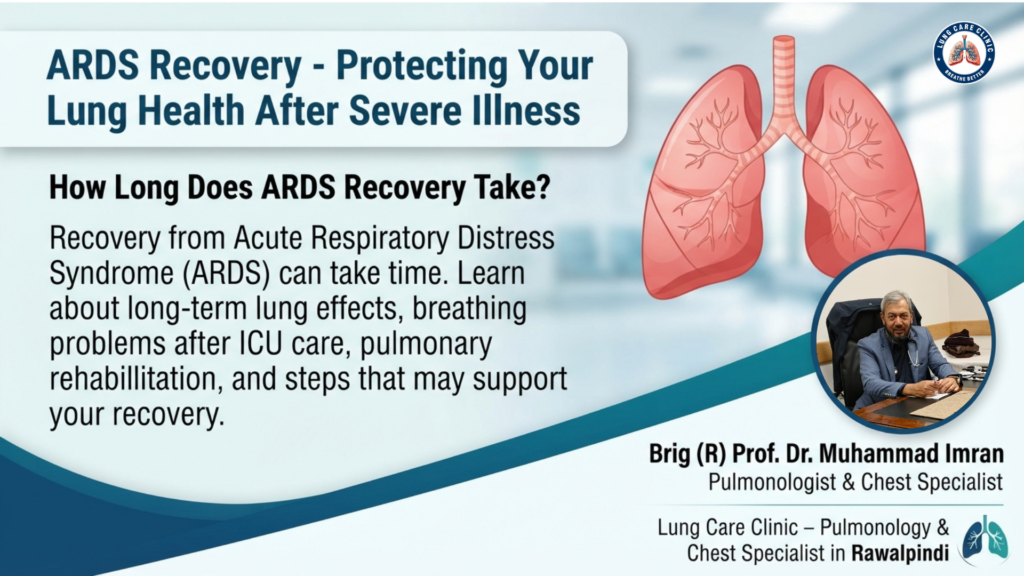
Brig (R) Prof. Dr. Muhammad Imran, Pulmonologist & Chest Specialist, provides specialist evaluation and management of respiratory conditions at Lung Care Clinic – Pulmonology & Chest Specialist in Rawalpindi.
Kohistan Tower, Mahfooz Road, Saddar, Rawalpindi
0302 9664043
If you or a family member has recently recovered from ARDS or another severe illness and continues to experience breathing difficulties, persistent cough, or reduced exercise capacity, a detailed pulmonary evaluation can help assess the next steps in recovery.
Book a consultation for specialist respiratory care and post-ICU lung assessment in Rawalpindi.