What Is Pulmonary Hypertension?
Pulmonary hypertension is a condition in which the blood pressure within the blood vessels of the lungs becomes abnormally high. These blood vessels carry blood from the right side of the heart toward the lungs, where it receives oxygen.
When pressure in these vessels increases, the right side of the heart may have to work harder to pump blood through the lungs. Over time, this increased workload can affect heart function and exercise capacity.
Pulmonary hypertension can develop for different reasons. It may be associated with heart disease, chronic lung disease, blood clots, certain medications, or other medical conditions. In some cases, the exact cause may not be immediately clear.
Recognizing pulmonary hypertension symptoms early can help patients receive appropriate evaluation and management.
What Are the Common Pulmonary Hypertension Symptoms?
Pulmonary hypertension symptoms may develop gradually. Early symptoms can sometimes be mistaken for normal tiredness, aging, poor fitness, or another respiratory condition.
Common symptoms include:
- Shortness of breath during physical activity
- Persistent fatigue
- Reduced exercise tolerance
- Dizziness
- Chest discomfort
- Fast or irregular heartbeat
- Weakness
- Shortness of breath that becomes progressively worse
As pulmonary hypertension becomes more advanced, some people may experience symptoms with less physical activity or even while resting.
Because these symptoms can occur in several heart and lung conditions, proper medical evaluation is important.
Shortness of Breath
Breathlessness is one of the most common pulmonary hypertension symptoms.
You may initially notice difficulty breathing when climbing stairs, walking quickly, or exercising. Over time, ordinary activities such as walking short distances may become more challenging.
Persistent or progressively worsening breathlessness should not automatically be attributed to aging or lack of fitness.
A respiratory specialist can assess whether the symptoms may be related to pulmonary hypertension, asthma, COPD, heart disease, or another condition.
Fatigue and Reduced Exercise Tolerance
When the heart and lungs cannot efficiently deliver oxygen-rich blood to the body’s tissues, physical activity may become more difficult.
You may feel unusually tired after activities that previously felt manageable. Walking, climbing stairs, or performing household tasks may require more effort.
If your exercise capacity is steadily declining without an obvious explanation, a medical assessment may help identify the cause.
Dizziness and Fainting
Dizziness can occur in people with pulmonary hypertension, particularly during physical activity.
In more severe cases, reduced blood flow may contribute to fainting or near-fainting episodes.
Unexplained fainting, especially during exertion, requires prompt medical evaluation because it can have several potentially serious causes.
Chest Discomfort and Heart Palpitations
Some people with pulmonary hypertension experience chest pressure or discomfort, particularly during exertion.
Heart palpitations or awareness of a rapid heartbeat may also occur.
Chest pain should never automatically be assumed to be caused by pulmonary hypertension. New, severe, or unexplained chest pain requires urgent medical assessment.
Swelling in the Legs
As pulmonary hypertension progresses, the right side of the heart can become strained. In some patients, this may contribute to fluid accumulation.
Swelling may develop around the ankles, feet, or lower legs.
Unexplained swelling combined with breathlessness or reduced exercise tolerance should be assessed by a healthcare professional.
What Causes High Blood Pressure in the Lungs?
Pulmonary hypertension has several possible causes.
Heart Conditions
Some heart conditions can increase pressure in the blood vessels of the lungs. Problems involving the left side of the heart or heart valves can contribute to elevated pressure.
Chronic Lung Disease
Conditions such as COPD and some forms of interstitial lung disease can affect blood vessels and oxygen levels, contributing to pulmonary hypertension.
Blood Clots
Previous or persistent blood clots in the pulmonary arteries can cause a form of pulmonary hypertension known as chronic thromboembolic pulmonary hypertension.
Other Medical Conditions
Certain connective tissue diseases, congenital heart conditions, liver disease, medications, and other medical problems can be associated with pulmonary hypertension.
Identifying the underlying cause is essential because treatment depends heavily on the specific type of pulmonary hypertension.
How Is Pulmonary Hypertension Diagnosed?
Diagnosing pulmonary hypertension usually involves several steps.
Your doctor may begin with a detailed medical history and physical examination. Information about breathlessness, exercise tolerance, previous heart or lung conditions, medications, and blood clot history can be important.
Depending on the findings, tests may include:
- Echocardiogram
- Electrocardiogram
- Chest X-ray
- CT scan
- Pulmonary function tests
- Blood tests
- Oxygen saturation measurement
- Exercise testing
An echocardiogram can provide useful information about heart structure and function and may suggest elevated pressure in the pulmonary circulation.
In selected cases, right heart catheterization may be required to directly measure pressures within the heart and pulmonary arteries and confirm the diagnosis.
How Is Pulmonary Hypertension Treated?
Treatment depends on the type and underlying cause of pulmonary hypertension.
Some patients may require treatment for an underlying heart or lung condition. Others may need specialized medicines designed for particular forms of pulmonary hypertension.
Management may include:
- Treatment of the underlying disease
- Appropriate prescribed medications
- Oxygen therapy when clinically indicated
- Diuretics for selected patients with fluid retention
- Management of blood clots when appropriate
- Supervised physical activity or rehabilitation
- Regular medical monitoring
Not every patient needs the same treatment. A specialist should determine the appropriate management plan based on the underlying cause and severity.
Can Pulmonary Hypertension Be Managed?
In many cases, appropriate management can help control symptoms and improve quality of life.
The treatment goal depends on the type of pulmonary hypertension. It may involve managing the underlying cause, reducing symptoms, improving functional capacity, and preventing complications.
Regular follow-up is important because symptoms and treatment needs can change over time.
Patients should also discuss appropriate physical activity, medications, oxygen requirements, and other lifestyle considerations with their healthcare team.
When Should You See a PH Specialist?
Consider specialist evaluation if you have persistent or unexplained breathlessness, declining exercise tolerance, recurrent dizziness, chest discomfort, unexplained leg swelling, or symptoms that continue despite treatment for another respiratory condition.
A pulmonary specialist can evaluate whether the symptoms may be related to pulmonary hypertension or another lung condition.
Early evaluation is especially important when symptoms are progressively worsening or significantly affecting daily activities.
When Is It an Emergency?
Seek urgent medical attention for severe or rapidly worsening breathing difficulty, fainting, severe chest pain, blue or gray lips, confusion, or a sudden major change in your usual symptoms.
Do not delay emergency care when breathing or cardiovascular symptoms become severe.
Pulmonary Hypertension Care in Rawalpindi
Pulmonary hypertension can affect both the lungs and the heart, and its symptoms may overlap with several other respiratory and cardiovascular conditions.
Understanding pulmonary hypertension symptoms such as breathlessness, fatigue, dizziness, chest discomfort, reduced exercise tolerance, and swelling can help patients recognize when further evaluation may be needed.
A proper assessment can help determine whether pulmonary hypertension is present and, if so, identify the underlying cause. Treatment is then tailored according to the patient’s specific condition.
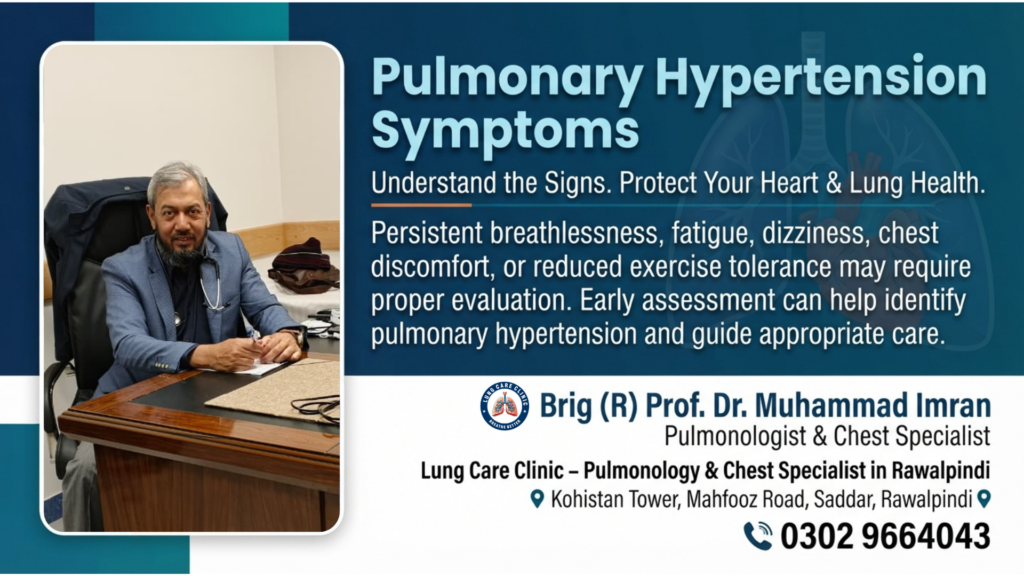
Brig (R) Prof. Dr. Muhammad Imran, Pulmonologist & Chest Specialist, provides expert evaluation and management of pulmonary and respiratory conditions at Lung Care Clinic – Pulmonology & Chest Specialist in Rawalpindi.
Kohistan Tower, Mahfooz Road, Saddar, Rawalpindi
0302 9664043
If you are experiencing persistent breathlessness, unexplained fatigue, dizziness, chest discomfort, or declining exercise tolerance, do not ignore the symptoms. A detailed respiratory evaluation can help identify the cause and guide appropriate care.
Book your consultation for expert pulmonary evaluation in Rawalpindi.