Pneumonia is an infection that causes inflammation in the lungs and can make breathing difficult. Understanding the types of pneumonia is important because viral, bacterial, and fungal infections may require different approaches to diagnosis and treatment. A cough, fever, chest discomfort, or shortness of breath can occur with several types of pneumonia, so symptoms alone may not always reveal the exact cause.
An accurate medical assessment can help determine what may be causing the infection and whether additional testing is needed. This is especially important when symptoms are severe, persistent, or occurring in someone with underlying health conditions.
What Are the Different Types of Pneumonia?
Pneumonia can develop when infectious organisms reach the lungs and cause inflammation in the air sacs.
The major infectious categories include:
- Viral pneumonia
- Bacterial pneumonia
- Fungal pneumonia
The symptoms can overlap, but the organisms responsible are different. Therefore, treatment should be based on the suspected or confirmed cause whenever possible.
Other classifications of pneumonia may also be used, such as community-acquired pneumonia and hospital-acquired pneumonia. These classifications describe where or under what circumstances the infection developed rather than identifying the specific organism.
What Is Viral Pneumonia?
Viral pneumonia occurs when a virus infects the respiratory system and causes inflammation in the lungs.
Several respiratory viruses can cause pneumonia. Viral respiratory infections may begin with symptoms similar to a common cold or flu and can progress to more significant breathing problems in some patients.
Possible symptoms include:
- Cough
- Fever
- Fatigue
- Muscle aches
- Shortness of breath
- Chest discomfort
- Reduced appetite
The severity varies considerably. Some people recover with supportive care, while others may develop significant respiratory complications.
People with certain underlying medical conditions, older adults, and those with weakened immune systems may be at greater risk of severe illness.
What Is Bacterial Pneumonia?
Bacterial pneumonia occurs when bacteria infect the lungs and cause inflammation.
Symptoms may include cough, fever, chills, chest discomfort, shortness of breath, weakness, and mucus production. In some cases, symptoms can develop relatively quickly.
Treatment depends on the specific clinical situation and suspected organism. Bacterial pneumonia treatment may involve antibiotics when a bacterial infection is suspected or confirmed.
However, antibiotics do not treat viral infections. This is one reason why understanding the likely cause of pneumonia is important.
Taking antibiotics unnecessarily can also expose patients to side effects without providing benefit.
What Is Fungal Pneumonia?
Fungal pneumonia occurs when certain fungi cause infection in the lungs.
It is less common than many bacterial or viral causes of pneumonia, but it can be important in specific groups of patients.
People with weakened immune systems may be particularly vulnerable to certain fungal lung infections. Risk can also depend on environmental exposure and underlying health conditions.
Fungal Pneumonia Symptoms
Fungal pneumonia symptoms can overlap with other types of pneumonia.
Possible symptoms include:
- Persistent cough
- Fever
- Fatigue
- Shortness of breath
- Chest discomfort
- Reduced appetite
- Weight loss in some cases
Because fungal infections can resemble other respiratory illnesses, additional testing may sometimes be necessary.
A healthcare professional may consider a patient’s immune status, environmental exposures, medical history, imaging findings, and laboratory results when evaluating possible fungal pneumonia.
Viral vs Bacterial vs Fungal Pneumonia
Although all three can cause inflammation in the lungs, there are important differences.
| Type | Cause | Common Symptoms | Treatment Approach |
| Viral pneumonia | Viruses | Cough, fever, fatigue, breathing difficulty | Often supportive care; specific antiviral therapy may be appropriate for certain infections |
| Bacterial pneumonia | Bacteria | Cough, fever, chills, mucus, chest discomfort | Antibiotics when bacterial infection is suspected or confirmed |
| Fungal pneumonia | Fungi | Cough, fever, fatigue, breathlessness | Antifungal treatment when indicated |
This table provides a general overview. Individual symptoms and treatment can vary significantly.
Why Does Exact Pneumonia Diagnosis Matter?
The cause of pneumonia can influence treatment decisions.
For example, antibiotics are designed to treat bacterial infections, not viruses. Similarly, suspected fungal pneumonia may require a completely different treatment strategy.
An incorrect assumption about the cause may delay appropriate treatment.
Diagnosis can also help identify patients who may need closer monitoring. Severe pneumonia can lead to complications such as low oxygen levels, respiratory failure, bloodstream infection, or worsening of existing heart and lung conditions.
For this reason, patients with significant symptoms should not rely solely on home treatment or self-prescribed medication.
How Is Pneumonia Diagnosed?
Pneumonia diagnosis usually begins with a medical history and physical examination.
A healthcare professional may ask about:
- Duration of symptoms
- Fever or chills
- Type of cough
- Mucus production
- Breathing difficulty
- Chest pain
- Recent infections
- Travel or environmental exposure
- Smoking history
- Existing medical conditions
- Immune system health
- Recent hospitalization
A chest X-ray may be used to look for changes consistent with pneumonia.
Depending on the situation, additional tests may include blood tests, oxygen saturation measurement, sputum testing, molecular tests, or other laboratory investigations.
Not every patient needs every test. The appropriate evaluation depends on symptoms, severity, risk factors, and clinical findings.
Why Antibiotics Do Not Treat Every Type of Pneumonia
One common misconception is that antibiotics are appropriate for every type of pneumonia.
Antibiotics target bacteria. They do not treat viral infections.
If pneumonia is caused by a virus, treatment may focus on supportive care and, for certain viral infections, specific antiviral medication.
Fungal pneumonia requires appropriate antifungal treatment when indicated.
Because treatment differs, taking medication without medical guidance may not address the underlying infection.
Who Is at Higher Risk of Severe Pneumonia?
Pneumonia can affect anyone, but some people have a higher risk of serious illness.
Risk may be increased in:
- Older adults
- Young children
- People with chronic lung disease
- People with heart disease
- People with diabetes
- People with weakened immune systems
- People who smoke
- People with other significant medical conditions
People in higher-risk groups should seek medical advice promptly when significant respiratory symptoms develop.
When Can Pneumonia Become Serious?
Pneumonia can range from mild to life-threatening.
Warning signs that require urgent medical assessment can include severe breathing difficulty, confusion, blue or gray lips, severe chest pain, fainting, or rapidly worsening symptoms.
Low oxygen levels can also be concerning.
Patients who are already being treated for pneumonia should contact their healthcare provider if symptoms are worsening rather than improving.
When Should You See a Pulmonologist?
A pulmonologist can be helpful when pneumonia symptoms are persistent, recurrent, severe, or difficult to explain.
Specialist evaluation may be particularly appropriate if you have:
- Persistent cough
- Ongoing shortness of breath
- Recurrent pneumonia
- Low oxygen levels
- Abnormal chest imaging
- Underlying lung disease
- A weakened immune system
- Slow recovery after pneumonia
A specialist can review your history and determine whether additional respiratory testing or follow-up is necessary.
Pneumonia Diagnosis and Treatment in Rawalpindi
Understanding the types of pneumonia is important because viral, bacterial, and fungal infections can require different diagnostic approaches and treatments.
A cough and fever do not necessarily identify the cause of pneumonia. Proper evaluation may involve a clinical examination, chest imaging, oxygen assessment, and selected laboratory tests. When appropriate, identifying the underlying organism can help guide treatment.
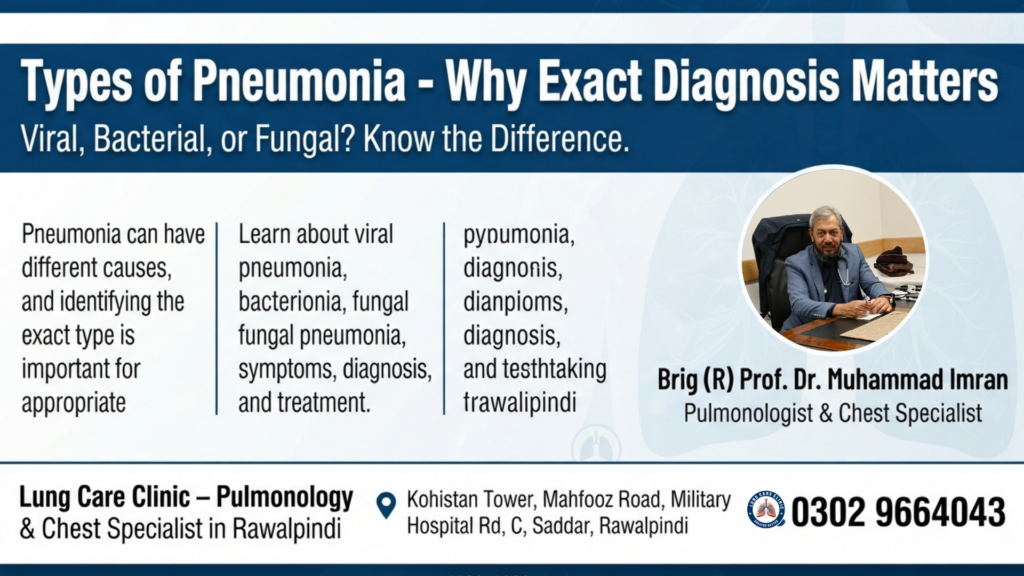
At Lung Care Clinic – Pulmonology & Chest Specialist in Rawalpindi, Brig (R) Prof. Dr. Muhammad Imran, Pulmonologist & Chest Specialist, provides specialist evaluation and management of pneumonia and other respiratory conditions.
Kohistan Tower, Mahfooz Road, Military Hospital Road, Opposite AFIC, Saddar, Rawalpindi
0302 9664043
If you have persistent cough, fever, chest discomfort, shortness of breath, or other symptoms suggestive of pneumonia, seek appropriate medical evaluation rather than relying on self-diagnosis.
Accurate diagnosis matters because the right treatment depends on understanding what is causing the infection.