
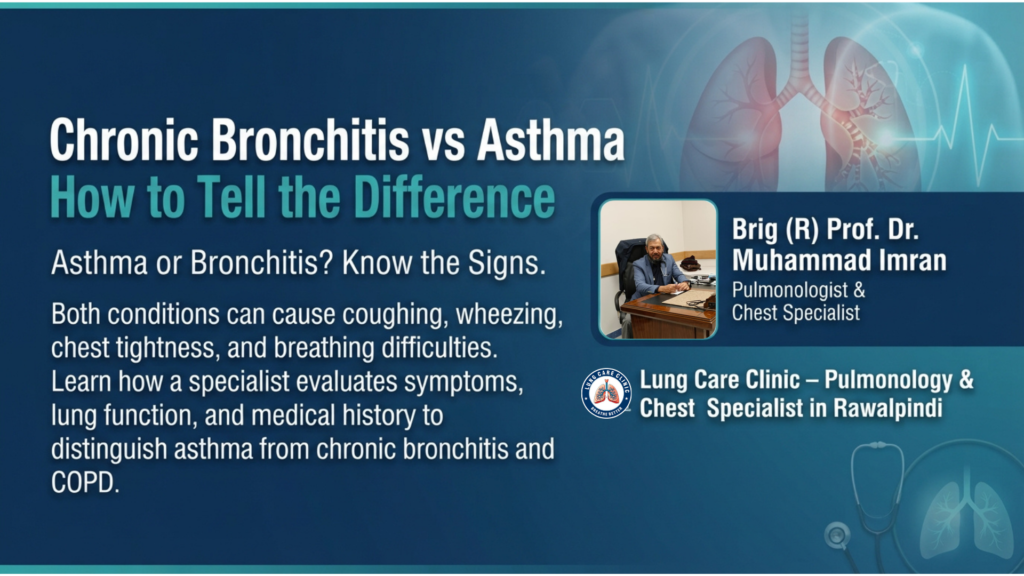
Chronic bronchitis vs asthma can be difficult to distinguish because both conditions may cause coughing, wheezing, chest tightness, mucus production, and shortness of breath. However, they are different respiratory conditions and may require different approaches to management.
A cough that keeps returning should not automatically be labeled as asthma or bronchitis. A specialist considers the pattern of symptoms, medical history, smoking exposure, triggers, physical examination, and lung function tests before determining the likely cause.
Understanding whether your symptoms are more consistent with asthma, chronic bronchitis, or another lung condition can help you receive appropriate evaluation and treatment.
What Is Chronic Bronchitis?
Chronic bronchitis involves long-term inflammation of the bronchial tubes, which carry air into and out of the lungs. The condition is commonly associated with a persistent cough that produces mucus.
Smoking is a major risk factor. Long-term exposure to tobacco smoke and other airway irritants can damage the respiratory system and contribute to chronic bronchitis.
People may experience:
- Persistent cough
- Regular mucus or phlegm production
- Wheezing
- Shortness of breath
- Chest discomfort
- Recurrent respiratory infections
Chronic bronchitis is commonly associated with COPD, although not everyone with chronic bronchitis has the same degree of airflow limitation.
What Is Asthma?
Asthma is a chronic respiratory condition involving airway inflammation and variable narrowing of the airways. Symptoms can come and go and may be triggered by different factors.
Common asthma symptoms include:
- Wheezing
- Coughing
- Chest tightness
- Shortness of breath
- Breathing difficulty
Asthma symptoms may become worse after exposure to allergens, smoke, cold air, exercise, respiratory infections, or other individual triggers.
Unlike a persistent cough from chronic bronchitis, asthma symptoms may vary considerably from day to day.
Chronic Bronchitis vs Asthma: What’s the Difference?
The major difference involves the pattern and underlying mechanism of the airway problem.
Asthma often involves variable and reversible airflow narrowing, meaning symptoms and airflow limitation can improve, particularly with appropriate treatment.
Chronic bronchitis is characterized by chronic bronchial inflammation and mucus production. When associated with COPD, airflow limitation may be persistent.
However, symptoms can overlap significantly.
| Feature | Asthma | Chronic Bronchitis |
| Cough | Common | Common and often persistent |
| Wheezing | Common | Can occur |
| Mucus | May occur | Often prominent |
| Symptoms | Often variable | May be persistent |
| Common triggers | Allergens, exercise, infections, smoke | Smoking and airway irritants |
| Smoking association | Can worsen asthma | Major risk factor |
| Lung function | May vary over time | May show persistent obstruction when associated with COPD |
These are general patterns rather than rules. A proper assessment is needed to determine the cause of symptoms.
Asthma or Bronchitis – How Do Symptoms Differ?
When asking “asthma or bronchitis?”, the timing and triggers of symptoms can provide useful clues.
Asthma symptoms may appear during specific situations and then improve. For example, someone may experience wheezing and chest tightness after exercise or exposure to dust, pollen, cold air, or smoke.
Chronic bronchitis may cause a more persistent cough and regular mucus production. Symptoms can become more noticeable with respiratory infections or continued exposure to tobacco smoke.
However, symptoms alone cannot reliably distinguish the two.
A specialist may need to perform lung function testing to understand how the airways are behaving.
Can Asthma Be Mistaken for Bronchitis?
Yes. Asthma can sometimes be mistaken for bronchitis, particularly when coughing is the main symptom.
A person may develop a cough after a respiratory infection and assume that they have bronchitis. If the cough repeatedly returns or is accompanied by wheezing, chest tightness, or breathing difficulty, asthma may need to be considered.
Similarly, someone with chronic airway disease may attribute persistent symptoms to repeated infections.
A pattern of recurring symptoms is an important reason to seek professional evaluation rather than repeatedly treating the cough without identifying its cause.
How Does a Specialist Diagnose Asthma?
Asthma diagnosis usually begins with a detailed medical history.
A specialist may ask about:
- When symptoms occur
- How long they last
- Possible triggers
- Nighttime symptoms
- Exercise-related symptoms
- Allergy history
- Smoking or smoke exposure
- Previous respiratory infections
- Response to previous treatment
Lung function testing can provide important information.
Spirometry measures how much air a person can breathe out and how quickly they can do so. In appropriate patients, additional testing may help determine whether airflow limitation changes over time or after a bronchodilator.
The diagnosis is based on the overall clinical picture rather than one symptom alone.
How Is Chronic Bronchitis Diagnosed?
A specialist may consider chronic bronchitis when a person has a long-standing productive cough and relevant risk factors.
The evaluation may include a medical history, physical examination, oxygen saturation measurement, and lung function testing.
A chest X-ray or other imaging may be recommended when appropriate, particularly when the symptoms require investigation for other possible causes.
The purpose of testing is not simply to confirm bronchitis. It is also to determine whether COPD, asthma, infection, or another respiratory condition could be contributing to the symptoms.
COPD vs Asthma – What Is the Difference?
The COPD vs asthma comparison is also important because the conditions can have overlapping symptoms.
COPD is a group of chronic lung diseases that cause persistent respiratory symptoms and airflow limitation. Smoking is a major risk factor for COPD.
Asthma, in contrast, often has variable symptoms and variable airflow obstruction.
Some patients can have features of both asthma and COPD. Therefore, a specialist may need to consider the complete clinical history rather than trying to place every patient into one simple category.
Lung function testing can be particularly useful when distinguishing between different obstructive airway conditions.
Can You Have Asthma and Chronic Bronchitis?
A person can have features of more than one respiratory condition.
For example, someone with asthma may also experience prolonged mucus production or episodes diagnosed as bronchitis. A smoker may have asthma and also develop chronic airway changes associated with COPD.
This is one reason why repeated respiratory symptoms deserve proper assessment.
Instead of assuming every episode of coughing is “just bronchitis,” it is better to determine whether an underlying chronic respiratory condition is present.
Why Does a Cough Keep Coming Back?
A recurring cough can have many causes.
Possible causes include:
- Asthma
- Chronic bronchitis
- COPD
- Respiratory infections
- Allergies
- Post-nasal drainage
- Acid reflux
- Smoking
- Environmental irritants
- Other lung conditions
If your cough repeatedly returns, especially with wheezing or shortness of breath, a specialist evaluation may help identify the underlying cause.
When Should You See a Pulmonologist?
Consider seeing a pulmonologist if you have persistent or recurrent:
- Cough
- Wheezing
- Shortness of breath
- Chest tightness
- Mucus production
- Exercise intolerance
- Respiratory infections
You should also seek medical attention for concerning symptoms such as coughing blood, significant chest pain, severe breathing difficulty, unexplained weight loss, or rapidly worsening respiratory symptoms.
Early assessment can help determine whether symptoms are related to asthma, chronic bronchitis, COPD, infection, or another condition.
Chronic Bronchitis and Asthma Evaluation in Rawalpindi
Understanding chronic bronchitis vs asthma is important because similar symptoms can arise from different respiratory conditions. Asthma may cause variable symptoms and airway narrowing, while chronic bronchitis is associated with long-term airway inflammation and mucus production. COPD can also cause overlapping symptoms, particularly in people with a history of smoking.
A specialist can use your medical history, symptom pattern, examination, and appropriate lung function testing to help determine the most likely cause.
At Lung Care Clinic – Pulmonology & Chest Specialist in Rawalpindi, Brig (R) Prof. Dr. Muhammad Imran, Pulmonologist & Chest Specialist, provides specialist evaluation and management of asthma, chronic bronchitis, COPD, chronic cough, wheezing, and other respiratory concerns.
Kohistan Tower, Mahfooz Road, Saddar, Rawalpindi
0302 9664043
If you are unsure whether your symptoms are related to asthma, chronic bronchitis, or another lung condition, don’t rely on symptoms alone. A detailed pulmonary evaluation can help identify the underlying problem and guide appropriate care.