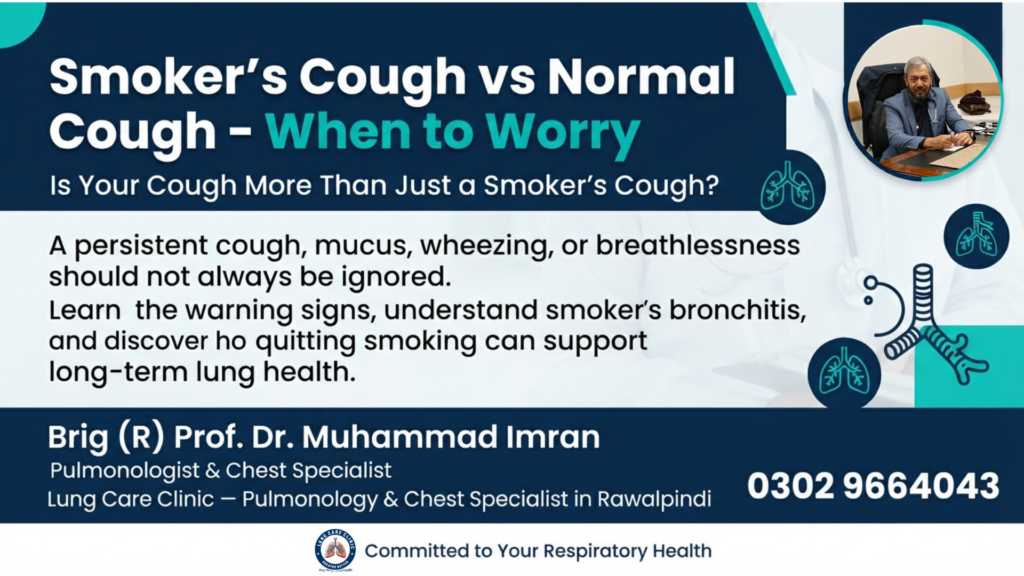
A smoker’s cough vs normal cough comparison can help you recognize when persistent coughing may need medical attention. Occasional coughing can happen for many reasons, including a cold, allergies, or temporary airway irritation. However, regular smoking can irritate the airways and lead to ongoing cough, mucus production, and other respiratory symptoms.
Many smokers become accustomed to coughing, especially in the morning, and may consider it a normal part of smoking. However, a persistent cough should not automatically be dismissed as a harmless “smoker’s cough.” It may sometimes be associated with chronic bronchitis, COPD, or other respiratory problems.
Understanding the difference can help you know when it is appropriate to speak with a pulmonologist.
What Is a Smoker’s Cough?
A smoker’s cough is a persistent cough associated with smoking or long-term exposure to tobacco smoke. Cigarette smoke contains substances that can irritate the airways and affect the normal mechanisms that help clear mucus and particles from the lungs.
Some smokers develop a cough that is particularly noticeable after waking up. Others may cough throughout the day.
A smoker’s cough may be:
- Dry or productive
- Associated with mucus or phlegm
- Worse in the morning
- Persistent for months or years
- Accompanied by wheezing or breathlessness
The presence of these symptoms does not automatically mean that someone has serious lung disease. However, persistent respiratory symptoms deserve appropriate assessment.
Smoker’s Cough vs Normal Cough: What Is the Difference?
A normal cough is often temporary and occurs because the airways are reacting to an irritant or infection.
For example, a person may develop a cough after a viral respiratory infection. The cough may gradually improve as the underlying condition resolves.
A smoker’s cough, on the other hand, may continue for a prolonged period because the airways are repeatedly exposed to tobacco smoke.
The key difference is often persistence and the underlying cause.
A cough that continues for weeks, repeatedly returns, produces significant mucus, or occurs alongside breathing difficulties should not simply be assumed to be caused by smoking.
Why Does Smoking Cause Chronic Cough?
Tobacco smoke can irritate the lining of the respiratory tract. Repeated exposure may cause inflammation and increase mucus production.
The airways also contain tiny hair-like structures called cilia. They help move mucus and particles out of the respiratory tract. Smoking can impair their normal function.
As a result, mucus and irritants may be harder to clear, which can contribute to repeated coughing.
Over time, continued smoking can contribute to chronic airway inflammation and may increase the risk of conditions such as chronic bronchitis and COPD.
What Does a Smoker’s Cough Feel Like?
There is no single type of smoker’s cough.
Some people have a dry cough, while others frequently clear thick mucus from their throat or chest.
You may notice:
- Morning coughing
- Frequent throat clearing
- Mucus or phlegm
- Wheezing
- Chest congestion
- Shortness of breath
- Reduced exercise tolerance
If these symptoms are persistent or gradually becoming worse, medical evaluation is advisable.
Can Smoking Cause Chronic Bronchitis?
Yes. Long-term smoking is a major risk factor for chronic bronchitis.
Chronic bronchitis involves ongoing inflammation of the bronchial tubes and is commonly associated with persistent cough and mucus production.
A person with chronic bronchitis may experience symptoms for extended periods and may also have episodes when respiratory symptoms become worse.
Not every smoker develops chronic bronchitis, but persistent cough and mucus should not be ignored.
When Should a Smoker’s Cough Be Concerning?
A persistent cough deserves more attention when it changes or is accompanied by other symptoms.
Seek medical evaluation if you notice:
- A cough that does not go away
- A significant change in your usual cough
- Coughing up blood
- Unexplained weight loss
- Persistent chest pain
- Increasing shortness of breath
- Wheezing
- Repeated chest infections
- Significant fatigue
- Difficulty performing normal activities
Coughing up blood, severe breathing difficulty, or significant chest pain requires prompt medical attention.
These symptoms can have many possible causes. They do not automatically indicate cancer or another serious disease, but they should be properly evaluated.
Can a Persistent Cough Be a Sign of Lung Disease?
Yes. A persistent cough can occur with several respiratory conditions.
These include:
- Chronic bronchitis
- COPD
- Asthma
- Respiratory infections
- Bronchiectasis
- Gastroesophageal reflux
- Post-nasal drainage
- Other lung conditions
Smoking also increases the risk of serious respiratory diseases. Therefore, a persistent cough in a smoker should be evaluated in the context of the person’s smoking history, symptoms, age, and other risk factors.
What Happens When You Quit Smoking?
Quitting smoking is one of the most important steps a smoker can take to protect long-term lung health.
After quitting, the body begins a process of recovery. Cough and mucus production may change during the early period, and some people notice temporary changes in respiratory symptoms.
Over time, avoiding tobacco smoke reduces continued irritation and exposure to harmful substances.
However, quit smoking lung healing is not an instant process. The extent of recovery depends on factors such as smoking duration, amount smoked, age, and whether underlying lung disease has already developed.
Quitting does not guarantee that all existing lung damage will disappear, but it can help reduce further damage and provide important long-term health benefits.
Why Am I Still Coughing After Quitting Smoking?
Some people continue to cough after stopping smoking.
There can be several reasons for this. The airways may still be recovering from years of irritation, or an underlying condition may already be present.
A persistent cough after quitting should not automatically be attributed to the body “clearing the lungs.”
If the cough continues, becomes worse, or is associated with breathlessness, chest pain, blood, or unexplained weight loss, speak with a healthcare professional.
How Is a Smoker’s Cough Evaluated?
A pulmonologist may begin by reviewing your smoking history and asking about the duration and characteristics of your cough.
The evaluation may include:
- Medical history
- Physical examination
- Oxygen saturation measurement
- Lung function testing
- Chest X-ray when appropriate
- Other imaging when clinically indicated
- Sputum assessment in selected cases
Spirometry can be particularly useful when COPD or another airflow-related condition is suspected.
The appropriate tests depend on your symptoms and clinical history.
How Can You Protect Your Lung Health?
The most important step for smokers is to stop smoking.
You can also support your respiratory health by avoiding secondhand smoke, following treatment plans for existing conditions, staying appropriately physically active, and seeking medical attention for persistent respiratory symptoms.
Do not rely on cough suppressants alone if a cough has become chronic. Finding the underlying cause is more important than simply masking the symptom.
When Should You See a Pulmonologist?
Consider a pulmonary evaluation if you have a persistent cough and a history of smoking, particularly if you also experience mucus production, wheezing, shortness of breath, recurrent chest infections, or reduced exercise tolerance.
A pulmonologist can assess your symptoms and determine whether further testing is appropriate.
Early evaluation may help identify chronic respiratory conditions and provide an opportunity to address modifiable risk factors.
Smoker’s Cough vs Normal Cough: The Bottom Line
Understanding smoker’s cough vs normal cough can help you recognize when coughing may need further attention.
A temporary cough caused by an infection or irritation often improves as the underlying problem resolves. A cough that persists for a long time, repeatedly returns, produces mucus, or occurs with breathlessness should not simply be considered a normal consequence of smoking.
Smoking can contribute to chronic airway irritation and conditions such as chronic bronchitis and COPD. Quitting smoking can help protect your lungs from further exposure and support long-term respiratory health.
At Lung Care Clinic – Pulmonology & Chest Specialist in Rawalpindi, Brig (R) Prof. Dr. Muhammad Imran, Pulmonologist & Chest Specialist, provides specialist evaluation and management of respiratory conditions.
Kohistan Tower, Mahfooz Road, Saddar, Rawalpindi
0302 9664043
If you have a persistent cough, particularly if you smoke or previously smoked, do not assume it is harmless. A proper pulmonary evaluation can help identify the cause and determine the appropriate next step for your lung health.