Asthma Triggers Rawalpindi patients experience can vary from person to person. Dust, smoke, pollen, air pollution, weather changes, respiratory infections, and indoor allergens may contribute to worsening asthma symptoms. For some people, symptoms may become more noticeable during particular seasons or after exposure to a specific trigger.
Asthma is a long-term condition that affects the airways. When the airways become inflamed and sensitive, exposure to certain triggers can cause coughing, wheezing, chest tightness, or shortness of breath. However, not everyone with asthma reacts to the same triggers.
If your asthma is becoming more frequent, more difficult to control, or is affecting your daily activities, it is important to look beyond the trigger itself. Your treatment plan, inhaler technique, medication adherence, infections, and other health conditions may also affect asthma control.
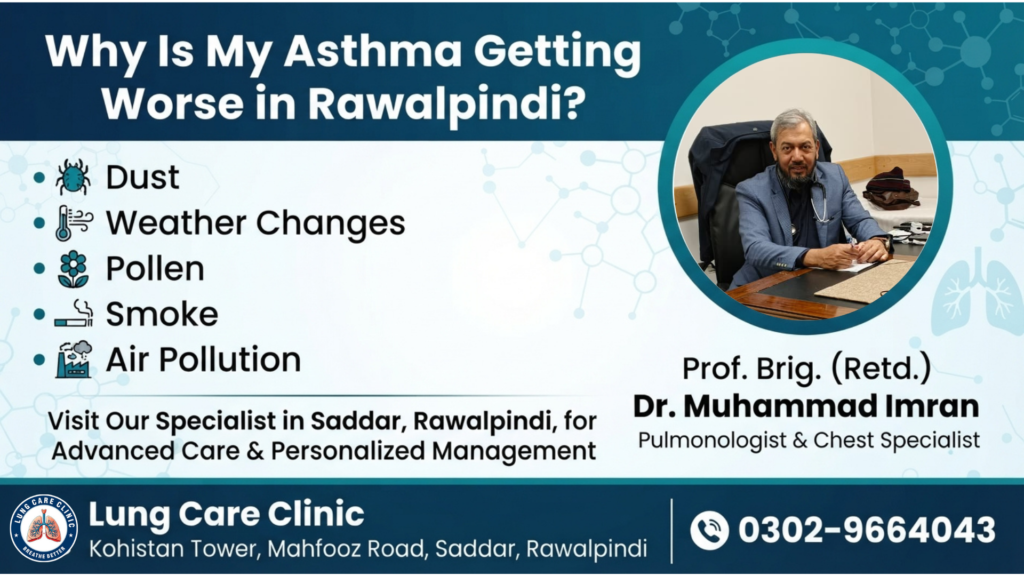
Why Is My Asthma Getting Worse in Rawalpindi?
If your asthma symptoms have recently increased, you may notice a connection with your surroundings.
Rawalpindi and the surrounding Islamabad region experience changing weather conditions, dust exposure, traffic-related pollution, smoke, and seasonal airborne allergens. These environmental factors can irritate sensitive airways in some people.
However, a trigger does not necessarily cause asthma in everyone. Asthma is different for each patient.
For example, one person may develop symptoms after exposure to dust, while another may react more strongly to pollen or cold air. Someone else may experience worsening symptoms during a respiratory infection.
Keeping track of when symptoms occur can help identify possible patterns.
Asthma Triggers Rawalpindi Residents May Encounter
Several environmental and personal factors may contribute to asthma symptoms.
Common potential triggers include:
- Dust
- Dust mites
- Smoke
- Air pollution
- Pollen
- Mold
- Cold or changing weather
- Respiratory infections
- Strong odors
- Chemical fumes
- Exercise in some patients
- Animal allergens
- Stress or strong emotions in some people
These factors do not affect every asthma patient in the same way.
Therefore, identifying personal triggers can be more useful than trying to avoid everything.
Can Dust Make Asthma Worse?
Dust is a common concern for people with asthma.
Household dust can contain multiple substances, including dust mite particles, animal material, pollen, mold spores, and other particles. Some of these may trigger allergic reactions in sensitive individuals.
Outdoor dust can also irritate the airways.
Construction activity, road dust, dry weather, and disturbed soil can increase airborne particles. If you notice coughing or wheezing after spending time in dusty environments, this pattern is worth discussing with your doctor.
Reducing unnecessary dust exposure may help some patients.
Practical measures can include regular cleaning, reducing dust accumulation, washing bedding appropriately, and using suitable cleaning methods that do not simply redistribute dust into the air.
Dust Mites and Asthma
Dust mites are microscopic organisms that commonly live in household environments.
Their waste particles and body fragments can become airborne and may trigger allergic symptoms in sensitive people.
They can be found in bedding, mattresses, carpets, upholstered furniture, and other areas where dust accumulates.
If dust mite allergy contributes to your asthma, environmental control may form part of your overall management plan.
Washing bedding regularly and reducing environments where dust accumulates may help reduce exposure.
However, environmental measures should complement prescribed asthma treatment rather than replace it.
Weather Changes and Asthma
Weather can affect asthma symptoms in some people.
Cold air may irritate the airways and contribute to symptoms, particularly during exercise or outdoor activity.
Sudden changes in temperature can also be uncomfortable for people with sensitive airways.
Humidity may affect some individuals as well. High humidity can contribute to conditions that support mold growth and may increase discomfort for people with certain allergies.
On the other hand, dry conditions can increase airborne dust.
Because responses differ, it can be useful to record your symptoms alongside weather conditions.
Seasonal Asthma and Pollen
Some people experience more asthma symptoms during particular seasons.
Pollen from trees, grasses, and weeds can trigger allergic reactions in susceptible individuals. If pollen exposure affects you, symptoms may include sneezing, nasal congestion, itchy eyes, coughing, wheezing, or breathing difficulty.
Seasonal patterns can provide useful clues.
For example, if your symptoms repeatedly increase during a particular part of the year, discuss this pattern with your doctor.
Asthma and allergic rhinitis can also occur together. Treating associated nasal allergy may form part of an overall asthma management strategy when clinically appropriate.
Air Pollution and Asthma
Air pollution can irritate the respiratory system.
Traffic emissions, smoke, particulate matter, and other pollutants can be particularly relevant for people with sensitive airways.
People with asthma may notice increased coughing, wheezing, or breathing difficulty when air quality is poor.
This does not mean that every episode of worsening asthma is caused by pollution.
Still, if you notice a consistent relationship between poor air quality and your symptoms, reducing exposure when practical may be helpful.
On days when pollution levels are high, some patients may benefit from limiting unnecessary outdoor exposure, particularly near heavy traffic or visible smoke.
People with asthma should also continue their prescribed treatment plan.
Smoke as an Asthma Trigger
Tobacco smoke is a well-known airway irritant.
Both active smoking and exposure to secondhand smoke can affect respiratory health.
Smoke from burning materials can also irritate the airways.
If smoke consistently worsens your symptoms, avoiding exposure is an important part of asthma management.
This includes avoiding cigarette smoke, shisha smoke, and indoor environments where smoke accumulates.
Parents and family members can also help protect children with asthma by keeping indoor environments smoke-free.
Respiratory Infections and Asthma Flare-Ups
Respiratory infections can worsen asthma symptoms.
Viral infections may increase airway inflammation and trigger coughing, wheezing, chest tightness, or shortness of breath.
A person who normally has well-controlled asthma may experience a temporary deterioration during an infection.
If asthma symptoms become significantly worse during a cold or other respiratory illness, follow the treatment plan provided by your healthcare professional.
Seek medical assessment if symptoms are severe, unusual, or fail to improve.
Strong Odors and Chemical Fumes
Strong odors can trigger symptoms in some people with asthma.
Possible irritants include:
- Perfumes
- Cleaning products
- Paint fumes
- Industrial chemicals
- Aerosol sprays
- Smoke
- Vehicle exhaust
These substances may irritate the airways even when they do not cause a traditional allergic reaction.
If a particular product repeatedly causes coughing or breathing difficulty, try to identify the substance and reduce exposure when possible.
Good ventilation can also reduce indoor exposure to some airborne irritants.
Exercise and Asthma
Exercise is beneficial for overall health and should not automatically be avoided because of asthma.
However, some people experience exercise-induced bronchoconstriction, in which airway narrowing occurs during or after physical activity.
Symptoms may include coughing, wheezing, chest tightness, or shortness of breath.
If exercise repeatedly causes symptoms, speak with your doctor.
Appropriate asthma management can often allow people to remain physically active.
Do not stop exercising permanently without discussing the problem with a healthcare professional.
Stress and Asthma Symptoms
Strong emotions and stress can affect breathing patterns and may contribute to symptoms in some people with asthma.
Stress itself is not necessarily the underlying cause of asthma.
However, emotional stress can coincide with changes in breathing, sleep, medication routines, and other factors that may influence asthma control.
If you notice that symptoms repeatedly appear during periods of significant stress, mention this pattern during your consultation.
How Can I Identify My Asthma Triggers?
Finding your personal triggers can take time.
A simple symptom diary can help.
Record:
- When symptoms occur
- Where you were
- Weather conditions
- Possible dust exposure
- Smoke exposure
- Exercise
- Recent infections
- New household products
- Medication use
- Nighttime symptoms
- Possible pollen exposure
You may begin to notice patterns.
For example, symptoms may repeatedly occur after cleaning, during cold mornings, near traffic, or during a particular season.
This information can help your doctor understand your asthma more clearly.
What If My Asthma Is Getting Worse Despite Treatment?
Not every worsening episode means that you have encountered a new environmental trigger.
Asthma may become poorly controlled for several reasons.
These can include:
- Incorrect inhaler technique
- Not taking controller medicine as prescribed
- Incorrect medication use
- Frequent exposure to triggers
- Respiratory infection
- Smoking
- Untreated allergic conditions
- Another respiratory condition
- Changes in asthma severity
For this reason, simply avoiding dust or weather exposure may not solve the problem.
If your symptoms are becoming more frequent, your treatment plan may need professional review.
Why Proper Inhaler Technique Matters
Even the right asthma medicine may not work as expected if the inhaler is used incorrectly.
Different inhalers require different techniques.
Common mistakes can include incorrect inhalation speed, poor coordination, failure to prepare the device correctly, or failing to use a spacer when one has been recommended.
A healthcare professional can check your technique.
This is particularly important if you believe that your asthma medicine is no longer working.
Before changing the dose or stopping a prescribed inhaler, discuss the problem with your doctor.
Seasonal Asthma Treatment
Seasonal asthma treatment depends on the individual’s symptoms and underlying condition.
Your doctor may review your asthma control, identify possible triggers, assess medication use, and determine whether additional testing is appropriate.
In some patients, lung function testing such as spirometry can provide useful information.
If allergies appear to contribute to symptoms, the doctor may also consider the patient’s allergic history and associated conditions.
Treatment should be individualized.
There is no single asthma treatment plan that works for every person.
When Should You See a Pulmonologist?
You should consider specialist evaluation if your asthma is becoming difficult to control.
Arrange a medical review if you experience:
- Increasing wheezing
- Frequent coughing
- Repeated chest tightness
- More frequent shortness of breath
- Increasing nighttime symptoms
- Frequent need for a reliever inhaler
- Symptoms interfering with work or sleep
- Repeated asthma flare-ups
- Difficulty exercising because of breathing symptoms
- Concerns about inhaler side effects or technique
A pulmonologist can assess your symptoms and treatment history and determine whether additional evaluation is needed.
When Is Asthma an Emergency?
Severe breathing difficulty requires urgent medical attention.
Seek emergency care if you have severe shortness of breath, difficulty speaking because of breathing problems, bluish lips or face, confusion, fainting, or symptoms that are rapidly worsening despite your prescribed rescue treatment.
Do not delay emergency care while trying to identify an environmental trigger.
Asthma Care in Rawalpindi
For patients searching for asthma treatment in Rawalpindi, specialist evaluation can help when symptoms are persistent, recurrent, or becoming difficult to control.
At Lung Care Clinic, Prof. Brig. (Retd.) Dr. Muhammad Imran, Pulmonologist & Chest Specialist, provides specialist assessment for asthma, wheezing, chronic cough, breathing difficulties, and other respiratory conditions.
During a consultation, your symptoms, medical history, current medicines, inhaler technique, and previous reports can be reviewed.
When appropriate, lung function testing or other investigations may help assess respiratory function.
The goal is to understand the factors affecting your breathing and develop an appropriate treatment approach based on your individual condition.
Practical Steps for Managing Asthma Triggers
You may be able to reduce exposure to some triggers by taking practical steps.
Consider:
- Avoiding tobacco smoke and secondhand smoke
- Reducing unnecessary dust exposure
- Keeping indoor areas adequately ventilated
- Cleaning bedding regularly when dust mites are a concern
- Avoiding strong chemical fumes when possible
- Monitoring symptoms during seasonal changes
- Paying attention to air pollution
- Managing known allergies
- Following your prescribed asthma treatment
- Checking your inhaler technique regularly
- Keeping recommended follow-up appointments
These measures work best as part of a broader asthma management plan.
Asthma Triggers Rawalpindi patients encounter can include dust, pollen, smoke, air pollution, weather changes, respiratory infections, and other environmental or personal factors.
However, asthma is highly individual. A trigger that affects one person may have little effect on another.
If your asthma is getting worse, do not assume that dust or weather is the only explanation. Poor inhaler technique, medication issues, respiratory infections, allergies, and changes in asthma control can also contribute.
Identifying your personal triggers can help you reduce unnecessary exposure. At the same time, appropriate medical treatment remains an important part of asthma management.
If you are experiencing frequent wheezing, persistent cough, chest tightness, or increasing shortness of breath, specialist respiratory evaluation can help determine the underlying factors and guide appropriate care.
Prof. Brig. (Retd.) Dr. Muhammad Imran
Pulmonologist & Chest Specialist
Lung Care Clinic
Kohistan Tower, Mahfooz Road, Military Hospital Rd, Opposite AFIC, Saddar, Rawalpindi.
0302-9664043
Serving patients from Rawalpindi & Islamabad.