
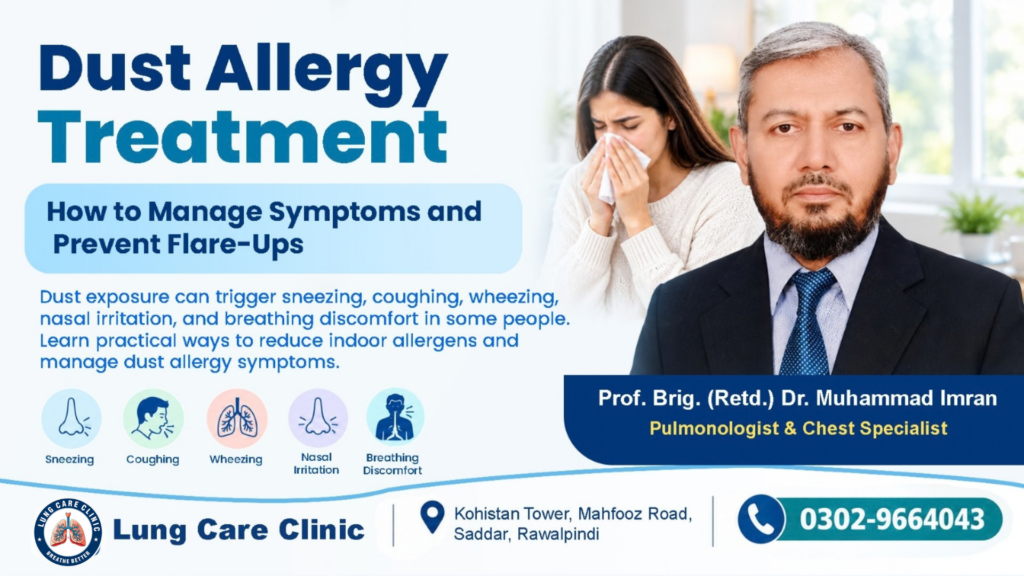
Dust-related allergies can cause repeated sneezing, a blocked or runny nose, itchy eyes, coughing, throat irritation, wheezing, and breathing discomfort. For some people, symptoms remain mild, while others experience frequent flare-ups that interfere with sleep, work, or daily activities.
Dust allergy is often associated with exposure to house dust mites, microscopic organisms that commonly live in bedding, mattresses, carpets, upholstered furniture, and other indoor environments. These mites prefer warm and humid conditions. Their allergens can become airborne and trigger symptoms in sensitive individuals.
Effective dust allergy treatment often starts with reducing exposure to the triggers inside the home. However, severe or persistent symptoms may require professional assessment because similar complaints can occur with asthma, allergic rhinitis, sinus problems, respiratory infections, or other conditions.
What Causes Dust Allergy Symptoms?
House dust contains a mixture of particles and substances. These may include dust mite allergens, fabric fibers, pollen brought indoors, mold particles, pet allergens, and other irritants.
For people with a house dust mite allergy, the mites themselves are not usually the main problem. Allergic reactions are commonly triggered by proteins found in mite waste and body particles.
Dust mites are extremely small and cannot normally be seen without magnification. They commonly live in mattresses, pillows, bedding, carpets, upholstered furniture, curtains, and stuffed toys.
Warm and humid environments can support their growth. Therefore, controlling indoor humidity and reducing dust-collecting materials can become important parts of home allergy control.
Common Dust Allergy Symptoms
Symptoms can affect the nose, eyes, throat, and lower airways.
Common complaints include:
- Frequent sneezing
- Runny nose
- Stuffy or blocked nose
- Itchy nose or throat
- Watery or itchy eyes
- Postnasal drip
- Repeated coughing
- Wheezing
- Chest tightness
- Breathing difficulty
- Disturbed sleep
- Fatigue caused by poor sleep
Some people notice that symptoms become worse in the bedroom, particularly after waking up. Others may experience increased symptoms while cleaning, moving old bedding, handling carpets, or disturbing dusty furniture.
Dust-related exposure can also worsen asthma in people who already have sensitive airways. Wheezing and breathing difficulty should therefore receive appropriate attention rather than being dismissed as a simple allergy.
Why Symptoms May Become Severe
The severity of symptoms depends on several factors.
First, the amount of allergen exposure can make a difference. A bedroom with old bedding, heavy carpets, upholstered furniture, and high humidity may provide more opportunities for exposure.
Second, individual sensitivity varies. One person may experience occasional sneezing, while another may develop persistent nasal symptoms, coughing, or asthma-related breathing problems.
Third, an existing respiratory condition can make symptoms more complicated. A person with asthma may notice wheezing or chest tightness after exposure to indoor allergens.
Finally, repeated exposure can make controlling symptoms more difficult when the underlying trigger remains present.
For these reasons, severe or recurring complaints deserve more than simply repeated cleaning or self-treatment.
Dust Allergy Treatment Starts With Exposure Control
Reducing exposure to the allergen is an important part of managing dust mite allergy. Complete elimination of dust mites from a home is generally not realistic, but reducing their numbers and limiting contact with allergens can help some people.
A practical approach should focus especially on the bedroom because mattresses, pillows, and bedding can provide suitable environments for dust mites.
Instead of trying to clean everything at once, create a consistent routine that targets the areas where allergens are most likely to accumulate.
Wash Bedding Regularly
Bedding deserves particular attention.
Wash sheets, pillowcases, blankets, and other washable bedding regularly. Hot-water washing can help kill dust mites and remove allergens. Mayo Clinic guidance recommends washing bedding weekly in water heated to at least 130°F, or approximately 54°C, where the fabric allows it.
If very hot washing is not suitable for a particular item, follow the manufacturer’s cleaning instructions and consider other exposure-control measures.
Regular bedding maintenance is more useful than occasionally performing a major cleaning session and then leaving the bedding untreated for long periods.
Use Allergy-Blocking Covers
Allergen-proof covers can be used on mattresses and pillows.
These tightly woven covers create a barrier between the person and allergens inside bedding materials. They can be particularly useful for people with diagnosed dust mite allergy.
Choose covers designed specifically for allergen control and follow the manufacturer’s instructions for washing and maintenance.
Remember that covers work best as part of a broader strategy. They should not be considered a complete solution by themselves.
Control Indoor Humidity
Humidity control is another important step.
Dust mites prefer warm, humid environments. Keeping indoor relative humidity below about 50% may help reduce conditions that support them.
A hygrometer can help you monitor humidity. Depending on the environment, ventilation, air conditioning, or a dehumidifier may help maintain a more suitable indoor environment.
However, extremely dry air can also irritate the nose and airways in some people. The goal is balanced indoor humidity rather than making the environment excessively dry.
Clean Dust Without Stirring It Into the Air
Cleaning methods matter.
Dry dusting can disturb settled particles and temporarily increase airborne exposure. A damp cloth or damp mop can help collect dust instead of simply moving it around.
Regular cleaning of hard surfaces can reduce accumulated dust. Pay particular attention to bedrooms, shelves, furniture, window areas, and other places where dust collects.
People with severe symptoms may prefer to have someone else perform dusty cleaning tasks.
Vacuum Carpets and Upholstered Furniture
Carpets and upholstered furniture can collect dust and allergens.
Regular vacuuming can remove surface dust. A vacuum with a HEPA or high-efficiency filtration system may help capture smaller particles more effectively.
However, vacuuming does not completely remove dust mites or all dust mite allergens. Therefore, it should be combined with bedding care, humidity control, and reduction of dust-collecting materials.
If vacuuming triggers significant symptoms, avoid staying in the room while it is being done. Allow airborne particles to settle before returning.
Reduce Bedroom Clutter
Bedrooms can become major allergen-collection areas when they contain many unnecessary items.
Books, magazines, decorative objects, stuffed toys, heavy curtains, cushions, and other materials can collect dust.
Reducing clutter makes regular cleaning easier and can decrease the number of surfaces where dust accumulates.
This does not mean that every household item must be removed. Instead, focus on practical organization and items that are difficult to clean.
Consider Your Flooring
Carpets can collect dust and provide an environment where dust mites may thrive.
For people with significant dust mite sensitivity, hard flooring such as tile, wood, vinyl, or similar washable surfaces may be easier to maintain than wall-to-wall carpeting.
If removing carpet is not practical, regular vacuuming with an appropriate filtration system and consistent cleaning can still help reduce surface dust.
Keep Curtains and Soft Furnishings Clean
Curtains, cushions, upholstered chairs, and other soft furnishings can collect allergens.
Where possible, choose washable curtains and materials that can be cleaned regularly.
Heavy furnishings that cannot be cleaned easily may deserve special attention if symptoms consistently worsen in rooms containing them.
The objective is not to create a completely allergen-free home, which is generally unrealistic. Instead, the goal is to reduce unnecessary exposure.
Can Dust Allergy Be Managed Without Medication?
Environmental control can reduce exposure and may lessen symptoms for some people. However, it is important not to assume that home measures will completely control severe allergy symptoms.
Some individuals continue to experience significant symptoms despite careful cleaning and allergen reduction. Others may have asthma or another respiratory condition that requires medical management.
Therefore, avoiding medication should not become the only objective. The more important goal is safe and effective symptom control based on the underlying cause.
If symptoms are persistent, severe, or affecting breathing, a medical assessment can help determine whether the problem is actually related to dust mites or another condition.
When Should You See a Specialist?
Consider professional evaluation if you experience:
- Persistent nasal congestion
- Repeated coughing
- Frequent wheezing
- Chest tightness
- Shortness of breath
- Symptoms that disturb sleep
- Recurrent symptoms after cleaning
- Symptoms that worsen in particular rooms
- Frequent asthma flare-ups
- Symptoms that do not improve despite exposure-control measures
A specialist can review your symptom pattern, home environment, medical history, and existing respiratory conditions.
If an allergy is suspected, testing may sometimes help identify specific allergens. Depending on the situation, healthcare professionals may consider skin testing or blood testing.
Dust Allergy or Asthma?
Dust exposure can cause nasal allergy symptoms, but it can also aggravate asthma in susceptible individuals.
This distinction matters.
Sneezing and a runny nose may point toward allergic rhinitis, while recurrent wheezing, chest tightness, coughing, or difficulty breathing may indicate airway involvement.
A person can also have both allergic rhinitis and asthma.
If breathing symptoms repeatedly occur after exposure to dust, especially at night, during cleaning, or in a dusty workplace, discuss the pattern with a respiratory specialist.
Do not assume that every episode of breathlessness is an allergy.
Can Dust Allergy Cause Breathing Problems?
Yes, dust mite exposure can be associated with asthma symptoms in sensitive individuals. These may include wheezing, coughing, chest tightness, and difficulty breathing.
However, breathing problems have many possible causes. Respiratory infections, asthma, COPD, environmental irritants, heart conditions, and other problems can produce overlapping symptoms.
That is why persistent breathing difficulty should be assessed rather than attributed to dust exposure without evaluation.
Severe breathing difficulty, rapidly worsening symptoms, blue or gray lips, fainting, or other signs of a medical emergency require urgent medical care.
A Practical Home Allergy-Control Routine
A simple routine can make allergen control more manageable.
Daily or frequent habits can include:
- Keeping bedrooms uncluttered
- Avoiding unnecessary fabric surfaces
- Cleaning visible dust with a damp cloth
- Maintaining suitable indoor humidity
- Keeping bedding clean
- Limiting dust accumulation
- Keeping pets away from the bedroom when relevant
- Maintaining air-conditioning and ventilation filters according to manufacturer instructions
Weekly tasks may include washing bedding, cleaning floors, vacuuming carpets and upholstery, and cleaning commonly overlooked surfaces.
Consistency is more useful than occasional intensive cleaning.
Dust Allergy Treatment in Rawalpindi
People in Rawalpindi and Islamabad may experience respiratory symptoms related to indoor dust, changing environmental conditions, workplace exposure, or other allergens.
If sneezing, nasal congestion, coughing, wheezing, chest tightness, or breathing difficulty continues despite efforts to reduce exposure, specialist assessment can help clarify the possible cause.
At Lung Care Clinic, respiratory concerns can be assessed by Prof. Brig. (Retd.) Dr. Muhammad Imran, Pulmonologist & Chest Specialist. The evaluation can consider symptoms, medical history, examination findings, and relevant reports when clinically appropriate.
The purpose of an assessment is not simply to label every symptom as a dust allergy. Instead, it is to identify the most likely cause and determine an appropriate management approach.
Dust-related allergies can interfere with breathing, sleep, concentration, and daily comfort. While it may not be possible to eliminate every allergen from a home, practical measures can reduce exposure.
Focus on the bedroom first. Wash bedding regularly, use suitable allergen-blocking covers, control indoor humidity, reduce clutter, clean surfaces carefully, and maintain carpets and upholstered furniture appropriately.
At the same time, do not rely entirely on home measures when symptoms are severe or persistent. Repeated wheezing, chest tightness, or shortness of breath may indicate asthma or another respiratory condition that requires professional evaluation.
Effective dust allergy treatment should therefore be based on the person’s symptoms, triggers, underlying conditions, and response to exposure-control measures.
Consult Prof. Brig. (Retd.) Dr. Muhammad Imran
Pulmonologist & Chest Specialist
Lung Care Clinic
Kohistan Tower, Mahfooz Road, Saddar, Rawalpindi
Phone: 0302-9664043
For specialist respiratory consultation, contact Lung Care Clinic to discuss persistent allergy-related or breathing symptoms.