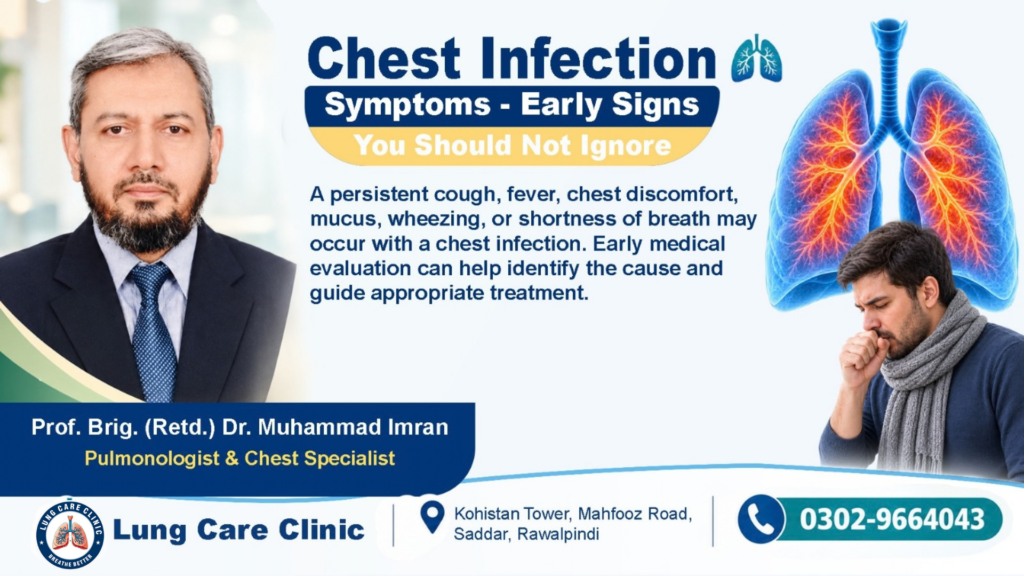
A chest infection can affect the large airways or the lungs and may develop after a cold, flu, or another respiratory infection. Chest infection symptoms can range from a persistent cough and mucus to fever, wheezing, chest discomfort, and shortness of breath. While many mild infections improve with time, some can become more serious, particularly in older adults and people with existing heart or lung conditions.
Recognizing changes in your breathing and overall health can help you decide when home care may be reasonable and when specialist medical assessment is appropriate. In Rawalpindi and Islamabad, people with persistent or worsening respiratory symptoms can seek evaluation from a pulmonologist to identify the possible cause and determine the appropriate next steps.
What Is a Chest Infection?
A chest infection generally refers to an infection affecting the airways or lungs. Common examples include acute bronchitis and pneumonia. These conditions can have overlapping symptoms, but their severity and treatment can differ.
Acute bronchitis, sometimes called a chest cold, involves inflammation and swelling of the airways. It commonly causes coughing, with or without mucus, congestion, tiredness, sore throat, and mild body aches. Viruses are the usual cause, and antibiotics generally do not help when the illness is viral.
Pneumonia affects the lungs and can cause more significant illness. Symptoms may include cough, fever, shortness of breath, chest pain, fatigue, reduced appetite, and sometimes confusion, particularly in older adults.
Therefore, it is important not to assume that every cough or mucus-producing illness is the same.
Common Chest Infection Symptoms
Chest infection symptoms can vary according to the infection, its severity, and the person’s general health.
Common signs include:
- Persistent or chesty cough
- Mucus or phlegm when coughing
- Fever or feeling feverish
- Wheezing
- Shortness of breath
- Chest discomfort or pain
- Tiredness
- Headache
- Body aches
- Reduced appetite
NHS guidance notes that chest infections can commonly cause a chesty cough, wheezing, breathlessness, chest pain or discomfort, fever, headache, muscle aches, and tiredness.
However, experiencing one or two of these symptoms does not automatically mean that you have a chest infection. Cough and breathing problems can also occur with asthma, COPD, allergies, reflux, viral illnesses, and other respiratory conditions.
Persistent Cough and Mucus
A cough is one of the most noticeable signs of an airway or lung infection. It may be dry initially and later produce mucus.
Mucus develops as the airways respond to inflammation and infection. You may notice clear, white, yellow, or green phlegm. However, mucus color alone cannot reliably determine whether an infection is bacterial or viral. A healthcare professional considers the complete clinical picture rather than relying only on phlegm color.
A cough associated with a mild chest infection may gradually improve, but the cough and mucus can sometimes continue for several weeks. NHS guidance states that chest infection symptoms often improve within around 7 to 10 days, while coughing and mucus can last for up to three weeks.
If a cough continues beyond three weeks, becomes increasingly severe, or is accompanied by breathing difficulty or blood, medical assessment is important.
Fever and Feeling Unwell
Fever can occur when the body responds to an infection. You may also experience chills, tiredness, headache, or muscle aches.
The severity and duration of fever matter. A mild fever during a short respiratory illness may improve as the infection settles. On the other hand, persistent or high fever, especially when accompanied by worsening cough, breathing difficulty, chest pain, or marked weakness, deserves medical attention.
People with chronic respiratory conditions such as asthma or COPD should also take worsening symptoms seriously because an infection may aggravate their underlying condition.
Wheezing and Shortness of Breath
Wheezing is a whistling or musical sound that can occur when air moves through narrowed airways. Respiratory infections can sometimes cause temporary airway inflammation and wheezing.
Shortness of breath is another important symptom. Mild breathlessness may occur during an infection, particularly when coughing or moving around. However, significant or worsening difficulty breathing should not be ignored.
Shortness of breath can have many causes, including infections, asthma, COPD, heart conditions, anemia, and other medical problems. For this reason, a proper assessment may be needed instead of assuming that an infection is responsible.
The CDC advises seeking medical care for shortness of breath or trouble breathing in the setting of acute bronchitis symptoms.
Chest Pain or Discomfort
Some people develop chest discomfort while coughing frequently. Inflammation involving the respiratory system can also produce discomfort when breathing or coughing.
Nevertheless, chest pain should be evaluated carefully because it can have many possible causes. Chest pain that is severe, sudden, persistent, or associated with significant breathing difficulty requires prompt medical attention.
Do not assume that chest pain is simply part of a respiratory infection, particularly if the symptoms are unusual for you or are becoming worse.
What Causes a Chest Infection?
Different microorganisms can cause infections affecting the respiratory system.
Viruses are a common cause of acute bronchitis and other respiratory illnesses. The CDC notes that viruses usually cause acute bronchitis, while antibiotics do not improve viral chest colds.
Bacterial infections can also affect the lungs, including some cases of pneumonia. In these situations, a clinician may consider antibiotics when appropriate.
Other respiratory infections may begin after exposure to infectious viruses or bacteria through respiratory droplets and close contact. Therefore, hygiene, ventilation, staying away from others when unwell, and covering coughs can help reduce transmission.
Chest Infection or Pneumonia?
Chest infections cover a range of illnesses, while pneumonia is a specific infection or inflammation involving the lungs.
Pneumonia can produce:
- Cough
- Fever
- Shortness of breath
- Chest pain
- Severe tiredness
- Reduced appetite
- Wheezing
- Confusion in some older adults
Symptoms can develop suddenly or gradually. Some people may become seriously unwell and require hospital treatment, particularly older adults and people with underlying heart or lung disease.
Because symptoms can overlap with bronchitis and other respiratory conditions, a healthcare professional may need to examine you and decide whether further testing is appropriate.
How Is a Chest Infection Diagnosed?
Diagnosis depends on the symptoms, medical history, examination findings, and the suspected cause.
During a consultation, a respiratory specialist may ask:
- When did the cough begin?
- Has the cough become worse?
- Are you producing mucus?
- Have you experienced fever?
- Are you short of breath?
- Do you have chest pain?
- Have you noticed wheezing?
- Do you have asthma, COPD, or another lung condition?
- Have you recently had a cold or flu?
- Have you been exposed to smoke, dust, chemicals, or other irritants?
Depending on the situation, additional investigations may be considered. These can include blood tests, mucus testing, chest imaging, or lung function testing. NHS guidance notes that blood tests or mucus samples may sometimes be used to help determine the cause of a respiratory infection.
The exact tests depend on the individual’s symptoms and clinical assessment.
Treatment Depends on the Cause
There is no single treatment that is appropriate for every respiratory infection.
When a viral illness is responsible, supportive care may be enough. Rest, adequate fluid intake, and measures that relieve symptoms can help during recovery. NHS guidance recommends rest and drinking plenty of water, while also advising people not to smoke because smoking can worsen symptoms.
Antibiotics are different. They are designed to treat certain bacterial infections and do not treat viral illnesses. Therefore, taking antibiotics without medical advice is not an appropriate approach to every cough or chest infection.
If bacterial pneumonia or another bacterial infection is suspected, a clinician may prescribe antibiotics when clinically indicated.
People with asthma, COPD, or other chronic respiratory conditions may need additional management if an infection triggers worsening symptoms.
When Should You See a Pulmonologist?
Consider specialist respiratory assessment when symptoms are persistent, recurrent, worsening, or difficult to explain.
You should seek medical advice if:
- Your cough lasts longer than three weeks
- Your symptoms are getting worse instead of better
- You are experiencing persistent shortness of breath
- You develop significant chest pain
- You cough up blood or blood-stained mucus
- You have repeated respiratory infections
- You have an existing lung condition and your symptoms worsen
- You feel unusually unwell or weak
People over 65, those with weakened immune systems, and individuals with long-term heart, lung, or kidney conditions may require earlier medical attention when respiratory infections develop.
If you have severe trouble breathing or significant chest pain, seek emergency medical care rather than waiting for a routine appointment.
How Can You Reduce the Risk?
Some practical measures can reduce the spread of respiratory infections.
Wash your hands regularly and cover your mouth and nose when coughing or sneezing. If you are unwell with a respiratory illness, avoiding close contact with others can reduce the chance of spreading infection. Cleaner indoor air and appropriate ventilation can also help reduce exposure to respiratory viruses.
Vaccination may also be appropriate for some people. Depending on age, health conditions, and local recommendations, healthcare professionals may discuss vaccines such as influenza and pneumococcal vaccination.
Smoking cessation is another important step because tobacco smoke can irritate the airways and worsen respiratory symptoms.
Chest Infection Symptoms in Rawalpindi and Islamabad
If you are experiencing a persistent cough, mucus, fever, wheezing, chest discomfort, or breathing difficulty in Rawalpindi or Islamabad, an assessment can help determine whether the symptoms are related to an infection or another respiratory condition.
At Lung Care Clinic, respiratory concerns can be evaluated by a specialist with attention to the patient’s symptoms, medical history, examination findings, and available reports.
Early assessment can be particularly important when symptoms are worsening, recurring, or occurring in someone with an existing lung condition.
Chest infection symptoms can range from a temporary cough and mucus to more significant breathing problems, fever, chest discomfort, and fatigue. Many mild respiratory infections improve with supportive care, but persistent or worsening symptoms should not be ignored.
Importantly, symptoms alone cannot always identify the exact cause. A viral infection, bacterial infection, asthma flare, COPD exacerbation, or another respiratory problem may produce overlapping features. Appropriate clinical evaluation helps determine what is most likely and whether further testing or treatment is needed.
If you are experiencing ongoing respiratory symptoms in Rawalpindi or Islamabad, consider consulting a pulmonologist for appropriate evaluation.
Prof. Brig. (Retd.) Dr. Muhammad Imran
Pulmonologist & Chest Specialist
Lung Care Clinic
Kohistan Tower, Mahfooz Road, Saddar, Rawalpindi
Phone: 0302-9664043
For specialist respiratory consultation, contact Lung Care Clinic to discuss your symptoms and appropriate next steps.