When a chronic cough persists for more than three weeks, accompanied by unexplained weight loss, evening fevers, and drenching night sweats, patients and their families frequently experience profound concern. Specifically, finding an expert TB specialist in Rawalpindi Saddar becomes an urgent priority to secure an accurate diagnosis and begin timely intervention. Tuberculosis remains a significant public health concern across Pakistan, yet with expert medical management and strict adherence to prescribed medication regimens, it is entirely curable. Furthermore, receiving care from a dedicated specialist ensures that patients avoid multi-drug resistance and navigate their recovery journey safely.
Understanding Tuberculosis (TB) and Why Specialist Care Matters
Tuberculosis is a chronic infectious bacterial disease caused by Mycobacterium tuberculosis. While it most commonly attacks the lungs (pulmonary tuberculosis), it can also affect other parts of the body such as lymph nodes, the spine, and the kidneys (extrapulmonary tuberculosis).
Unlike a standard viral chest infection or common bronchitis, tuberculosis requires a prolonged, highly structured course of multiple antibiotics administered over several months. Consequently, consulting the best TB doctor in Rawalpindi is essential. General practitioners provide initial screenings, but a specialist pulmonologist possesses the advanced clinical expertise needed to interpret complex chest X-rays, evaluate smear and GeneXpert test results, and tailor precise drug regimens based on individual patient health profiles.
Common Signs and Symptoms Requiring Evaluation
- Persistent Cough: A cough lasting longer than three weeks that gradually worsens rather than improving.
- Hemoptysis: Coughing up blood-stained sputum or frank blood, which indicates significant bronchial or lung tissue inflammation.
- Unexplained Weight Loss: Rapid, unintended shedding of body weight accompanied by severe fatigue and loss of appetite.
- Drenching Night Sweats: Waking up with clothing or bedding completely soaked in sweat, often accompanied by recurring low-grade afternoon or evening fevers.
- Chest Pain: Deep-seated discomfort or sharp pain when breathing in or coughing.
TB Diagnostic Screening: What to Expect
Accurate diagnosis is the cornerstone of successful tuberculosis management. Modern pulmonary diagnostics rely on a combination of advanced laboratory testing and radiological imaging to confirm the presence of the bacteria and assess the extent of lung involvement.
Clinical History and Physical Examination
Your initial consultation begins with a detailed review of your symptoms, medical history, occupational background, and any potential exposure to individuals diagnosed with active tuberculosis.
Sputum Smear and GeneXpert Testing
- Acid-Fast Bacilli (AFB) Sputum Smear: Microscope-based examination of mucus samples to detect the presence of TB bacteria.
- GeneXpert MTB/RIF Assay: A rapid, highly sensitive molecular test that detects tuberculosis DNA and simultaneously identifies resistance to rifampicin, a primary anti-TB medication.
Chest Radiography (X-Ray) and HRCT Scans
Advanced imaging allows the chest specialist to evaluate lung cavitation, infiltration patterns, and pleural effusions, differentiating tuberculosis from other pulmonary conditions such as pneumonia, fungal infections, or lung abscesses.
The Core Principles of Tuberculosis Treatment
Once tuberculosis is diagnosed, starting treatment immediately is critical both for individual recovery and for stopping transmission within the household and community.
The Intensive and Continuation Phases
Standard TB treatment is divided into two distinct phases:
- The Intensive Phase: Typically lasting the first two months, this phase utilizes a combination of four potent anti-tuberculosis drugs designed to rapidly eliminate the largest population of active bacteria in the lungs.
- The Continuation Phase: Lasting four or more months, this phase utilizes targeted medications to eliminate remaining dormant bacteria and prevent disease relapse.
Strict Adherence and Preventing Drug Resistance
One of the greatest challenges in managing tuberculosis is premature discontinuation of medication. When patients start feeling better after a few weeks, they often stop taking their pills. However, incomplete courses lead to drug-resistant strains of tuberculosis (such as MDR-TB and XDR-TB), which are significantly harder, more expensive, and more toxic to treat. Therefore, continuous guidance from a specialized TB doctor in Rawalpindi ensures unwavering adherence and regular progress monitoring.
Why Choose Lung Care Clinic in Saddar, Rawalpindi?
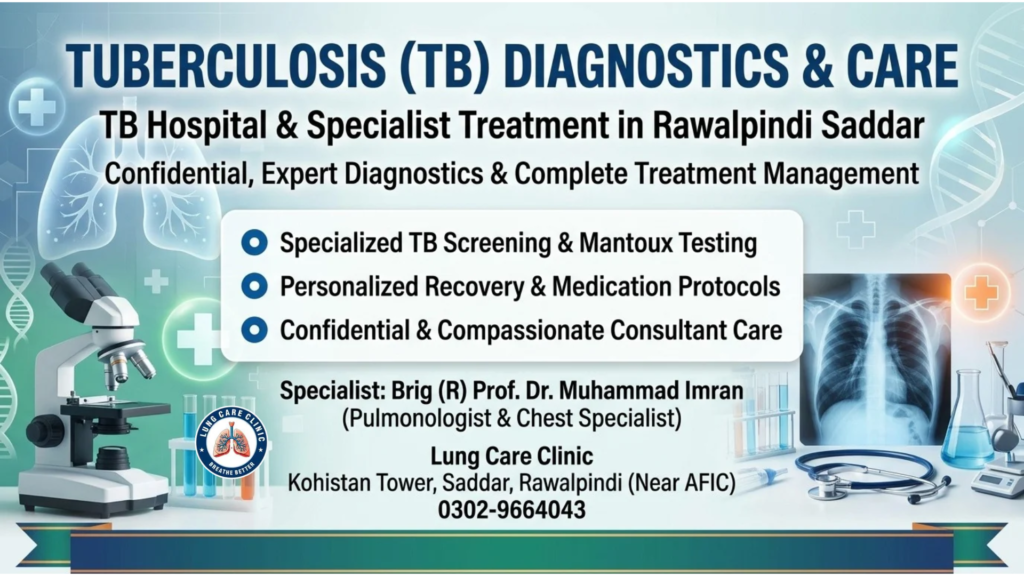
Navigating a tuberculosis diagnosis requires a compassionate environment, strict confidentiality, and uncompromised clinical oversight. Located centrally at Kohistan Tower in Saddar, Rawalpindi (Near AFIC), Lung Care Clinic offers specialized respiratory care tailored to each patient’s needs.
Led by Brig (R) Prof. Dr. Muhammad Imran, a renowned pulmonologist and chest specialist with decades of military and clinical leadership experience, the clinic provides comprehensive diagnostic evaluations, precise treatment monitoring, and dedicated recovery support. Patients receive direct, consultant-led attention at every visit, ensuring the highest standards of medical safety.
Frequently Asked Questions
Is tuberculosis completely curable?
Yes, pulmonary and extrapulmonary tuberculosis are entirely curable provided that patients complete the full multi-month course of prescribed medications without skipping doses.
Can I transmit TB to my family members?
Active pulmonary tuberculosis spreads through the air when an infected person coughs, sneezes, or speaks. However, after starting effective treatment, patients typically become non-infectious within a few weeks. Specialist guidance helps protect household contacts during the initial weeks of therapy.
What is a Mantoux test?
The Mantoux tuberculin skin test is a screening tool used to determine if a person has been infected with the tuberculosis bacterium. While a positive test indicates exposure or latent infection, further diagnostic evaluations are required to confirm active disease.
For expert tuberculosis screening, specialist consultation, and managed respiratory care,
Visit Lung Care Clinic located at Kohistan Tower, Saddar, Rawalpindi (Near AFIC), or call 0302-9664043.