A Tuberculosis Test Rawalpindi can help identify whether a person may have tuberculosis (TB) and whether further diagnostic evaluation is needed. TB is an infectious disease that most often affects the lungs, although it can affect other parts of the body as well. Early assessment is important, particularly when a person has a persistent cough, fever, night sweats, unexplained weight loss, chest discomfort, or coughing blood.
TB screening does not always involve one single test. Instead, doctors may recommend different tests based on symptoms, medical history, exposure to TB, and the possibility of active or inactive infection. A specialist assessment can help determine which tests are appropriate.
For patients looking for TB screening in Rawalpindi, understanding the difference between screening and diagnosis is important. A screening test may indicate TB infection, while additional testing may be required to determine whether active tuberculosis is present.
What Is Tuberculosis?
Tuberculosis is an infectious disease caused by bacteria known as Mycobacterium tuberculosis. The infection most commonly affects the lungs, which is called pulmonary tuberculosis.
TB can spread through the air when a person with infectious pulmonary TB coughs, speaks, sings, or sneezes. However, not everyone exposed to TB develops active disease.
Some people can have TB infection without symptoms. This is often referred to as inactive or latent TB infection. Others develop active TB disease, which can cause symptoms and may spread to other people depending on the site and infectiousness of the disease.
Because the infection can develop in different ways, testing should be interpreted alongside the patient’s clinical condition.
When Should You Consider TB Screening?
TB screening may be appropriate when there has been known exposure to someone with TB or when symptoms raise concern about tuberculosis.
Common symptoms that may require medical assessment include:
- Cough lasting several weeks
- Fever
- Night sweats
- Unexplained weight loss
- Loss of appetite
- Fatigue or weakness
- Chest discomfort
- Coughing blood
- Shortness of breath in some cases
These symptoms do not automatically mean that a person has tuberculosis. Many other respiratory conditions can cause similar symptoms.
For example, persistent cough can occur with asthma, COPD, bronchitis, pneumonia, allergies, reflux, and other conditions. Therefore, testing should be selected based on the overall clinical picture.
Tuberculosis Test Rawalpindi – Which Tests May Be Used?
A Tuberculosis Test Rawalpindi may refer to several different types of TB testing.
The appropriate test depends on what the doctor is trying to determine.
Common approaches include:
- TB skin testing
- TB blood testing
- Chest imaging
- Sputum testing
- Molecular testing
- Other investigations when clinically indicated
No single test is suitable for every patient.
Mantoux Test
The Mantoux test, also called the tuberculin skin test or TST, is one method used to assess whether a person has been infected with TB bacteria.
During the test, a small amount of tuberculin is placed into the skin of the forearm. The area is then checked after the required period, usually 48 to 72 hours.
The healthcare professional measures the amount of swelling rather than simply looking at redness.
A positive result can indicate TB infection, but it does not by itself prove that a person has active pulmonary tuberculosis.
Previous Bacillus Calmette-Guérin (BCG) vaccination and certain other factors can affect interpretation. Therefore, the result should be considered alongside medical history and other findings.
Patients searching for a Mantoux Test Rawalpindi should therefore understand that the test is part of an assessment rather than a complete diagnosis by itself.
TB Blood Tests
Blood tests known as interferon-gamma release assays (IGRAs) can also help detect TB infection.
These tests measure the immune response to TB-related proteins in a blood sample.
IGRAs can be useful in certain situations, including some people who have received BCG vaccination.
Like the Mantoux test, an IGRA can indicate TB infection but does not by itself determine whether the infection is active in the lungs.
Further evaluation may be necessary when active TB is suspected.
Chest X-Ray for Tuberculosis Evaluation
A chest X-ray can be an important part of evaluating suspected pulmonary TB.
The imaging may show abnormalities that increase or decrease concern for tuberculosis. However, chest X-ray findings are not always specific to TB.
Other lung conditions can produce similar changes.
Therefore, a doctor may combine the imaging findings with symptoms, exposure history, physical examination, and laboratory testing.
A chest X-ray can support the diagnostic process, but it should not automatically be treated as proof of TB.
Sputum Testing for Pulmonary TB
When pulmonary tuberculosis is suspected, sputum may be collected for laboratory testing.
Sputum is mucus that comes from the lower respiratory tract.
Laboratories can examine sputum for evidence of TB bacteria. Depending on the clinical situation and available testing, microscopy, culture, or molecular tests may be used.
Molecular testing can help detect TB genetic material and, in appropriate settings, may also provide information about resistance to certain medicines.
The exact test depends on the patient’s symptoms, local testing availability, and clinical requirements.
Molecular TB Testing
Modern molecular tests can detect genetic material associated with Mycobacterium tuberculosis.
Some molecular tests can also identify certain forms of drug resistance.
This information can be valuable because tuberculosis treatment depends on using effective medicines for the specific infection.
If drug resistance is suspected, additional laboratory testing may be required.
A doctor can determine which test is appropriate based on the patient’s presentation and available diagnostic facilities.
TB Screening vs TB Diagnosis
TB screening and TB diagnosis are not exactly the same.
Screening generally aims to identify people who may have TB infection or who require further assessment.
Diagnosis goes further. It considers symptoms, examination findings, imaging, laboratory results, and other relevant information to determine whether active disease is present.
For example, a person with a positive Mantoux test may have evidence of TB infection. That result does not automatically mean the person has active pulmonary tuberculosis.
Further assessment may be needed to determine whether active disease is present.
This distinction is important because treatment decisions depend on the clinical diagnosis.
Who May Need TB Screening?
TB testing may be recommended for people with certain risk factors or clinical circumstances.
These can include:
- People who have been in close contact with someone with infectious TB
- People with symptoms suggestive of tuberculosis
- People living or working in settings where TB exposure is more likely
- People with certain medical conditions that increase the risk of TB disease
- People undergoing medical evaluation where TB needs to be excluded
- People with previous TB exposure or a history that requires assessment
The decision to test should be individualized.
If you have concerns about TB exposure or symptoms, speak with a qualified healthcare professional rather than relying on an online symptom checklist.
What Happens During a TB Evaluation?
A TB evaluation usually begins with a detailed medical history.
The doctor may ask about:
- Duration of cough
- Fever
- Night sweats
- Weight changes
- Appetite
- Previous TB exposure
- Previous TB treatment
- Household or workplace exposure
- Travel or living history when relevant
- Current medicines
- Other medical conditions
The doctor may then perform a physical examination.
Depending on the findings, the evaluation may include a Mantoux test, TB blood test, chest X-ray, sputum testing, molecular testing, or other investigations.
The exact combination varies from patient to patient.
Can a Positive TB Test Confirm Active TB?
Not necessarily.
This is one of the most important points to understand about tuberculosis testing.
A positive TB skin test or blood test generally indicates TB infection, but it does not establish whether the person has active TB disease.
If active pulmonary TB is suspected, doctors may need to assess symptoms, chest imaging, and respiratory samples.
Therefore, patients should avoid interpreting one test result without professional guidance.
Can TB Be Diagnosed Without Symptoms?
Yes, TB infection can sometimes be identified in people who do not have symptoms.
This is why screening can be useful for people with known exposure or certain risk factors.
However, the evaluation of a person without symptoms can differ from the evaluation of someone who has an ongoing cough, fever, weight loss, or other signs of active disease.
The doctor will determine which approach is appropriate.
Why Early TB Evaluation Matters
Early evaluation can be important when symptoms suggest tuberculosis.
Delayed assessment can allow an underlying condition to remain untreated. In cases of infectious pulmonary TB, delayed diagnosis can also increase the period during which transmission may occur.
However, early evaluation does not mean every cough requires a TB test.
Instead, the doctor should assess the symptoms and risk factors before selecting appropriate investigations.
This approach helps avoid unnecessary testing while ensuring that concerning symptoms receive proper attention.
Coughing Blood and TB
Coughing blood, also called hemoptysis, can occur with tuberculosis.
However, TB is not the only possible cause.
Other conditions can also cause blood in sputum, including respiratory infections, bronchiectasis, certain lung diseases, and other serious conditions.
Therefore, coughing blood should not be automatically attributed to TB.
If you cough up blood, particularly repeatedly or in significant amounts, seek prompt medical assessment.
TB Testing and Treatment
Testing is only one part of TB care.
If active tuberculosis is diagnosed, treatment usually requires a combination of prescribed anti-TB medicines taken for an appropriate duration.
The treatment plan depends on the type of TB, drug-susceptibility results, the patient’s overall condition, and national or local treatment protocols.
Patients should not start, stop, or change TB medicines without medical supervision.
Completing treatment as prescribed is important because incomplete or inappropriate treatment can contribute to treatment failure and drug resistance.
TB Screening in Saddar, Rawalpindi
People searching for TB Screening Saddar Rawalpindi may want convenient access to specialist respiratory evaluation.
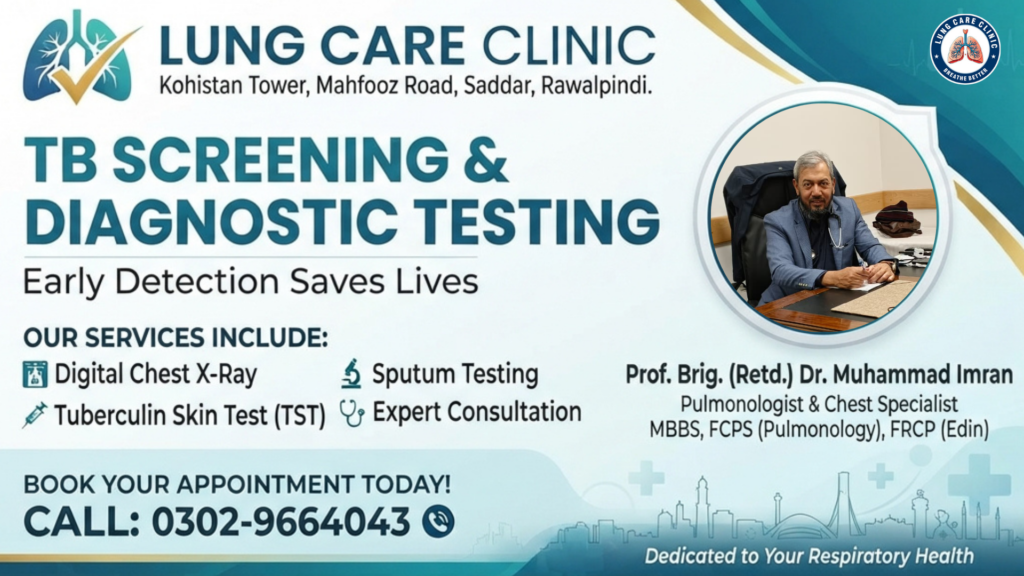
At Lung Care Clinic, patients with persistent cough, unexplained respiratory symptoms, possible TB exposure, or other chest concerns can receive specialist assessment.
Prof. Brig. (Retd.) Dr. Muhammad Imran, Pulmonologist & Chest Specialist, can review symptoms, medical history, previous reports, and available investigations to determine the appropriate next step.
Depending on the clinical situation, further TB testing or chest investigations may be recommended.
The goal is to identify the likely cause of respiratory symptoms and guide appropriate medical care.
How to Prepare for a TB Consultation
Before your appointment, gather any previous medical records that may help the doctor understand your condition.
You can bring:
- Previous chest X-rays or CT scans
- Blood test reports
- Previous TB test results
- Previous prescriptions
- Current medicines
- Previous sputum reports
- Details of previous TB treatment, if applicable
It is also helpful to tell the doctor when your symptoms started and whether you have had contact with anyone diagnosed with TB.
Providing complete information can help the doctor plan the appropriate evaluation.
A Tuberculosis Test Rawalpindi may involve different types of testing depending on the patient’s symptoms, exposure history, and clinical risk.
The Mantoux test and TB blood tests can help identify TB infection. However, they do not by themselves prove active pulmonary tuberculosis. Chest imaging, sputum testing, molecular tests, and other investigations may be needed when active disease is suspected.
Most importantly, persistent cough, fever, night sweats, unexplained weight loss, chest discomfort, or coughing blood should receive appropriate medical attention.
If you are looking for tuberculosis testing in Rawalpindi or TB screening in Saddar, specialist evaluation can help determine which diagnostic steps are appropriate for your situation.
Prof. Brig. (Retd.) Dr. Muhammad Imran
Pulmonologist & Chest Specialist
Lung Care Clinic
Kohistan Tower, Mahfooz Road, Military Hospital Rd, Opposite AFIC, Saddar, Rawalpindi.
0302-9664043
Serving patients from Rawalpindi & Islamabad.