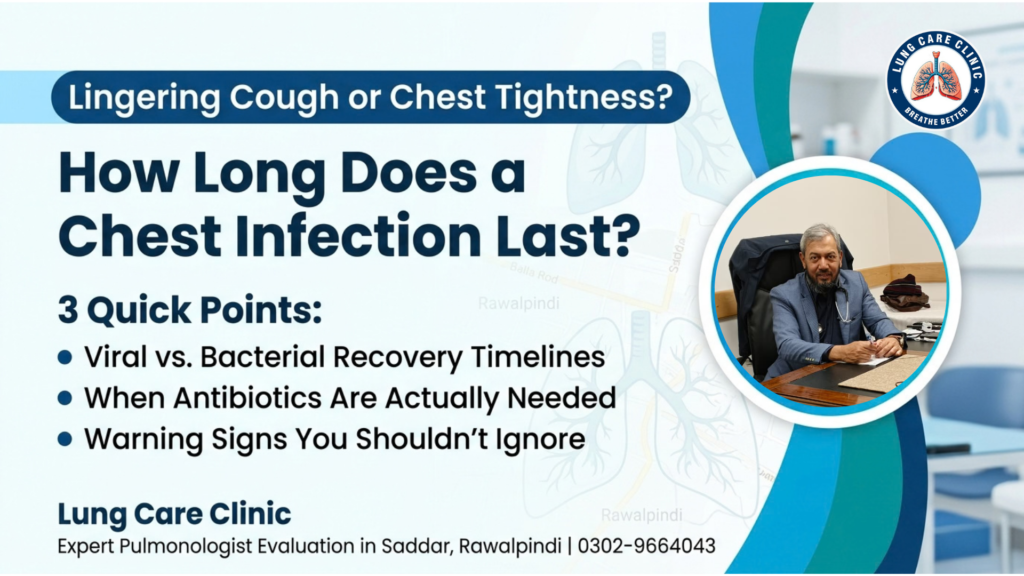
Asking how long does a chest infection last is a common concern for anyone experiencing a persistent cough, chest tightness, fatigue, or breathing discomfort. The total duration of a chest infection depends heavily on whether the cause is viral or bacterial, the specific part of the respiratory tract involved, and your overall health. While mild viral bronchitis often improves within one to three weeks, severe bacterial pneumonia or secondary complications can require several weeks or even months for a complete recovery.
Understanding how long does a chest infection last helps you monitor your symptoms effectively, set realistic recovery expectations, and recognize critical warning signs that require specialist medical evaluation.
How Long Does a Chest Infection Last on Average?
When evaluating how long does a chest infection last, healthcare professionals generally distinguish between mild, uncomplicated bronchitis and more serious deep lung infections like pneumonia.
In most uncomplicated cases, acute viral symptoms begin to improve within 7 to 10 days. However, a lingering post-viral cough can frequently persist for 3 to 4 weeks after the primary infection has cleared. If a chest infection is caused by bacteria, treatment with targeted antibiotics typically begins reducing symptoms within 48 to 72 hours, though physical stamina and full lung function may take several weeks to return to normal.
Viral vs Bacterial Chest Infection Recovery Timelines
The underlying cause of your illness plays a major role in determining how long does a chest infection last. Respiratory infections generally fall into two main categories: viral and bacterial.
| Feature | Viral Chest Infection (e.g., Acute Bronchitis) | Bacterial Chest Infection (e.g., Pneumonia) |
| Typical Duration | 1 to 3 weeks | 2 to 6 weeks (or longer) |
| Symptom Peak | Days 3 to 5 | Variable until treated |
| Antibiotics Needed? | No (Ineffective against viruses) | Yes (Requires prescription) |
| Lingering Cough | 2 to 4 weeks common | 3 to 8 weeks during recovery |
| Fever Duration | 3 to 5 days | Until appropriate antibiotics begin working |
Viral Chest Infection Recovery
Most viral chest infections clear as your immune system mounts a response. While acute fever and body aches subside within a week, inflammation in the bronchial tubes can cause airway sensitivity and coughing that lasts up to a month.
Bacterial Chest Infection Recovery
Bacterial chest infections often produce higher fevers, thicker mucus, and significant fatigue. Once proper antibiotic therapy is started, noticeable clinical improvement usually occurs within 2 to 3 days, but complete resolution of lung inflammation takes time.
When Are Antibiotics for Chest Infection Needed?
Many patients assume that every persistent cough requires antibiotics for chest infection treatment. However, antibiotics only target bacterial infections and have no effect against viral illnesses like acute bronchitis or cold viruses.
A chest specialist will evaluate several clinical factors before deciding if antibiotics are necessary:
- Symptom Duration: Symptoms that progressively worsen after 7 to 10 days or suddenly spike after initial improvement (a “double sickening”).
- Physical Examination: Auscultation with a stethoscope revealing crackles, rales, or localized lung consolidation.
- Laboratory & Imaging Tests: Chest X-rays showing lung infiltrates or blood tests indicating elevated inflammatory markers.
- Patient Vulnerability: High-risk groups, including older adults, individuals with diabetes, or patients with underlying lung diseases like asthma or COPD.
Inappropriate antibiotic use can lead to drug resistance and unnecessary side effects without shortening the duration of a viral illness.
What Factors Cause Persistent Bronchitis Recovery Delays?
If you are wondering how long does a chest infection last because your cough will not go away, several factors can contribute to persistent bronchitis recovery delays:
- Airway Hyperresponsiveness: After an infection, the lining of your airways remains hypersensitive to cold air, dust, and physical exertion, triggering reflex coughing.
- Environmental Irritants: Exposure to tobacco smoke, indoor air pollution, vehicle emissions, or occupational dust continuously re-irritates vulnerable bronchial tissue.
- Secondary Bacterial Infection: A viral illness can temporarily weaken mucosal defenses, allowing opportunistic bacteria to establish a secondary infection.
- Underlying Conditions: Unmanaged asthma, gastroesophageal reflux disease (GERD), or chronic obstructive pulmonary disease (COPD) can prolong recovery significantly.
- Inadequate Rest & Hydration: Returning to strenuous physical activity or failing to drink enough fluids can slow mucus clearance and delay healing.
Home Care & Acceleration Strategies for Recovery
While your body works to clear the infection, specific supportive measures can ease symptoms and promote airway recovery:
- Maintain High Hydration: Drinking plenty of water helps thin bronchial mucus, making it easier to clear from the airways.
- Use Inhalation & Steam: Inhaling steam or using a clean humidifier moistens dry, irritated airway tissues.
- Prioritize Rest: Adequate sleep allows your immune system to allocate energy toward tissue repair and inflammation control.
- Avoid Irritants: Eliminate exposure to secondhand cigarette smoke, harsh cleaning fumes, and heavy air pollution.
- Elevate Your Head: Using extra pillows while resting reduces post-nasal drip and nighttime coughing fits.
Warning Signs – When to See a Pulmonologist
While asking how long does a chest infection last is natural, monitoring for severe symptoms is critical.
You should seek immediate specialist evaluation if you experience any of the following warning signs:
- Shortness of breath or rapid, shallow breathing at rest
- Sharp chest pain that worsens when taking a deep breath or coughing
- High fever accompanied by severe shaking chills
- Coughing up blood or rust-colored sputum
- Blue or pale tint to the lips, face, or fingernails
- Symptoms lasting longer than 3 to 4 weeks without improvement
- Confusion or marked lethargy, especially in elderly family members
Specialist Chest & Lung Infection Care in Rawalpindi
If you or a family member are dealing with a prolonged cough, persistent fever, or breathing difficulty, timely clinical evaluation is essential to prevent long-term lung complications.
At Lung Care Clinic in Saddar, Rawalpindi, Brigadier (R) Prof. Dr. Muhammad Imran, Pulmonologist & Chest Specialist, provides comprehensive diagnostic evaluation and targeted management plans for acute and chronic respiratory conditions.
Proper diagnosis including lung auscultation, pulse oximetry, and necessary diagnostic imaging—ensures you receive the correct treatment without delay.
Consultant: Brigadier (R) Prof. Dr. Muhammad Imran
Specialty: Pulmonologist & Chest Specialist
Lung Care Clinic – Pulmonology & Chest Specialist in Rawalpindi
Address: Kohistan Tower, Mahfooz Road, Military Hospital Rd, Opposite AFIC, Saddar, Rawalpindi
Appointment Line: 0302-9664043