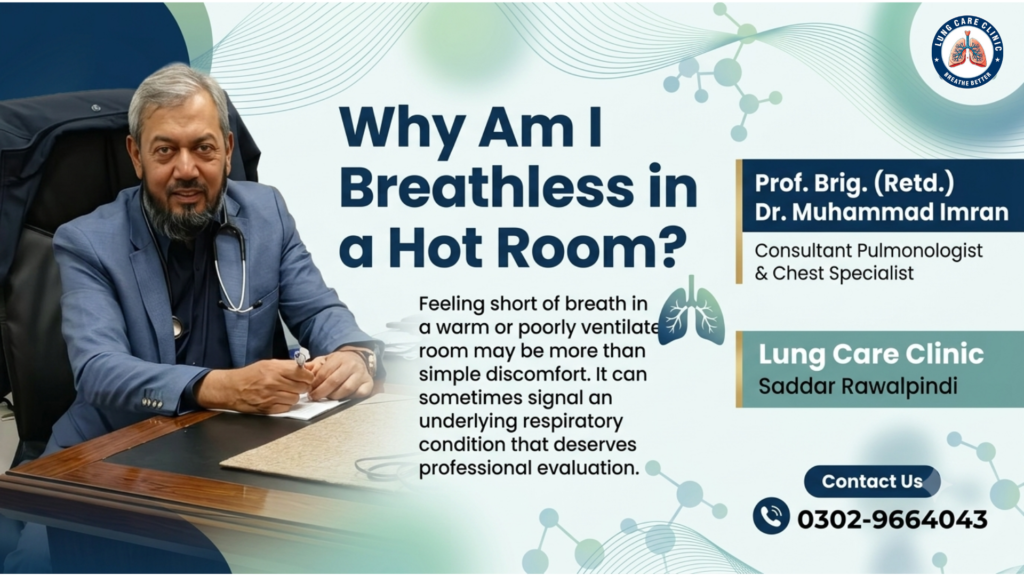
Many people notice that breathing becomes more difficult when they enter a hot or poorly ventilated room. While occasional discomfort may simply be related to temperature, persistent breathlessness in a hot room should not be ignored. In some cases, it may indicate an underlying respiratory condition that requires medical attention.
Understanding why hot indoor environments affect breathing can help you recognize potential warning signs and take steps to protect your lung health.
How Hot Rooms Affect Breathing
When a room becomes excessively warm, the body works harder to regulate its temperature. This process increases the demand for oxygen and can make breathing feel more difficult, especially for individuals with existing respiratory conditions.
Poor ventilation can make the situation worse by reducing airflow and allowing heat, humidity, dust, and other irritants to accumulate. As a result, some people may experience a sensation of not getting enough air, leading to breathlessness and discomfort.
Common Causes of Breathlessness in a Hot Room
Asthma
Asthma is one of the most common reasons people feel breathless in warm environments. Hot air can irritate sensitive airways, causing inflammation and narrowing of the breathing passages.
Symptoms may include:
- Shortness of breath
- Wheezing
- Chest tightness
- Persistent coughing
If these symptoms worsen indoors during hot weather, asthma may be contributing to the problem.
Chronic Obstructive Pulmonary Disease (COPD)
Individuals with COPD often struggle in hot environments because their lungs already have reduced airflow. Heat can place additional stress on the respiratory system, making breathing more difficult.
Common symptoms include:
- Breathlessness
- Fatigue
- Increased coughing
- Difficulty performing routine activities
High Humidity
A hot room often contains elevated humidity levels, which can make the air feel heavy. Humid air may be more difficult to breathe, especially for people with asthma or other chronic lung conditions.
Many patients report worsening respiratory symptoms when heat and humidity occur together.
Poor Air Quality
Dust, smoke, strong odors, and indoor pollutants can accumulate in poorly ventilated spaces. These irritants may trigger breathing difficulties and worsen existing respiratory conditions.
People who are sensitive to allergens may notice symptoms becoming more severe in enclosed environments.
Anxiety and Stress
Feeling trapped in a hot room can sometimes trigger anxiety, which may cause rapid breathing and a sensation of breathlessness. However, persistent symptoms should not automatically be attributed to anxiety without proper medical evaluation.
Warning Signs That Should Not Be Ignored
Occasional discomfort in a warm room may not be serious. However, certain symptoms should prompt medical attention:
- Persistent shortness of breath
- Wheezing
- Chest tightness
- Difficulty speaking due to breathlessness
- Frequent coughing
- Symptoms that worsen over time
- Reduced ability to perform daily activities
These signs may indicate an underlying respiratory condition that requires diagnosis and treatment.
Tips to Improve Breathing in Hot Rooms
Several practical steps may help reduce symptoms:
- Improve room ventilation by opening windows or using fans.
- Use air conditioning when available.
- Stay hydrated throughout the day.
- Avoid overcrowded and poorly ventilated spaces.
- Reduce exposure to indoor pollutants and smoke.
- Follow prescribed treatment plans for asthma or COPD.
If symptoms continue despite these measures, professional evaluation is recommended.
When Should You See a Pulmonologist?
If you frequently feel breathless in hot rooms or notice recurring respiratory symptoms, a comprehensive lung assessment may help identify the underlying cause.
A pulmonologist can evaluate lung function, review symptoms, and recommend appropriate treatment to improve breathing and quality of life.
Feeling breathless in a hot room is often more than simple discomfort. Heat, humidity, poor ventilation, asthma, COPD, and other respiratory conditions can all contribute to breathing difficulties. Recognizing the warning signs and seeking timely medical advice can help prevent complications and support better lung health.
If you experience shortness of breath, chest tightness, wheezing, or other breathing problems, consult Prof. Brig. (Retd.) Dr. Muhammad Imran at Lung Care Clinic, Saddar Rawalpindi, for expert respiratory evaluation and treatment.
Prof. Brig. (Retd.) Dr. Muhammad Imran
Consultant Pulmonologist & Chest Specialist
Lung Care Clinic, Saddar Rawalpindi
0302-9664043