Experiencing excessive sweating and shortness of breath at the same time can be alarming. While these symptoms may occasionally occur during intense physical activity or hot weather, they should not always be dismissed as harmless. In some cases, sweating and shortness of breath may indicate an underlying respiratory or medical condition that requires professional evaluation.
Understanding the possible causes can help you determine when to seek medical attention and protect your overall health.
Why Do Sweating and Shortness of Breath Occur Together?
The body relies on oxygen to function efficiently. When breathing becomes difficult, the body may respond by increasing its effort to obtain oxygen. This extra workload can stimulate sweating as part of the body’s stress response.
In many situations, sweating and breathlessness occur together because the body is working harder than normal to maintain adequate oxygen levels.
Common Causes of Sweating and Shortness of Breath
Asthma
Asthma causes inflammation and narrowing of the airways, making it harder to breathe. During an asthma flare-up, individuals may experience:
- Shortness of breath
- Wheezing
- Chest tightness
- Excessive sweating due to respiratory distress
Symptoms may worsen during hot weather, exposure to allergens, or physical exertion.
Chronic Obstructive Pulmonary Disease (COPD)
COPD is a long-term lung condition that restricts airflow and affects breathing. As the disease progresses, patients often experience increased effort during breathing, which can lead to sweating and fatigue.
Common symptoms include:
- Persistent cough
- Breathlessness
- Increased mucus production
- Excessive sweating during activity
Respiratory Infections
Infections affecting the lungs and airways may cause both sweating and breathing difficulties.
Examples include:
- Pneumonia
- Bronchitis
- Severe respiratory infections
Fever-related sweating combined with shortness of breath should always be evaluated by a healthcare professional.
Heat and Humidity
Hot and humid weather can place additional stress on the respiratory system. Individuals with asthma, COPD, or other lung conditions may find it difficult to breathe comfortably, particularly during heat waves.
Excessive sweating is the body’s natural cooling mechanism, but when accompanied by breathlessness, it may indicate that the respiratory system is under strain.
Anxiety and Panic Episodes
Stress and anxiety can sometimes trigger rapid breathing and excessive sweating. While anxiety-related symptoms are common, it is important not to assume anxiety is the cause without proper medical evaluation, particularly if symptoms are new or severe.
Warning Signs That Should Not Be Ignored
While mild symptoms may occasionally occur, certain situations require prompt medical attention.
Seek medical evaluation if sweating and shortness of breath are accompanied by:
- Persistent chest tightness
- Severe wheezing
- Difficulty speaking due to breathlessness
- Bluish lips or fingertips
- Dizziness or fainting
- Persistent cough
- Symptoms that worsen over time
Early assessment can help identify serious respiratory conditions before complications develop.
How Can You Reduce Symptoms?
Depending on the underlying cause, the following measures may help:
- Stay hydrated, especially during hot weather.
- Avoid exposure to smoke and air pollutants.
- Follow prescribed asthma or COPD treatment plans.
- Limit strenuous outdoor activities during extreme heat.
- Monitor symptoms and seek medical advice if they worsen.
However, self-treatment should never replace professional medical evaluation when symptoms are persistent or severe.
When Should You Consult a Pulmonologist?
If sweating and shortness of breath occur repeatedly, interfere with daily activities, or continue despite rest, a detailed respiratory assessment may be necessary.
A pulmonologist can evaluate lung function, identify underlying respiratory conditions, and recommend appropriate treatment to improve breathing and quality of life.
Sweating and shortness of breath may sometimes result from heat, physical exertion, or temporary illness, but they can also signal significant respiratory problems. Recognizing the warning signs and seeking timely medical advice can help prevent complications and ensure appropriate treatment.
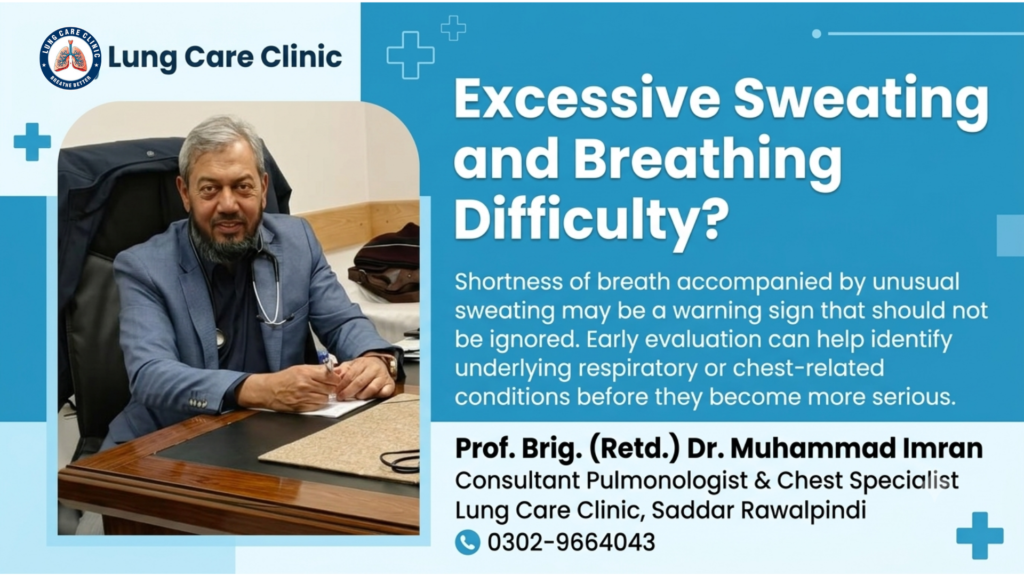
If you are experiencing unexplained breathlessness, chest discomfort, persistent cough, or excessive sweating, consult Prof. Brig. (Retd.) Dr. Muhammad Imran at Lung Care Clinic, Saddar Rawalpindi, for a comprehensive respiratory evaluation.
Prof. Brig. (Retd.) Dr. Muhammad Imran
Consultant Pulmonologist & Chest Specialist
Lung Care Clinic, Saddar Rawalpindi
0302-9664043