Asthma flare-ups can escalate from mild chest tightness to dangerous breathing difficulty within minutes. Knowing the emergency signs of asthma attack helps patients and families act decisively before oxygen levels drop to critical levels.
Whether an acute episode is triggered by seasonal dust, viral chest infection, cold air, or missed controller inhalers, timely medical evaluation protects the airways and prevents life-threatening complications. At Lung Care Clinic, located at Kohistan Tower, Saddar, Rawalpindi (Opposite AFIC), Brig (R) Prof. Dr. Muhammad Imran provides prompt outpatient respiratory assessment, oxygen monitoring, and personalized asthma action plans to keep breathing safe and controlled.
Recognizing the Emergency Signs of Asthma Attack
During an asthma attack, three simultaneous changes narrow the bronchial tubes: airway lining inflammation, tightening of surrounding smooth muscles (bronchospasm), and thick mucus production. Together, these changes trap air inside the lungs and force respiratory muscles to work much harder with every breath.
Recognizing the emergency signs of asthma attack early separates a manageable flare-up from a medical crisis.
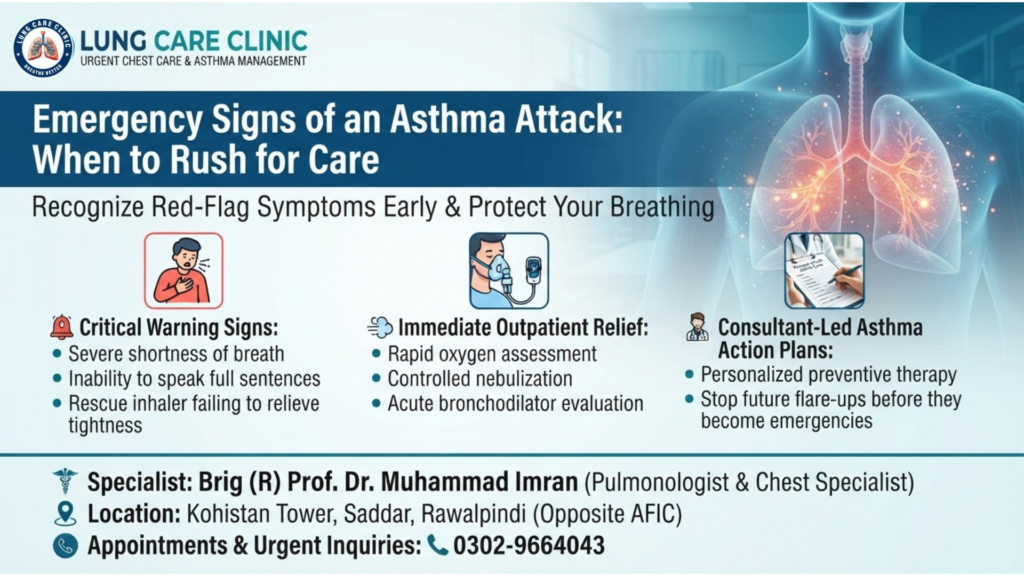
Critical Life-Threatening Signs (Seek Immediate Hospital Emergency Care)
Certain warning signs indicate severe oxygen deprivation or impending respiratory exhaustion and require immediate transport to the nearest 24-hour hospital emergency department:
- Inability to Speak Full Sentences: Pausing for breath after only one or two words while trying to talk.
- Bluish or Grayish Tint (Cyanosis): Discoloration around the lips, tongue, fingernails, or skin.
- Extreme Chest Retractions: Skin pulling inward sharply around the neck, collarbone, or between the ribs with every inhale.
- Silent Chest: Wheezing suddenly stops despite severe breathing distress, indicating dangerously low airflow.
- Drowsiness, Confusion, or Exhaustion: Slumped posture, inability to lie flat, or altered alertness caused by rising carbon dioxide and falling oxygen.
- No Relief After Rescue Inhaler: Breathing continues worsening even after using a fast-acting reliever inhaler as directed.
Early Warning Signs vs. Red-Flag Acute Asthma Symptoms
Most severe asthma attacks build up over several hours or days rather than striking without warning. Paying attention to early changes allows timely outpatient intervention before emergency symptoms appear:
Early Warning Signs (Schedule Urgent Clinic Evaluation)
- Increasing frequency of dry cough, especially late at night or early in the morning.
- Noticeable wheezing or whistling sounds during exhalation.
- Chest heaviness or tightness during routine walking or climbing stairs.
- Waking up from sleep due to coughing or shortness of breath.
- Needing a blue reliever inhaler more than twice a week (excluding pre-exercise doses).
Escalating Acute Symptoms (Same-Day Urgent Chest Care Needed)
- Reliever inhaler relief lasts less than two to three hours.
- Rapid breathing rate and visibly flared nostrils at rest.
- Fast heartbeat accompanied by restlessness or anxiety from air hunger.
- Peak expiratory flow readings dropping into the yellow or red zone of your asthma action plan.
What to Do Immediately When an Asthma Flare-Up Starts
Staying calm and following structured first-aid steps prevents panic from worsening airway constriction:
- Sit Upright Immediately: Sit straight up on a chair or bed edge and lean slightly forward with hands resting on your knees. Never lie flat on your back during an acute attack.
- Use Your Fast-Acting Reliever Inhaler: Administer your prescribed short-acting bronchodilator (such as salbutamol), ideally through a spacer chamber so medication reaches deep into narrowed airways.
- Loosen Tight Clothing: Unbutton collars or restrictive garments around the neck and chest to allow unrestricted ribcage expansion.
- Move Away from Triggers: Step away immediately from dust, smoke, strong perfumes, chemical fumes, or cold drafts.
- Practice Controlled Pursed-Lip Breathing: Inhale slowly through your nose and exhale gently through pursed lips to prevent small airway collapse.
- Monitor Response Closely: If breathing does not ease promptly or any red-flag emergency signs appear, seek urgent medical care without delay.
Common Triggers Behind Sudden Asthma Attacks in Rawalpindi
Identifying local environmental and medical triggers reduces the risk of sudden respiratory flare-ups:
- Seasonal Dust and Pollen Surges: Dry winds, construction dust, and spring or autumn pollen spikes irritate sensitive bronchial linings.
- Viral Respiratory Infections: Common colds, influenza, and seasonal throat infections remain the leading cause of severe asthma exacerbations in both adults and children.
- Air Pollution and Smoke Exposure: Vehicle exhaust, wood smoke, incense, and secondhand tobacco smoke trigger rapid bronchospasm.
- Stopping Controller Inhalers Early: Discontinuing daily anti-inflammatory inhalers once symptoms feel better leaves underlying airway swelling untreated and vulnerable to sudden attacks.
- Sudden Weather Shifts: Moving abruptly from warm indoor spaces into cold morning or night air can constrict hyperreactive airways.
How Outpatient Urgent Chest Care Evaluates Acute Asthma
When patients visit Lung Care Clinic for worsening asthma symptoms, structured outpatient assessment stabilizes breathing and prevents repeat emergencies:
Pulse Oximetry and Vital Sign Assessment
Immediate oxygen saturation measurement checks how effectively oxygen is reaching the bloodstream, alongside respiratory rate and heart rate monitoring.
Targeted Chest Auscultation
Listening carefully across all lung fields evaluates airflow intensity, wheezing distribution, and signs of concurrent chest infection.
Controlled Nebulization and Bronchodilator Therapy
When appropriate for outpatient management, supervised nebulized bronchodilators relax constricted airway muscles safely while clinic staff monitor comfort and oxygen levels.
Inhaler and Spacer Technique Verification
Studies show that improper inhaler coordination is a major reason acute flare-ups occur. Hands-on coaching ensures every puff delivers maximum therapeutic benefit.
Written Asthma Action Plan
Once breathing stabilizes, patients receive a clear step-by-step daily controller regimen and early flare-up protocol tailored to their spirometry results and trigger profile.
Preventive Asthma Control at Kohistan Tower, Saddar, Rawalpindi
True asthma control means living free from nighttime awakenings, emergency visits, and frequent reliever inhaler use. At Lung Care Clinic, located at Kohistan Tower, Saddar, Rawalpindi (Opposite AFIC), Brig (R) Prof. Dr. Muhammad Imran provides comprehensive spirometry testing, personalized controller therapy, and structured follow-up care in a calm ground-floor outpatient setting.
Frequently Asked Questions
How can I tell if my asthma attack requires a hospital emergency room versus an outpatient clinic visit?
If you cannot speak full sentences, notice bluish lips or fingernails, feel drowsy or confused, or get zero relief after using your rescue inhaler, go straight to the nearest 24-hour hospital emergency room. If you are experiencing worsening wheezing, nighttime breathlessness, or increasing reliever inhaler use while still able to speak and walk comfortably, schedule an urgent outpatient evaluation with your pulmonologist the same day.
Why does my rescue inhaler stop working during a severe flare-up?
Rescue inhalers relax tight airway muscles, but they do not reduce deep airway swelling or thick mucus plugs. When inflammation builds up over several days, only targeted anti-inflammatory treatment prescribed by a specialist can restore full airway openness.
Can spirometry testing be done during a severe asthma attack?
No. During an acute flare-up, the priority is stabilizing breathing and oxygen levels first. Once your airways recover, spirometry lung function testing is performed safely to measure baseline capacity and fine-tune long-term preventive medication.
For urgent outpatient asthma evaluation, inhaler review, and personalized respiratory care, visit Lung Care Clinic at Kohistan Tower, Saddar, Rawalpindi (Opposite AFIC), or call 0302-9664043.