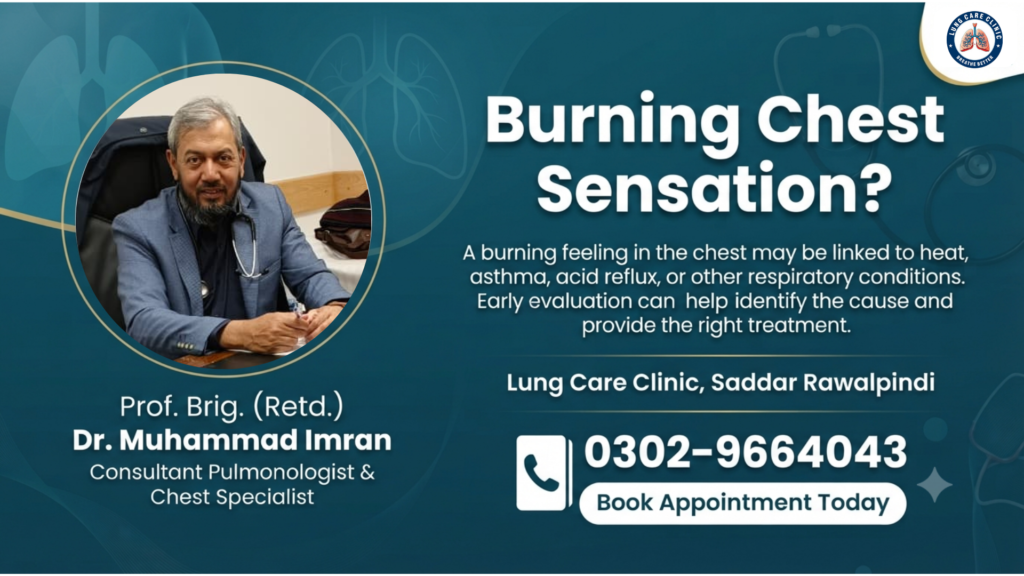
A Burning Chest Sensation can be uncomfortable and sometimes alarming, especially during the hot summer months. Many people notice a burning feeling in the chest after spending time outdoors in high temperatures or humid weather. While heat may contribute to this symptom, it is not always the direct cause. A Burning Chest Sensation may also be linked to asthma, acid reflux (GERD), respiratory infections, allergies, or other lung conditions. Identifying the underlying cause is important because early diagnosis can help prevent complications and improve breathing.
What Is Burning Chest Sensation?
A Burning Chest Sensation refers to a feeling of heat, irritation, or discomfort in the chest. Some people experience it behind the breastbone, while others feel burning across the entire chest. The sensation may occur occasionally or become persistent depending on the underlying condition.
In some cases, the burning feeling is accompanied by coughing, wheezing, or shortness of breath. Others may notice symptoms after physical activity, exposure to heat, or eating a heavy meal.
Common Causes of Burning Chest Sensation
Several health conditions can contribute to a Burning Chest Sensation.
Asthma
Hot weather, humidity, dust, smoke, and seasonal allergens can trigger asthma symptoms. Inflamed airways become narrow, making breathing more difficult and sometimes causing chest burning or tightness.
Other symptoms may include:
- Wheezing
- Persistent cough
- Shortness of breath
- Chest tightness
Proper asthma management helps reduce flare-ups during the summer.
Acid Reflux (GERD)
Acid reflux is one of the most common causes of chest burning. It occurs when stomach acid flows back into the food pipe, producing a burning feeling commonly known as heartburn.
People with GERD may also experience:
- Sour taste in the mouth
- Burning after meals
- Difficulty swallowing
- Symptoms that worsen while lying down
Although GERD affects the digestive system, its symptoms are often mistaken for lung or heart problems.
Respiratory Infections
Chest infections can irritate the lungs and airways, resulting in chest discomfort and coughing. Viral or bacterial infections may also cause fever, fatigue, mucus production, and difficulty breathing.
If symptoms continue for several days or are associated with high fever or coughing up blood, prompt medical evaluation is essential.
Chronic Obstructive Pulmonary Disease (COPD)
People living with COPD may notice worsening respiratory symptoms during hot weather. Heat and poor air quality can increase airway inflammation, making breathing more difficult and contributing to a burning or heavy feeling in the chest.
Common symptoms include:
- Breathlessness
- Chronic cough
- Excess mucus
- Reduced exercise tolerance
Regular follow-up and prescribed medications can help control COPD symptoms.
Hot Weather and Air Pollution
High temperatures alone do not usually cause a burning feeling in the chest, but they can make existing respiratory problems more noticeable. During summer, humidity, dust, smoke, and air pollution often increase, irritating the airways and making breathing uncomfortable.
People with asthma, COPD, or allergies may notice that their symptoms become worse after spending time outdoors in hot weather.
Symptoms That May Accompany Burning Chest Sensation
A burning feeling in the chest may occur with other symptoms, depending on the underlying cause.
These include:
- Shortness of breath
- Persistent cough
- Wheezing
- Chest tightness
- Difficulty taking deep breaths
- Sore throat
- Fatigue
- Heartburn or acid regurgitation
If these symptoms are severe, recurrent, or interfere with your daily activities, they should not be ignored.
Who Is More Likely to Experience This Symptom?
Certain individuals are at greater risk of developing chest burning or respiratory discomfort, including:
- People with asthma
- Individuals with COPD
- Patients with acid reflux (GERD)
- Allergy sufferers
- Smokers
- Older adults
- Children with respiratory conditions
- Individuals frequently exposed to dust, smoke, or air pollution
Understanding your personal risk factors can help you take preventive measures before symptoms worsen.
How Can You Reduce Chest Burning?
Simple lifestyle measures can help reduce chest discomfort and protect your lungs.
Stay Hydrated
Drinking enough water helps your body regulate temperature and may reduce irritation of the respiratory tract during hot weather.
Avoid Extreme Heat
Whenever possible, stay indoors during the hottest hours of the day. If you need to go outside, wear light clothing and avoid strenuous physical activity.
Reduce Exposure to Irritants
Stay away from cigarette smoke, dust, chemical fumes, and polluted environments, as these can aggravate respiratory symptoms.
Follow Your Treatment Plan
If you have asthma, COPD, or another chronic respiratory condition, continue taking your prescribed medications and carry your rescue inhaler if recommended by your physician.
Manage Acid Reflux
If acid reflux contributes to your symptoms, avoid overeating, limit spicy or fatty foods, and avoid lying down immediately after meals.
When Should You See a Pulmonologist?
A burning feeling in the chest should be evaluated if it is persistent, recurrent, or accompanied by breathing difficulties.
Seek medical attention if you experience:
- Chest discomfort lasting several days
- Persistent cough
- Wheezing
- Shortness of breath
- Difficulty performing normal daily activities
- Fever with respiratory symptoms
- Coughing up blood
- Symptoms that continue despite home care
Early diagnosis allows the underlying cause to be identified and treated before complications develop.
A burning feeling in the chest during hot weather should never be ignored, especially if it occurs repeatedly or is associated with cough, wheezing, or shortness of breath. While heat and humidity can aggravate symptoms, underlying conditions such as asthma, COPD, acid reflux, allergies, or respiratory infections may also be responsible. Timely medical evaluation can help identify the cause and ensure appropriate treatment for better long-term lung health.
If you are experiencing persistent chest discomfort or breathing problems, consult Prof. Brig. (Retd.) Dr. Muhammad Imran for a comprehensive respiratory evaluation and personalized treatment.
Prof. Brig. (Retd.) Dr. Muhammad Imran
Consultant Pulmonologist & Chest Specialist
Lung Care Clinic, Saddar Rawalpindi
0302-9664043