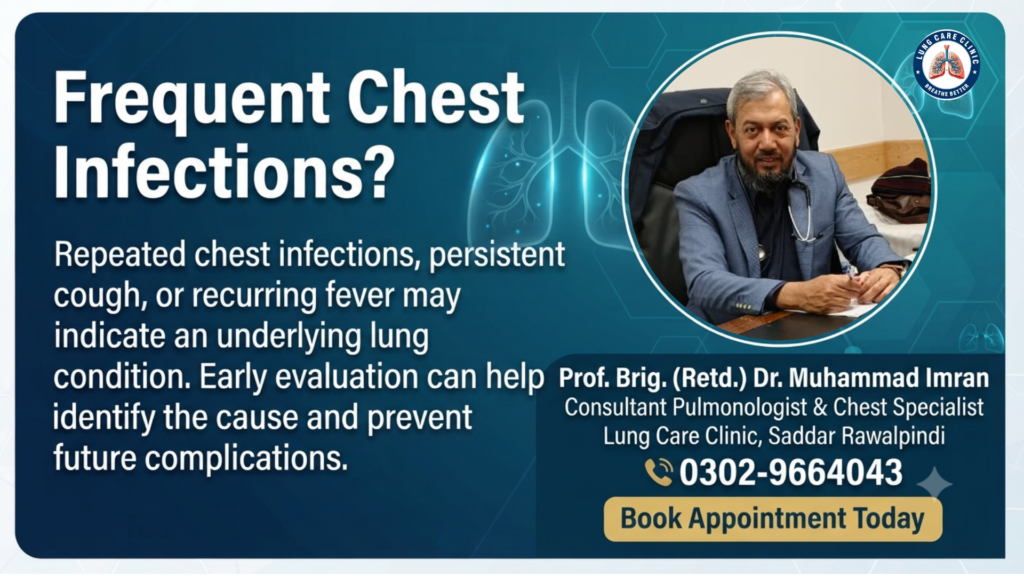
Frequent Chest Infections can be frustrating, uncomfortable, and sometimes a sign of an underlying lung condition. While most people recover from an occasional chest infection without long-term problems, repeated infections should never be ignored. If you find yourself experiencing chest infections several times a year, it is important to identify the cause rather than simply treating each episode with medication.
Understanding Frequent Chest Infections can help you recognize warning signs, protect your lung health, and seek timely medical care before permanent damage develops.
What Are Frequent Chest Infections?
Frequent Chest Infections refer to repeated infections affecting the airways or lungs. These infections may involve the bronchi (bronchitis), lung tissue (pneumonia), or other parts of the respiratory system.
Although there is no single definition, experiencing multiple chest infections within a year or having infections that do not completely resolve may indicate an underlying medical problem.
Repeated infections can gradually damage the lungs if left untreated.
Common Symptoms of Frequent Chest Infections
The symptoms may vary depending on the cause, but many people experience:
- Persistent cough
- Cough with mucus or phlegm
- Fever
- Chest discomfort or chest pain
- Wheezing
- Shortness of breath
- Fatigue
- Chills
- Difficulty performing daily activities
Some people notice that their symptoms improve after treatment but return again within a few weeks or months.
Why Do Some People Get Frequent Chest Infections?
Several conditions can increase the risk of repeated respiratory infections.
Chronic Obstructive Pulmonary Disease (COPD)
COPD damages the airways and reduces the lungs’ ability to clear mucus effectively.
People with COPD are more likely to develop repeated chest infections because bacteria and viruses can remain in the airways more easily.
Symptoms often include:
- Chronic cough
- Excess mucus
- Wheezing
- Breathlessness
- Frequent respiratory infections
Asthma
Poorly controlled asthma causes chronic inflammation of the airways.
Inflamed airways are more sensitive to infections, making some patients experience repeated episodes of cough, wheezing, and chest infections.
Proper asthma management can reduce this risk.
Bronchiectasis
Bronchiectasis is one of the most common causes of Frequent Chest Infections.
In this condition, damaged airways become permanently widened, allowing mucus to accumulate. The trapped mucus creates an ideal environment for bacteria to grow.
Typical symptoms include:
- Daily productive cough
- Thick mucus
- Recurrent chest infections
- Breathlessness
- Fatigue
Early diagnosis helps prevent further lung damage.
Smoking
Smoking damages the tiny hair-like structures (cilia) that normally remove mucus and germs from the lungs.
As a result, smokers have a much higher risk of developing repeated respiratory infections.
Stopping smoking significantly improves lung health over time.
Weak Immune System
People with weakened immune systems are more vulnerable to bacterial and viral infections.
This may occur because of:
- Diabetes
- Certain medications
- Cancer treatment
- Chronic illnesses
- Nutritional deficiencies
Identifying and treating the underlying problem helps reduce infection risk.
Previous Lung Damage
Individuals who have previously had severe pneumonia, tuberculosis (TB), or other serious lung infections may have permanent lung changes that increase the likelihood of future infections.
These patients often benefit from regular follow-up with a pulmonologist.
Who Is More Likely to Develop Frequent Chest Infections?
Certain groups have a higher risk of repeated respiratory infections.
These include:
- Smokers
- Older adults
- Young children
- People with asthma
- Individuals with COPD
- Patients with bronchiectasis
- People with diabetes
- Individuals with weakened immune systems
- Patients with chronic lung diseases
If you belong to one of these groups and repeatedly develop chest infections, specialist evaluation is recommended to identify the underlying cause.
When Should You See a Pulmonologist?
Occasional respiratory infections are common, especially during seasonal changes. However, Frequent Chest Infections that continue to recur should always be evaluated to identify the underlying cause.
Consult a pulmonologist if you experience:
- Two or more chest infections within a year
- Persistent cough lasting more than eight weeks
- Thick yellow, green, or blood-stained sputum
- Recurrent fever
- Wheezing
- Shortness of breath
- Chest pain while breathing or coughing
- Slow recovery after each infection
- Repeated need for antibiotics
Early evaluation can help prevent long-term lung damage and improve quality of life.
How Are Frequent Chest Infections Diagnosed?
Your pulmonologist will first review your medical history, previous infections, smoking history, and existing respiratory conditions.
Depending on your symptoms, the following investigations may be recommended:
- Physical examination
- Chest X-ray
- High-Resolution CT (HRCT) Chest
- Spirometry (Pulmonary Function Test)
- Sputum examination and culture
- Blood investigations
- Oxygen saturation assessment
- Bronchoscopy in selected cases
These tests help identify whether repeated infections are caused by bronchiectasis, asthma, COPD, tuberculosis (TB), pneumonia, immune disorders, or another lung condition.
Treatment for Frequent Chest Infections
Treatment depends on the underlying cause rather than the infection alone.
Your pulmonologist may recommend:
- Antibiotics for confirmed bacterial infections
- Inhaled medications for asthma or COPD
- Airway clearance techniques to remove mucus
- Pulmonary rehabilitation
- Smoking cessation support
- Vaccinations to reduce future respiratory infections
- Nutritional advice to strengthen immunity
- Regular follow-up to monitor lung health
Avoid taking antibiotics without medical advice, as unnecessary use may contribute to antibiotic resistance and fail to treat the actual cause.
Can Frequent Chest Infections Be Prevented?
Although not every infection can be prevented, several measures can reduce the risk.
You can protect your lungs by:
- Stopping smoking
- Washing your hands regularly
- Staying well hydrated
- Following prescribed inhaler treatment
- Receiving recommended influenza and pneumonia vaccinations
- Exercising regularly according to your doctor’s advice
- Avoiding exposure to air pollution and secondhand smoke
- Seeking early medical care when symptoms begin
People with chronic lung diseases should attend regular follow-up appointments even when they feel well.
Frequent Chest Infections should never be dismissed as simply having a “weak chest.” Recurrent infections may indicate an underlying condition such as asthma, Chronic Obstructive Pulmonary Disease (COPD), bronchiectasis, tuberculosis (TB), or another respiratory disorder that requires specialist care.
Early diagnosis and appropriate treatment can reduce the number of future infections, improve breathing, and help preserve long-term lung function. If you continue to experience repeated chest infections, persistent cough, wheezing, or breathlessness, consult a pulmonologist for a comprehensive respiratory evaluation.
Prof. Brig. (Retd.) Dr. Muhammad Imran
Consultant Pulmonologist & Chest Specialist
Lung Care Clinic, Saddar Rawalpindi
0302-9664043