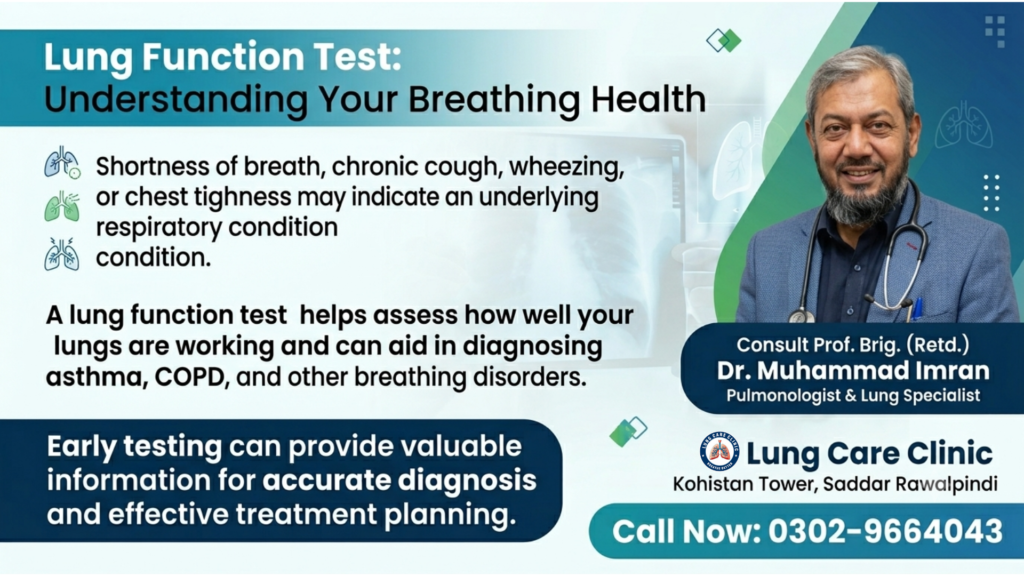
Breathing should feel effortless. However, when symptoms such as shortness of breath, chronic cough, wheezing, or chest tightness occur, it may indicate an underlying respiratory condition. Identifying the cause is the first step toward effective treatment.
A lung function test is one of the most important tools used by pulmonologists to evaluate how well the lungs are working. These tests help diagnose a wide range of respiratory conditions and provide valuable information for treatment planning.
Understanding how lung function testing works can help patients feel more confident about their respiratory evaluation.
What Is a Lung Function Test?
A lung function test is a group of assessments that measure how effectively the lungs move air in and out of the body.
These tests help determine:
- Lung capacity
- Airflow
- Breathing efficiency
- Oxygen exchange performance
A lung function test can reveal whether breathing problems are caused by airway obstruction, lung restriction, or other respiratory abnormalities.
Therefore, these tests play a critical role in diagnosing and monitoring lung disease.
How Spirometry Measures Lung Health
Spirometry is the most commonly performed lung function test.
During spirometry, a patient breathes into a specialized device that measures the amount and speed of air entering and leaving the lungs.
The procedure is simple, safe, and non-invasive.
Spirometry can help identify:
Because spirometry provides objective measurements, it helps doctors make accurate diagnostic decisions.
Why Lung Function Testing Is Important
Many respiratory conditions share similar symptoms.
For example:
- Asthma
- COPD
- Bronchitis
- Allergic airway disease
All may cause coughing, wheezing, and breathing difficulty.
Without proper testing, symptoms alone may not provide enough information for an accurate diagnosis.
Therefore, a lung function test helps distinguish between different respiratory conditions and supports targeted treatment.
Conditions Diagnosed with Lung Function Testing
Asthma
Asthma causes airway inflammation and narrowing.
Lung function testing can detect airflow limitation and help assess symptom severity.
Chronic Obstructive Pulmonary Disease (COPD)
COPD is a chronic respiratory condition that affects airflow.
Spirometry is considered one of the most important tests for diagnosing COPD.
Chronic Bronchitis
Patients with chronic bronchitis often experience persistent cough and mucus production.
Lung function testing helps evaluate airway involvement.
Restrictive Lung Diseases
Certain lung disorders reduce lung expansion and capacity.
Testing can identify these abnormalities and guide further evaluation.
What to Expect During the Test
Many patients worry that breathing tests may be uncomfortable.
Fortunately, most lung function tests are straightforward and painless.
During testing, patients are typically asked to:
- Take a deep breath
- Exhale forcefully into a mouthpiece
- Repeat the maneuver several times
The procedure usually takes only a short period to complete.
Results are then analyzed by a respiratory specialist.
Are Lung Function Tests Safe?
Yes. Lung function tests are generally considered very safe.
Most individuals can undergo testing without complications.
The tests do not involve surgery or invasive procedures.
In some cases, patients may briefly feel lightheaded after forceful exhalation, but this usually resolves quickly.
Therefore, lung function testing remains a widely used and trusted diagnostic tool.
When Should You Have a Lung Function Test?
A pulmonologist may recommend testing if you experience:
- Persistent cough
- Shortness of breath
- Wheezing
- Chest tightness
- Exercise intolerance
- Recurrent respiratory symptoms
Early testing can help identify problems before they become more serious.
As a result, treatment can often begin sooner and improve long-term outcomes.
Beyond Spirometry – Additional Respiratory Evaluation
Although spirometry is highly valuable, some patients require additional investigations.
These may include:
Pulmonary Function Testing (PFT)
Comprehensive testing provides a broader assessment of lung performance.
Oxygen Assessment
Measuring oxygen levels helps evaluate respiratory efficiency.
Chest Imaging
Chest X-rays may reveal structural lung abnormalities.
Clinical Examination
A detailed medical history and physical examination remain essential parts of diagnosis.
Together, these assessments help provide a complete understanding of respiratory health.
Benefits of Early Diagnosis
Early diagnosis offers several advantages:
- More effective treatment planning
- Better symptom control
- Improved quality of life
- Reduced risk of complications
- Ongoing monitoring of lung health
Therefore, patients should not ignore persistent breathing symptoms.
When to Visit a Pulmonologist
You should consult a pulmonologist if:
- Breathing problems persist
- Chronic cough develops
- Wheezing becomes frequent
- Daily activities become difficult
- Symptoms continue despite treatment
Prompt evaluation may lead to earlier diagnosis and better management.
Expert Lung Function Testing in Rawalpindi
People experiencing shortness of breath, chronic cough, wheezing, or unexplained respiratory symptoms should seek professional evaluation.
Consult Prof. Brig. (Retd.) Dr. Muhammad Imran
Pulmonologist & Lung Specialist
Lung Care Clinic, Kohistan Tower, Saddar Rawalpindi
0302-9664043
A lung function test is one of the most valuable tools for diagnosing breathing disorders. Spirometry and other respiratory assessments help identify conditions such as asthma, COPD, chronic bronchitis, and other lung diseases.
If you are experiencing ongoing breathing problems, professional evaluation can provide answers and guide effective treatment. Early diagnosis and proper respiratory care are important steps toward healthier lungs and better quality of life.