
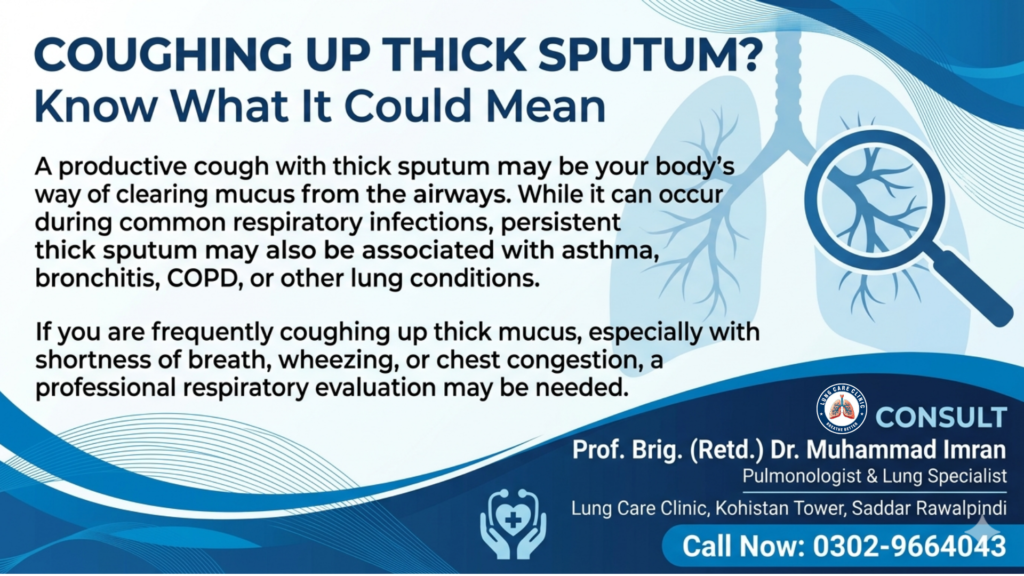
Coughing up thick sputum is a common respiratory symptom that many people experience during illness or chronic lung conditions. Sputum, also known as phlegm, is mucus produced by the lungs and airways. Its purpose is to trap dust, germs, and other particles before they enter deeper into the respiratory system.
While occasional mucus production is normal, persistent coughing up thick sputum may indicate an underlying respiratory problem. Understanding the possible causes can help patients know when to seek medical attention and protect their lung health.
What Does Coughing Up Thick Sputum Mean?
A productive cough is a cough that brings mucus or phlegm out of the lungs.
The thickness, color, and amount of sputum can vary depending on the cause.
Thick sputum often develops when:
- The airways become inflamed
- Mucus production increases
- Infection is present
- Chronic respiratory disease affects the lungs
Therefore, the presence of thick sputum may provide important clues about respiratory health.
Common Causes of Thick Sputum
Respiratory Infections
Respiratory infections are among the most common reasons for coughing up thick sputum.
Examples include:
- Common cold
- Influenza
- Bronchitis
- Pneumonia
During infection, the body produces extra mucus to help clear germs from the airways.
As a result, patients may develop chest congestion and productive coughing.
Bronchitis
Bronchitis occurs when the bronchial tubes become inflamed.
Common symptoms include:
- Persistent cough
- Thick mucus production
- Chest discomfort
- Wheezing
Acute bronchitis often improves over time, while chronic bronchitis may require ongoing management.
Asthma
Although asthma is often associated with wheezing, some patients also produce thick mucus.
Airway inflammation may increase mucus production and contribute to coughing.
Therefore, uncontrolled asthma can sometimes present with productive coughing episodes.
Chronic Obstructive Pulmonary Disease (COPD)
COPD is a chronic lung condition that frequently causes excess mucus production.
Patients may experience:
- Chronic cough
- Thick sputum
- Shortness of breath
- Wheezing
Smoking is one of the leading risk factors for COPD.
When Thick Mucus May Signal a Lung Problem
Not every episode of coughing up mucus is serious. However, certain situations may indicate an underlying lung condition.
Medical evaluation may be necessary if:
- Thick sputum persists for several weeks
- Symptoms repeatedly return
- Breathing becomes difficult
- Chest congestion worsens
- Daily activities are affected
Persistent respiratory symptoms should never be ignored.
What Does Sputum Color Mean?
Sputum color may sometimes provide useful information, although it cannot diagnose a condition by itself.
Clear or White Sputum
Often associated with allergies, viral infections, or mild airway irritation.
Yellow or Green Sputum
May occur during respiratory infections when the immune system is actively responding.
Brown Sputum
Can sometimes be associated with smoking or exposure to environmental pollutants.
Blood-Stained Sputum
This requires prompt medical evaluation.
Therefore, unusual sputum changes should be discussed with a healthcare professional.
Warning Signs That Need Medical Attention
Certain symptoms may indicate a more serious respiratory condition.
Seek medical care if coughing up thick sputum occurs with:
- Shortness of breath
- Chest pain
- Fever
- Wheezing
- Unexplained weight loss
- Blood in sputum
- Persistent fatigue
Early evaluation can help identify the underlying cause and prevent complications.
How Doctors Diagnose the Cause
A pulmonologist may recommend several tests depending on symptoms.
Medical History and Examination
A detailed assessment helps identify possible respiratory conditions.
Chest Imaging
Chest X-rays may reveal infection, inflammation, or other abnormalities.
Pulmonary Function Testing (PFT)
PFT helps evaluate lung performance and airflow.
Sputum Analysis
In some cases, sputum samples may be examined to identify infection or other concerns.
These investigations support accurate diagnosis and treatment planning.
How to Support Healthy Airways
Several habits may help reduce mucus buildup and support lung health.
Stay Hydrated
Adequate fluids help keep mucus thinner and easier to clear.
Avoid Smoking
Smoking increases mucus production and damages the airways.
Maintain Clean Air
Reducing exposure to dust, smoke, and pollutants may improve respiratory health.
Seek Early Treatment
Persistent symptoms should be evaluated promptly.
Early intervention often leads to better outcomes.
When to Visit a Pulmonologist
You should consult a pulmonologist if:
- Thick sputum persists for several weeks
- Chronic cough develops
- Breathing becomes difficult
- Wheezing occurs frequently
- Symptoms interfere with daily life
Early diagnosis may help identify respiratory disease before complications develop.
Expert Lung Care in Rawalpindi
People experiencing coughing up thick sputum, chronic cough, chest congestion, wheezing, or breathing difficulties should seek professional respiratory evaluation.
Consult Prof. Brig. (Retd.) Dr. Muhammad Imran
Pulmonologist & Lung Specialist
Lung Care Clinic, Kohistan Tower, Saddar Rawalpindi
0302-9664043
Coughing up thick sputum may occur due to respiratory infections, bronchitis, asthma, COPD, or other lung conditions. While temporary mucus production can be a normal response to illness, persistent symptoms should not be ignored.
If thick sputum continues, worsens, or occurs alongside breathing difficulties, professional respiratory evaluation is recommended. Early diagnosis and proper treatment can improve breathing, reduce complications, and support long-term lung health.