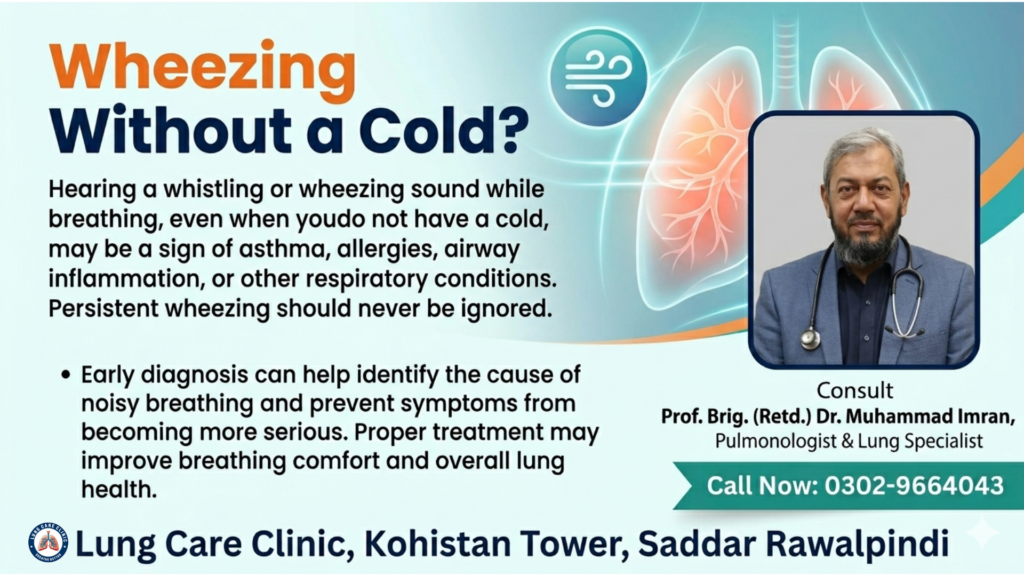
Wheezing no cold symptoms can be confusing and concerning. Many people expect wheezing to occur during a cold or chest infection. However, wheezing can develop even when there are no signs of a viral illness.
A wheezing sound is often described as a whistling noise that occurs during breathing. It usually happens when airflow becomes restricted inside the airways. Therefore, wheezing without a cold should not be ignored, especially if symptoms continue or become frequent.
Understanding the possible causes of wheezing no cold symptoms can help patients seek timely diagnosis and appropriate treatment.
What Does Wheezing No Cold Mean?
Wheezing occurs when air moves through narrowed or inflamed airways. Although respiratory infections can trigger wheezing, they are not the only cause.
In many cases, wheezing no cold symptoms may indicate an underlying respiratory condition. As a result, the body produces abnormal breathing sounds even when there is no fever, sore throat, or runny nose.
Persistent wheezing often signals irritation, inflammation, or obstruction within the airways.
Common Causes of Wheezing Without a Cold
Asthma
Asthma is one of the most common causes of wheezing no cold symptoms.
The airways become inflamed and sensitive to triggers such as dust, smoke, pollution, exercise, or weather changes.
Common asthma symptoms include:
- Wheezing
- Shortness of breath
- Chest tightness
- Chronic cough
Therefore, patients with recurring wheezing should be evaluated for asthma.
Allergies
Allergic reactions may also trigger wheezing.
Exposure to allergens such as:
- Dust mites
- Pollen
- Pet dander
- Mold
can cause airway swelling and breathing difficulty.
As a result, some patients develop wheezing even without infection.
Chronic Obstructive Pulmonary Disease (COPD)
COPD is a long-term lung condition that affects airflow.
Smoking is the leading risk factor. However, environmental exposure may also contribute.
Patients with COPD often experience:
- Wheezing
- Chronic cough
- Breathlessness
- Excess mucus production
Therefore, wheezing in adults should not automatically be blamed on allergies alone.
Airway Irritation
Strong odors, air pollution, smoke, and chemical fumes can irritate the airways.
This irritation may trigger temporary wheezing and breathing discomfort.
People exposed to workplace dust or pollutants may notice symptoms more frequently.
Gastroesophageal Reflux Disease (GERD)
Acid reflux may sometimes contribute to wheezing.
When stomach acid travels upward, it can irritate the airways and trigger breathing symptoms.
Some patients experience:
- Chronic cough
- Throat irritation
- Wheezing
- Hoarseness
Therefore, wheezing may occasionally originate outside the lungs.
When Wheezing Becomes a Warning Sign
Not all wheezing is harmless.
Certain symptoms may indicate a more serious respiratory problem.
Seek medical evaluation if wheezing occurs with:
- Shortness of breath
- Chest tightness
- Persistent cough
- Difficulty speaking
- Low oxygen symptoms
- Frequent nighttime breathing problems
Moreover, worsening wheezing should never be ignored.
How Doctors Diagnose Wheezing
A pulmonologist evaluates the patient’s symptoms, medical history, and breathing patterns.
Additional tests may include:
Pulmonary Function Testing (PFT)
This test measures how well the lungs move air.
Chest Imaging
Chest X-rays may help identify lung abnormalities.
Allergy Assessment
Testing may identify environmental triggers.
Oxygen Level Evaluation
Oxygen assessment helps determine whether breathing is being affected.
Proper diagnosis helps identify the exact cause of wheezing and guides treatment decisions.
Treatment Options for Wheezing No Cold Symptoms
Treatment depends on the underlying cause.
Asthma Management
Asthma medications help reduce airway inflammation and improve airflow.
Allergy Control
Avoiding triggers may significantly reduce wheezing episodes.
Smoking Cessation
Quitting smoking improves lung function and reduces airway irritation.
Environmental Protection
Reducing exposure to smoke, dust, and pollution may improve symptoms.
Managing Acid Reflux
Patients with GERD-related wheezing may benefit from reflux treatment.
Therefore, treatment should always address the root cause rather than only the symptom.
How to Protect Your Lung Health
Several lifestyle measures may help reduce respiratory symptoms.
Stay Physically Active
Regular activity supports lung function and overall health.
Avoid Smoking
Smoking remains one of the leading causes of chronic respiratory disease.
Maintain Clean Indoor Air
Air purifiers and regular cleaning may reduce allergen exposure.
Seek Early Medical Care
Persistent wheezing should never be ignored.
Early intervention often prevents more serious respiratory complications.
When to Visit a Pulmonologist
You should seek professional respiratory evaluation if:
- Wheezing occurs repeatedly
- Breathing becomes difficult
- Symptoms interfere with sleep
- Chest tightness develops
- Chronic cough persists
Early diagnosis may help prevent worsening lung disease and improve quality of life.
Expert Lung Care in Rawalpindi
People experiencing wheezing, breathing problems, asthma symptoms, or chronic cough should seek professional respiratory evaluation.
Consult Prof. Brig. (Retd.) Dr. Muhammad Imran
Pulmonologist & Lung Specialist
Lung Care Clinic, Kohistan Tower, Saddar Rawalpindi
0302-9664043
Wheezing no cold symptoms may be caused by asthma, allergies, airway irritation, COPD, or other respiratory conditions. While occasional wheezing may seem harmless, persistent symptoms should never be ignored.
Early diagnosis and proper treatment can improve breathing, reduce complications, and support long-term lung health. If wheezing continues without a cold, a professional respiratory evaluation is strongly recommended.