Chest congestion is a common respiratory symptom that affects people of all ages. It often causes a feeling of heaviness in the chest, excess mucus production, coughing, and difficulty breathing comfortably.
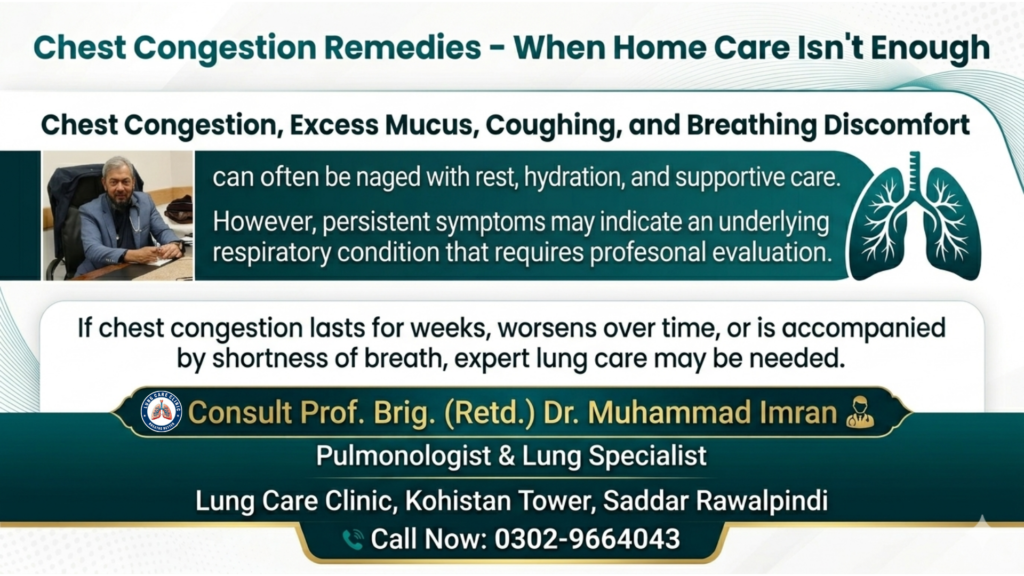
Many people search for chest congestion remedies to find quick relief at home. While certain home measures may help reduce symptoms, persistent chest congestion can sometimes indicate a more serious respiratory condition.
Therefore, understanding when home treatment is appropriate and when professional medical care is necessary is important for protecting lung health
What Causes Chest Congestion?
Chest congestion occurs when mucus accumulates in the airways and lungs.
The body naturally produces mucus to trap dust, germs, and other irritants. However, certain conditions can increase mucus production and lead to congestion.
Common causes include:
- Viral respiratory infections
- Common cold
- Influenza
- Bronchitis
- Asthma
- Allergies
- COPD
- Smoking-related lung irritation
As a result, patients may experience coughing, chest tightness, and breathing discomfort.
Common Chest Congestion Remedies at Home
Many chest congestion remedies may help loosen mucus and improve comfort.
Stay Hydrated
Drinking adequate fluids helps thin mucus, making it easier to clear from the airways.
Warm water, soups, and caffeine-free beverages may be especially helpful.
Steam Inhalation
Warm steam can help moisturize irritated airways.
Some people find temporary relief by inhaling steam from a bowl of warm water or taking a warm shower.
Rest
The body recovers more effectively when it has adequate rest.
Therefore, getting sufficient sleep is important during respiratory illnesses.
Use a Humidifier
Dry air may worsen airway irritation.
A humidifier can add moisture to the air and improve breathing comfort.
Avoid Smoking
Smoking increases airway inflammation and mucus production.
Therefore, avoiding cigarettes and secondhand smoke is essential.
When Home Remedies May Help
Home treatment may be appropriate when symptoms are mild and short-lasting.
Examples include:
- Mild viral infections
- Temporary mucus buildup
- Seasonal allergy symptoms
- Minor respiratory irritation
In these situations, chest congestion often improves within several days.
However, symptoms should continue to improve gradually.
When Home Remedies Are Not Enough
Not all chest congestion responds to home care alone.
Persistent symptoms may indicate an underlying lung condition requiring medical attention.
Patients should be cautious if congestion:
- Lasts more than two to three weeks
- Continues to worsen
- Causes breathing difficulty
- Interferes with sleep
- Occurs repeatedly
Therefore, ongoing chest congestion should not be ignored.
Warning Signs That Require Medical Care
Certain symptoms suggest the need for professional evaluation.
Seek medical attention if you experience:
Shortness of Breath
Difficulty breathing may indicate significant airway obstruction or lung disease.
Wheezing
A whistling sound during breathing may suggest asthma or airway inflammation.
Chest Pain
Persistent chest discomfort should always be evaluated.
Blood in Sputum
Coughing up blood requires prompt medical assessment.
High Fever
A prolonged fever may indicate a serious infection.
Persistent Cough
A cough lasting several weeks should not be considered normal.
Early evaluation may help identify potentially serious respiratory conditions.
Conditions Commonly Associated With Chronic Chest Congestion
Several respiratory disorders may cause long-term congestion.
Asthma
Inflamed airways may produce excess mucus and recurring symptoms.
Chronic Bronchitis
This condition causes ongoing airway inflammation and mucus production.
COPD
Patients with COPD frequently experience chronic cough and chest congestion.
Pneumonia
Lung infections may lead to significant mucus accumulation and breathing difficulties.
Allergies
Allergic reactions can contribute to airway swelling and congestion.
Therefore, identifying the underlying cause is essential for effective treatment.
How Doctors Evaluate Chest Congestion
A pulmonologist may recommend several tests depending on symptoms.
These may include:
- Pulmonary Function Testing (PFT)
- Chest X-rays
- Oxygen level assessment
- Sputum analysis
- Physical examination
These evaluations help determine the cause of congestion and guide treatment planning.
Protecting Your Lung Health
Several habits may help reduce respiratory problems:
Avoid Tobacco Smoke
Smoking remains a major cause of chronic respiratory disease.
Stay Physically Active
Regular movement helps support healthy lung function.
Manage Allergies
Reducing exposure to triggers may prevent airway irritation.
Seek Early Treatment
Prompt medical care may prevent complications and improve outcomes.
When to Visit a Pulmonologist
You should consult a pulmonologist if:
- Chest congestion lasts longer than expected
- Breathing becomes difficult
- Wheezing develops
- Chronic cough persists
- Symptoms repeatedly return
Early diagnosis often leads to better treatment results and improved quality of life.
Expert Lung Care in Rawalpindi
People experiencing persistent chest congestion, chronic cough, breathing problems, or excess mucus production should seek professional respiratory evaluation.
Consult Prof. Brig. (Retd.) Dr. Muhammad Imran
Pulmonologist & Lung Specialist
Lung Care Clinic, Kohistan Tower, Saddar Rawalpindi
0302-9664043
Chest congestion remedies may provide relief for mild respiratory symptoms. However, home treatments are not always enough. Persistent congestion, breathing difficulty, or chronic cough may indicate an underlying lung condition requiring medical attention.
Therefore, patients with ongoing chest congestion should seek professional respiratory evaluation. Early diagnosis and proper treatment can improve breathing, reduce complications, and support long-term lung health.