
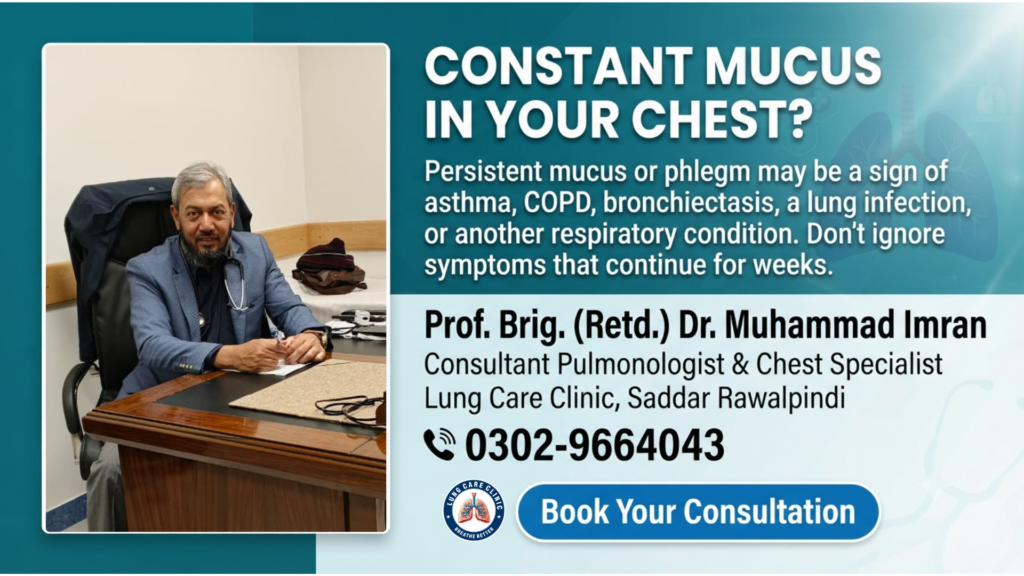
Having Constant Mucus in Chest can be frustrating and uncomfortable. While mucus plays an important role in protecting your lungs, excessive or persistent mucus production may indicate an underlying respiratory condition that requires medical attention.
Many people ignore ongoing chest mucus, assuming it is caused by a common cold or seasonal allergies. However, if mucus continues for several weeks, repeatedly returns, or is accompanied by coughing or breathing difficulty, it should not be overlooked.
Understanding the possible causes of Constant Mucus in Chest can help you seek timely diagnosis and appropriate treatment before more serious lung problems develop.
What Is Chest Mucus?
Mucus is a thick fluid naturally produced by the respiratory system. It helps trap dust, bacteria, viruses, and other harmful particles before they reach the lungs.
Normally, small amounts of mucus are cleared without you noticing. However, when the airways become irritated or inflamed, the lungs may produce much larger amounts of mucus.
This can lead to persistent chest congestion, frequent throat clearing, and coughing up phlegm.
Is Constant Mucus in Chest Normal?
Occasional mucus production during a cold or respiratory infection is common. However, Constant Mucus in Chest that lasts for weeks or keeps returning is not considered normal.
Persistent mucus may indicate inflammation, chronic airway disease, infection, or another respiratory disorder that requires specialist evaluation.
Common Causes of Constant Mucus in Chest
Several lung conditions can cause excessive mucus production.
Chronic Bronchitis
Chronic bronchitis is one of the most common causes of Constant Mucus in Chest.
It occurs when the airways remain inflamed for a prolonged period, leading to excessive mucus production.
Symptoms often include:
- Daily cough
- Thick mucus
- Chest congestion
- Wheezing
- Shortness of breath
Smoking is the leading risk factor for chronic bronchitis.
Chronic Obstructive Pulmonary Disease (COPD)
COPD frequently causes increased mucus production because damaged airways produce excessive secretions.
Patients may experience:
- Persistent mucus
- Chronic cough
- Wheezing
- Breathlessness
- Frequent chest infections
Early diagnosis and treatment can help reduce symptoms and slow disease progression.
Bronchiectasis
Bronchiectasis causes permanent widening of the airways, making it difficult to clear mucus effectively.
Typical symptoms include:
- Large amounts of mucus
- Chronic cough
- Recurrent chest infections
- Wheezing
- Breathlessness
Without treatment, repeated infections may gradually damage the lungs.
Asthma
Although asthma is commonly associated with wheezing and breathlessness, some patients also produce excess mucus.
Inflammation of the airways may result in:
- Persistent cough
- Chest tightness
- Wheezing
- Increased mucus production
Proper asthma control usually helps reduce mucus formation.
Lung Infections
Respiratory infections can temporarily increase mucus production as the body works to remove bacteria or viruses.
Examples include:
- Pneumonia
- Acute bronchitis
- Viral respiratory infections
If mucus remains after the infection has resolved, further evaluation may be necessary.
Smoking
Smoking continuously irritates the airways and stimulates mucus-producing glands.
Long-term smokers often develop:
- Constant mucus in the chest
- Morning cough
- Chest congestion
- Chronic bronchitis
- COPD
Quitting smoking is one of the most important steps toward improving lung health.
Other Possible Causes
Although lung diseases are the most common reasons for Constant Mucus in Chest, other conditions may also contribute, including:
- Allergies
- Postnasal drip
- Air pollution exposure
- Occupational dust exposure
- Gastroesophageal reflux disease (GERD)
A detailed medical evaluation helps determine the exact cause.
Symptoms That May Accompany Constant Mucus
People with Constant Mucus in Chest may also notice:
- Persistent cough
- Thick phlegm
- Wheezing
- Shortness of breath
- Chest tightness
- Frequent throat clearing
- Recurrent chest infections
- Fatigue
These associated symptoms provide important clues about the underlying respiratory condition.
Who Is More Likely to Develop Constant Mucus in Chest?
The risk is higher among:
- Smokers
- Former smokers
- Patients with COPD
- Individuals with asthma
- People with bronchiectasis
- Individuals exposed to dust or chemical fumes
- Older adults
- People with repeated respiratory infections
If chest mucus continues for several weeks or repeatedly returns despite treatment, specialist assessment is recommended to identify the underlying cause.
How Is Constant Mucus in Chest Diagnosed?
If you have Constant Mucus in Chest, a pulmonologist will perform a detailed evaluation to determine the underlying cause. Your doctor will ask about the duration of symptoms, smoking history, allergies, previous lung infections, occupational exposure, and other medical conditions.
Depending on your symptoms, the following investigations may be recommended:
- Physical examination
- Spirometry (Pulmonary Function Test)
- Chest X-ray
- High-Resolution CT (HRCT) Chest
- Oxygen saturation measurement
- Sputum examination to identify infection
- Blood tests
- Allergy assessment when appropriate
- Bronchoscopy in selected cases
These tests help diagnose asthma, Chronic Obstructive Pulmonary Disease (COPD), bronchiectasis, lung infections, Interstitial Lung Disease (ILD), and other respiratory disorders.
Treatment for Constant Mucus in Chest
Treatment depends on the condition causing the excessive mucus.
Your pulmonologist may recommend:
- Inhaled medications for asthma or COPD
- Antibiotics for bacterial lung infections
- Medicines to reduce airway inflammation
- Mucus-clearing medications when indicated
- Chest physiotherapy and airway clearance techniques
- Pulmonary rehabilitation
- Smoking cessation support
- Adequate hydration to help thin mucus
The goal is not only to reduce mucus but also to treat the underlying disease responsible for its production.
Can Constant Mucus in Chest Be Prevented?
Although prevention depends on the underlying condition, several measures can reduce mucus production and improve lung health.
You can help protect your lungs by:
- Avoiding smoking and secondhand smoke
- Drinking enough fluids
- Following prescribed inhaler treatment
- Avoiding dust, pollution, and chemical fumes
- Receiving recommended vaccinations
- Seeking early treatment for respiratory infections
- Attending regular follow-up visits if you have chronic lung disease
Healthy lifestyle habits and appropriate medical care can significantly reduce respiratory symptoms.
When Should You See a Pulmonologist?
You should consult a pulmonologist if:
- You have Constant Mucus in Chest for more than a few weeks
- You cough up mucus every day
- Chest mucus repeatedly returns
- You experience wheezing or breathlessness
- You have frequent chest infections
- You notice blood in your sputum
- Your symptoms interfere with daily activities
Early diagnosis allows respiratory conditions to be treated before complications develop.
Constant Mucus in Chest should never be ignored, especially when it persists or keeps returning. Although temporary mucus production is common during respiratory infections, ongoing chest mucus may be associated with asthma, Chronic Obstructive Pulmonary Disease (COPD), bronchiectasis, lung infections, or other respiratory disorders.
A thorough respiratory evaluation can identify the underlying cause and guide the most appropriate treatment. If you have persistent mucus, chronic cough, or breathing difficulties, consult a pulmonologist for expert assessment and care.
Prof. Brig. (Retd.) Dr. Muhammad Imran
Consultant Pulmonologist & Chest Specialist
Lung Care Clinic, Saddar Rawalpindi
0302-9664043