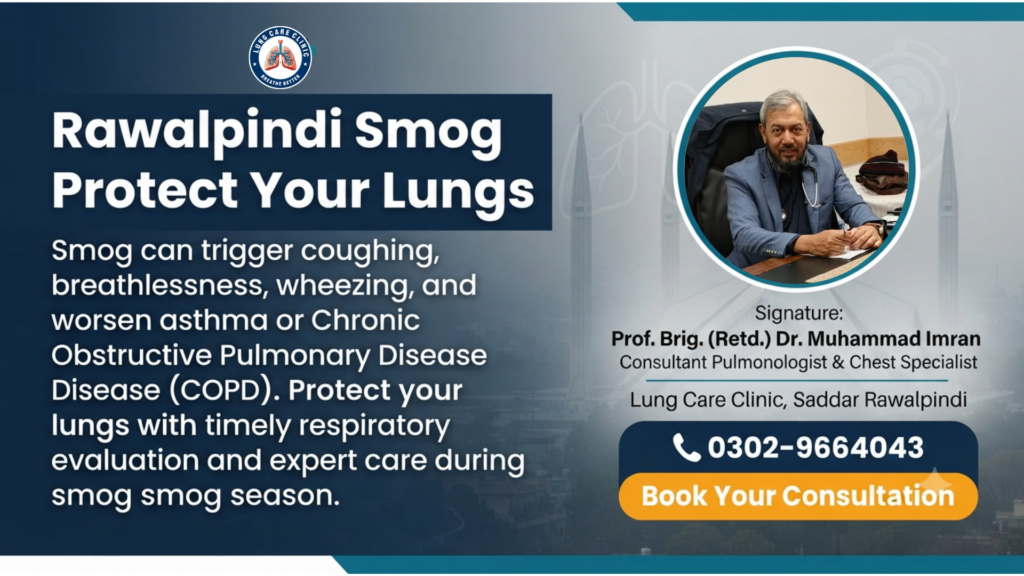
Every year, the arrival of winter brings an increase in Rawalpindi Smog Breathing Problems. Reduced visibility may be the most obvious effect of smog, but the greatest concern is its impact on respiratory health. Air pollution caused by vehicle emissions, industrial pollutants, construction dust, and crop residue burning creates a mixture of harmful particles that can irritate the lungs and worsen existing respiratory diseases.
Many people experience coughing, breathlessness, wheezing, throat irritation, or chest discomfort during smog season. While these symptoms may appear mild at first, prolonged exposure to polluted air can increase the risk of serious lung disease, especially in children, older adults, and individuals with chronic respiratory conditions.
Understanding Rawalpindi Smog Breathing Problems can help you recognize early warning signs and take practical steps to protect your lungs.
What Is Smog?
Smog is a type of air pollution formed when smoke, dust, harmful gases, and fine particulate matter accumulate in the atmosphere. During winter, cooler temperatures, reduced wind, and temperature inversions trap pollutants close to the ground, making the air unhealthy to breathe.
Fine particles known as PM2.5 and PM10 are especially dangerous because they can travel deep into the lungs and even enter the bloodstream.
Why Does Rawalpindi Experience Smog?
Several factors contribute to severe smog in Rawalpindi during the colder months.
Common sources include:
- Heavy traffic emissions
- Industrial pollution
- Construction dust
- Burning of crop residue
- Household smoke
- Weather conditions that trap pollutants
As pollution levels rise, people spend hours breathing contaminated air without realizing the effects on their lungs.
How Smog Affects the Lungs
Healthy lungs naturally filter many airborne particles. However, prolonged exposure to polluted air overwhelms these protective mechanisms.
Fine pollutants irritate the airways, trigger inflammation, and increase mucus production. They may also narrow the breathing passages, making it harder to breathe.
Repeated exposure can reduce lung function and increase the risk of respiratory illnesses.
Common Rawalpindi Smog Breathing Problems
Air pollution affects each person differently, but some respiratory symptoms occur more frequently during smog season.
Persistent Cough
One of the earliest symptoms is a cough that develops after exposure to polluted air.
Some people experience a dry cough, while others produce mucus because irritated airways increase secretions.
If the cough continues despite avoiding pollution, further medical evaluation is recommended.
Shortness of Breath
Many people notice breathlessness during walking, climbing stairs, or other daily activities.
Smog can narrow the airways and reduce oxygen exchange, making breathing more difficult.
Individuals with asthma or Chronic Obstructive Pulmonary Disease (COPD) often experience worsening symptoms during periods of poor air quality.
Wheezing
Inflamed airways may produce a whistling sound while breathing.
Wheezing often indicates airway narrowing and is commonly associated with asthma, allergic airway disease, and COPD.
Chest Tightness
Smog exposure may cause an uncomfortable feeling of pressure or tightness in the chest.
This occurs because irritated airways become inflamed, making breathing more difficult.
Increased Mucus Production
Polluted air stimulates mucus-producing glands inside the respiratory tract.
Excess mucus may lead to frequent throat clearing, coughing, and chest congestion.
Who Is Most at Risk?
Although anyone can develop Rawalpindi Smog Breathing Problems, certain groups are especially vulnerable.
These include:
- Children
- Older adults
- Pregnant women
- Smokers
- People with asthma
- Patients with Chronic Obstructive Pulmonary Disease (COPD)
- Individuals with Interstitial Lung Disease (ILD)
- People with bronchiectasis
- Individuals with heart disease
For these groups, even short periods of exposure to severe smog can significantly worsen respiratory symptoms.
Warning Signs You Should Not Ignore
While mild throat irritation may improve after reducing exposure, some symptoms require prompt medical attention.
Seek evaluation if you experience:
- Persistent cough lasting several weeks
- Increasing shortness of breath
- Wheezing that becomes more frequent
- Chest tightness
- Difficulty performing routine activities
- Recurrent respiratory infections
- Coughing up blood
- High fever along with breathing difficulty
Ignoring these symptoms may delay the diagnosis of an underlying respiratory condition that requires treatment.
Smog Cough Treatment
The treatment for a smog-related cough depends on the underlying cause and the severity of symptoms. While avoiding exposure to polluted air is important, medical treatment may also be necessary if smog has triggered or worsened a respiratory condition.
Your pulmonologist may recommend:
- Inhaled medications for asthma or Chronic Obstructive Pulmonary Disease (COPD)
- Medicines to reduce airway inflammation
- Bronchodilators to improve airflow
- Treatment for respiratory infections, when present
- Adequate hydration to help loosen mucus
- Pulmonary rehabilitation for selected patients
Self-medication with antibiotics or cough syrups should be avoided unless advised by a healthcare professional.
Can Smog Cause Long-Term Lung Damage?
Yes. Repeated exposure to polluted air may lead to air pollution lung damage, particularly in people who are frequently exposed to poor air quality.
Long-term exposure may:
- Reduce lung function
- Increase the risk of chronic bronchitis
- Worsen asthma
- Accelerate Chronic Obstructive Pulmonary Disease (COPD)
- Increase the frequency of respiratory infections
- Contribute to chronic airway inflammation
People with existing lung diseases are particularly vulnerable and may experience more frequent flare-ups during smog season.
How Are Rawalpindi Smog Breathing Problems Diagnosed?
If your symptoms continue despite avoiding pollution, a pulmonologist may recommend further evaluation.
Depending on your condition, investigations may include:
- Physical examination
- Spirometry (Pulmonary Function Test)
- Chest X-ray
- High-Resolution CT (HRCT) Chest
- Oxygen saturation assessment
- Allergy evaluation
- Blood tests
- Sputum examination
- Bronchoscopy, when clinically indicated
These investigations help identify whether your symptoms are due to asthma, COPD, bronchiectasis, lung infection, Interstitial Lung Disease (ILD), or another respiratory disorder.
How to Protect Your Lungs During Smog Season
Simple preventive measures can significantly reduce your exposure to harmful pollutants.
You can help protect your lungs by:
- Checking daily air quality before outdoor activities
- Wearing a properly fitted protective mask when pollution levels are high
- Limiting outdoor exercise during severe smog
- Keeping windows closed when air quality is poor
- Using indoor air purifiers if available
- Staying well hydrated
- Continuing prescribed asthma or COPD medications
- Avoiding smoking and secondhand smoke
- Seeking early medical attention if respiratory symptoms worsen
Taking these precautions can reduce irritation and lower the risk of respiratory complications.
When Should You Consult a Pulmonologist?
You should arrange a respiratory evaluation if you experience:
- Persistent cough during smog season
- Shortness of breath that interferes with daily activities
- Wheezing or chest tightness
- Repeated chest infections
- Symptoms that continue after pollution levels improve
- Existing asthma or COPD that becomes difficult to control
Early assessment allows respiratory conditions to be diagnosed and treated before they become more severe.
Rawalpindi Smog Breathing Problems have become an important public health concern, particularly during the winter months. Smog can trigger coughing, breathlessness, wheezing, chest tightness, and increased mucus production while also worsening chronic respiratory diseases such as asthma and Chronic Obstructive Pulmonary Disease (COPD).
Although avoiding air pollution completely may not be possible, early recognition of symptoms, protective measures, and timely medical evaluation can help reduce complications and protect long-term lung health.
If you or a family member develop persistent respiratory symptoms during smog season, consult a pulmonologist for a comprehensive assessment and personalized treatment plan.
Prof. Brig. (Retd.) Dr. Muhammad Imran
Consultant Pulmonologist & Chest Specialist
Lung Care Clinic, Saddar Rawalpindi
0302-9664043