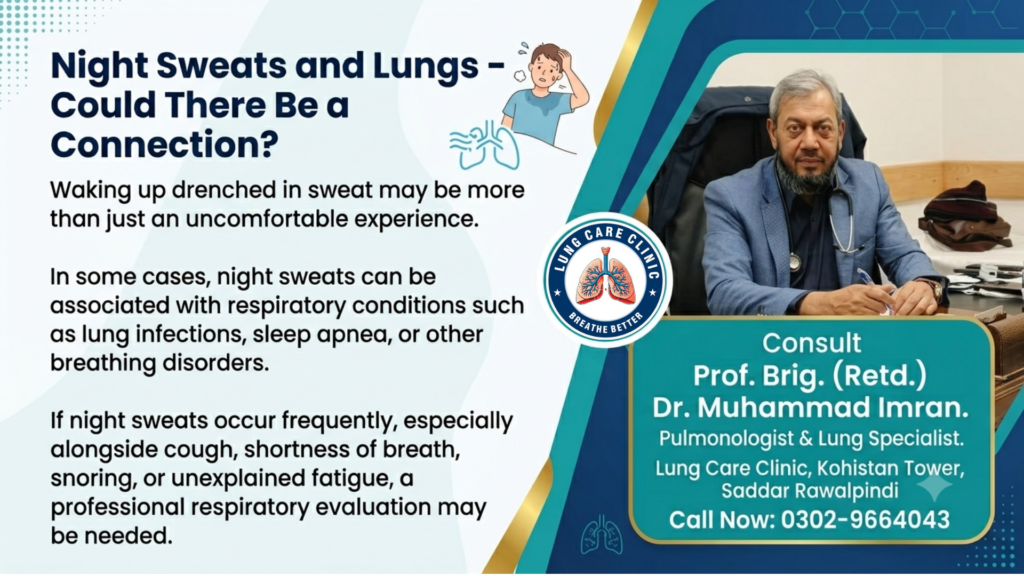
The connection between night sweats and lungs is often overlooked. Many people assume that waking up drenched in sweat is simply due to a warm room or heavy blankets. However, frequent night sweats can sometimes be linked to underlying respiratory conditions.
Night sweats refer to excessive sweating during sleep that is significant enough to soak clothing or bedding. While occasional episodes may not be concerning, persistent night sweats should not be ignored, especially when accompanied by cough, breathing problems, fatigue, or unexplained weight loss.
Understanding how night sweats and lungs may be connected can help patients recognize warning signs and seek timely medical care.
What Do Night Sweats and Lungs Have in Common?
The lungs play a vital role in delivering oxygen throughout the body. When respiratory health is affected by infection, inflammation, or breathing disorders, the body may respond in different ways.
In some cases, night sweats occur because the body is working harder to fight illness or compensate for breathing difficulties during sleep.
Therefore, frequent nighttime sweating may occasionally be a clue that an underlying respiratory issue is present.
Common Respiratory Causes of Night Sweats
Lung Infections
Certain lung infections may cause night sweats as part of the body’s immune response.
Symptoms may include:
- Persistent cough
- Fever
- Fatigue
- Chest discomfort
- Night sweats
As the body fights infection, sweating may increase, particularly during sleep.
Tuberculosis (TB)
Tuberculosis is one of the classic respiratory conditions associated with night sweats.
Common symptoms include:
- Chronic cough
- Weight loss
- Fever
- Fatigue
- Night sweats
Because TB can affect lung health significantly, early diagnosis is essential.
Pneumonia
Pneumonia is an infection of the lungs that can cause fever, chills, cough, and excessive sweating.
Some patients experience significant nighttime sweating while recovering from pneumonia.
Therefore, persistent respiratory symptoms should always be evaluated properly.
Can Sleep Apnea Cause Night Sweats?
Yes. Sleep apnea is another important condition associated with night sweats and lungs.
Obstructive sleep apnea occurs when breathing repeatedly stops and starts during sleep due to airway blockage.
Common symptoms include:
- Loud snoring
- Gasping during sleep
- Choking sensations at night
- Morning headaches
- Daytime sleepiness
- Night sweats
Reduced oxygen levels and repeated sleep interruptions may contribute to excessive sweating.
As a result, individuals experiencing both snoring and night sweats may benefit from respiratory evaluation.
Can Asthma Contribute to Night Sweats?
Asthma symptoms often worsen during the night.
Frequent coughing, wheezing, and breathing difficulty may disturb sleep and contribute to sweating episodes.
Poorly controlled asthma may increase physical stress on the body during sleep, leading to nighttime discomfort.
Therefore, recurrent night sweats in patients with asthma should not be overlooked.
Warning Signs That Need Medical Evaluation
Occasional sweating may not be serious. However, certain symptoms require medical attention.
Seek professional evaluation if night sweats occur along with:
- Persistent cough
- Shortness of breath
- Wheezing
- Unexplained weight loss
- Fever
- Chronic fatigue
- Chest pain
These symptoms may indicate an underlying respiratory condition that requires diagnosis and treatment.
How Doctors Evaluate Night Sweats
A pulmonologist may recommend several assessments to determine whether respiratory disease is contributing to symptoms.
These may include:
Medical History and Examination
A detailed evaluation helps identify potential causes.
Chest Imaging
Chest X-rays may help detect infections or lung abnormalities.
Pulmonary Function Testing (PFT)
This test evaluates lung performance and airflow.
Sleep Evaluation
Patients with snoring, choking sensations, or excessive daytime sleepiness may require sleep assessment.
These investigations help guide accurate diagnosis and treatment.
How to Support Respiratory Health
Several lifestyle habits may help maintain healthy lungs and reduce respiratory complications.
Avoid Smoking
Smoking damages lung tissue and increases the risk of respiratory disease.
Stay Physically Active
Regular activity supports healthy breathing and overall wellness.
Maintain Good Sleep Habits
Quality sleep contributes to respiratory and general health.
Seek Early Medical Care
Persistent symptoms are easier to manage when diagnosed early.
When to Visit a Pulmonologist
You should consult a pulmonologist if:
- Night sweats occur frequently
- Symptoms disrupt sleep
- Chronic cough develops
- Breathing problems occur
- Snoring becomes severe
- Fatigue affects daily activities
Early diagnosis may help identify respiratory disorders before complications develop.
Expert Lung Care in Rawalpindi
People experiencing night sweats, chronic cough, sleep apnea symptoms, breathing difficulties, or unexplained respiratory symptoms should seek professional evaluation.
Consult Prof. Brig. (Retd.) Dr. Muhammad Imran
Pulmonologist & Lung Specialist
Lung Care Clinic, Kohistan Tower, Saddar Rawalpindi
0302-9664043
The relationship between night sweats and lungs is important to understand. While night sweats may occasionally occur for harmless reasons, persistent symptoms can sometimes be linked to lung infections, sleep apnea, asthma, or other respiratory conditions.
If night sweats occur regularly or are accompanied by cough, breathing problems, fatigue, or weight loss, professional respiratory evaluation is recommended. Early diagnosis can support better treatment outcomes and long-term lung health.