
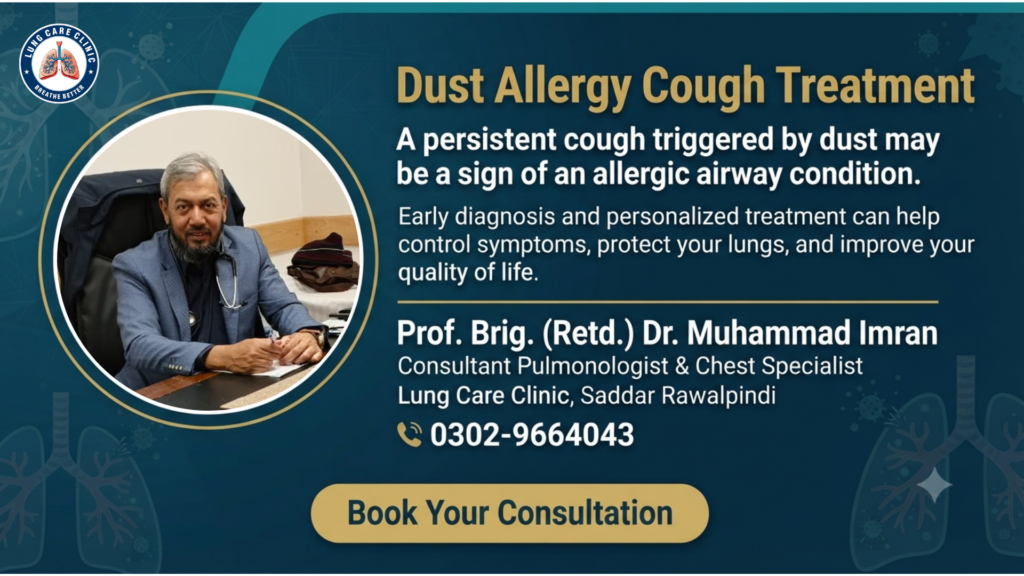
Dust allergies are among the most common causes of chronic coughing and respiratory irritation. Many people assume a cough caused by dust will disappear on its own, but when symptoms persist or repeatedly return, they may indicate an allergic airway condition that requires proper medical evaluation.
Understanding Dust Allergy Cough Treatment is important because untreated allergies can interfere with daily activities, disturb sleep, reduce quality of life, and even worsen conditions such as asthma. Early diagnosis and appropriate treatment can help control symptoms and protect long-term lung health.
What Is a Dust Allergy?
A dust allergy occurs when your immune system overreacts to allergens commonly found in household dust. These allergens may include:
- Dust mites
- Mold spores
- Pet dander
- Tiny insect particles
- Pollen trapped inside the home
When these allergens are inhaled, the immune system releases chemicals such as histamine, causing inflammation of the nose, throat, and airways.
Why Does a Dust Allergy Cause Coughing?
The airways become irritated when dust allergens enter the respiratory system. This irritation stimulates cough receptors, leading to repeated coughing.
Unlike a cough caused by an infection, an allergic cough usually develops after exposure to dust and often improves when the person leaves the dusty environment.
Without proper Dust Allergy Cough Treatment, repeated exposure may cause ongoing airway inflammation and more persistent respiratory symptoms.
How Dust Allergies Affect the Lungs
Dust allergies do not only affect the nose and throat. In many people, allergens also reach the lower airways and lungs.
Inflammation inside the breathing passages may result in:
- Narrowing of the airways
- Increased mucus production
- Airway sensitivity
- Difficulty breathing
Individuals with asthma are especially vulnerable because dust exposure can trigger severe asthma attacks.
Common Symptoms of Dust Allergy
Symptoms vary from person to person but commonly include:
- Persistent dry cough
- Repeated coughing after dust exposure
- Sneezing
- Runny nose
- Nasal congestion
- Itchy eyes
- Itchy throat
- Wheezing
- Chest tightness
- Shortness of breath
Some people notice that symptoms become worse while cleaning, making the bed, using old carpets, or entering dusty storage areas.
Dust Allergy Lungs: When Allergies Affect Breathing
When dust allergies involve the lungs, patients may experience more than just coughing.
Respiratory symptoms may include:
- Wheezing
- Difficulty taking a deep breath
- Breathlessness during activity
- Chest discomfort
- Persistent mucus
- Frequent nighttime coughing
If these symptoms continue despite avoiding dust exposure, further respiratory evaluation is recommended.
Who Is More Likely to Develop Dust Allergy?
Several factors increase the risk of developing dust allergies.
These include:
- Family history of allergies
- Asthma
- Allergic rhinitis
- Living in dusty environments
- Indoor exposure to dust mites
- Poor ventilation
- Occupational exposure to dust
Children and adults with existing allergic conditions are more likely to develop persistent respiratory symptoms.
Can Dust Allergy Trigger Asthma?
Yes. Dust is one of the most common asthma triggers.
People with allergic asthma may experience:
- Sudden coughing
- Wheezing
- Chest tightness
- Shortness of breath
- Nighttime asthma attacks
Repeated exposure to dust without appropriate treatment can make asthma symptoms more difficult to control.
Warning Signs That Require Medical Attention
A simple dust allergy should not cause severe or prolonged breathing problems.
You should consult a pulmonologist if you experience:
- Cough lasting more than three weeks
- Wheezing
- Increasing shortness of breath
- Frequent nighttime coughing
- Persistent chest tightness
- Recurrent chest infections
- Symptoms that interfere with daily activities
Early evaluation helps determine whether the cough is caused solely by allergies or whether another respiratory condition is also present.
Dust Allergy Cough Treatment
Effective Dust Allergy Cough Treatment begins with identifying and reducing exposure to dust allergens while managing the airway inflammation responsible for persistent symptoms.
Depending on your condition, your pulmonologist may recommend:
- Allergy medications to reduce allergic reactions
- Inhaled medicines for patients with asthma or allergic airway disease
- Bronchodilators to improve airflow when needed
- Nasal sprays for associated allergic rhinitis
- Medicines to reduce airway inflammation
- Personalized asthma management if allergies trigger asthma attacks
Treatment is tailored to each patient after a thorough respiratory evaluation.
Is Allergic Cough Medicine Enough?
Many people rely on over-the-counter cough syrups or allergy tablets for temporary relief. While these medicines may reduce symptoms, they often do not address the underlying cause.
If your cough repeatedly returns after dust exposure, you should avoid self-medicating for long periods without medical advice. Persistent symptoms may indicate asthma, allergic airway disease, or another respiratory condition that requires specialist management.
A proper diagnosis helps ensure you receive the most appropriate treatment rather than simply masking the symptoms.
How Is a Dust Allergy Diagnosed?
Diagnosing the cause of an allergic cough involves a detailed assessment of your symptoms, medical history, and possible environmental triggers.
Your pulmonologist may recommend:
- Physical examination
- Detailed allergy history
- Spirometry (Pulmonary Function Test)
- Chest X-ray, when indicated
- Blood tests
- Allergy testing
- Oxygen saturation assessment
- Additional investigations if another lung condition is suspected
These evaluations help determine whether your symptoms are caused by a dust allergy alone or by an underlying respiratory disease such as asthma or Chronic Obstructive Pulmonary Disease (COPD).
Tips to Reduce Dust Exposure
Reducing exposure to dust allergens is an important part of long-term symptom control.
You can help protect yourself by:
- Cleaning your home regularly with a damp cloth
- Vacuuming carpets using a HEPA-filter vacuum cleaner
- Washing bedding in hot water every week
- Using dust-mite-proof pillow and mattress covers
- Keeping indoor humidity at an appropriate level
- Avoiding heavy dust exposure during cleaning
- Wearing a properly fitted mask when cleaning dusty areas
- Improving indoor ventilation
These simple measures can significantly reduce allergen exposure and decrease the frequency of coughing.
When Should You See a Pulmonologist?
Arrange a respiratory evaluation if you have:
- A cough that lasts longer than three weeks
- Repeated coughing after dust exposure
- Wheezing or chest tightness
- Shortness of breath
- Frequent nighttime cough
- Symptoms that continue despite allergy medication
- Recurrent respiratory infections
Early assessment helps identify the underlying cause and allows treatment to begin before symptoms become more severe.
Persistent coughing caused by dust should never be ignored. While allergies are a common cause, ongoing symptoms may also be associated with asthma or other respiratory conditions that require specialist care.
Appropriate Dust Allergy Cough Treatment combines allergen avoidance, accurate diagnosis, and personalized medical management. Early intervention can improve breathing, reduce coughing, prevent asthma flare-ups, and protect long-term lung health.
If you experience a persistent cough, wheezing, or breathing difficulties after dust exposure, consult a pulmonologist for a comprehensive respiratory assessment and an individualized treatment plan.
Prof. Brig. (Retd.) Dr. Muhammad Imran
Consultant Pulmonologist & Chest Specialist
Lung Care Clinic, Saddar Rawalpindi
0302-9664043