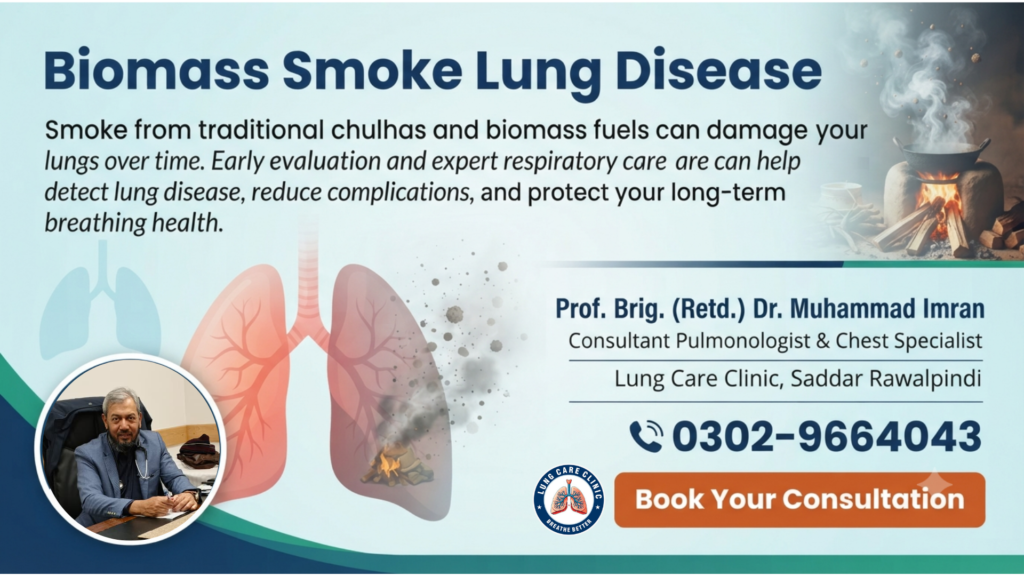
Millions of people continue to cook using traditional chulhas fueled by wood, crop residue, charcoal, animal dung, or other biomass materials. Although these fuels are widely used, especially in rural communities, the smoke they produce contains harmful pollutants that can seriously affect respiratory health.
Continuous exposure to biomass smoke increases the risk of developing Biomass Smoke Lung Disease, a condition that often develops gradually over many years. Because symptoms usually appear slowly, many people ignore early warning signs until significant lung damage has already occurred.
Understanding Biomass Smoke Lung Disease is essential for protecting yourself and your family from the harmful effects of indoor air pollution.
What Is Biomass Smoke?
Biomass smoke is produced when organic materials such as wood, dried leaves, agricultural waste, charcoal, or animal dung are burned for cooking or heating.
During combustion, these fuels release a mixture of harmful pollutants, including:
- Fine particulate matter (PM2.5)
- Carbon monoxide
- Nitrogen oxides
- Volatile organic compounds
- Toxic gases
- Smoke particles
When cooking is performed indoors without adequate ventilation, these pollutants accumulate rapidly and are inhaled repeatedly by household members.
Why Is Traditional Chulha Smoke Harmful?
Unlike smoke that quickly disperses outdoors, indoor chulha smoke often remains trapped inside kitchens and living areas.
People who cook every day may inhale smoke for several hours, resulting in long-term exposure over many years.
Women, children, and older adults are particularly vulnerable because they often spend more time near cooking areas.
Repeated inhalation causes continuous irritation of the respiratory system and increases the likelihood of chronic lung disease.
How Biomass Smoke Damages the Lungs
The harmful particles in biomass smoke are extremely small and can travel deep into the lungs.
Instead of being filtered by the nose or throat, these particles reach the smallest airways and air sacs, where they trigger inflammation and tissue injury.
Over time, repeated exposure may lead to:
- Chronic airway inflammation
- Narrowing of the airways
- Increased mucus production
- Reduced lung capacity
- Permanent damage to lung tissue
As inflammation continues, breathing gradually becomes more difficult.
Wood Smoke Lung Damage
One of the most serious consequences of prolonged biomass exposure is wood smoke lung damage.
Continuous inhalation of wood smoke can:
- Damage the lining of the airways
- Reduce the lungs’ natural ability to clear mucus
- Increase susceptibility to respiratory infections
- Accelerate the decline in lung function
- Contribute to chronic respiratory diseases
The risk becomes even greater when exposure continues for decades.
Common Symptoms of Biomass Smoke Lung Disease
Symptoms usually develop gradually and may initially appear only during physical activity.
Common symptoms include:
- Persistent cough
- Cough with mucus
- Shortness of breath
- Wheezing
- Chest tightness
- Frequent chest infections
- Reduced exercise tolerance
- Fatigue due to poor oxygen exchange
Many patients assume these symptoms are simply part of aging and delay seeking medical care.
Indoor Air Pollution and the Lungs
Indoor air pollution is one of the leading environmental causes of respiratory disease worldwide.
Cooking with biomass fuels in poorly ventilated kitchens exposes the lungs to concentrations of pollutants that may exceed recommended safety levels.
Long-term exposure has been associated with:
- Chronic bronchitis
- Chronic Obstructive Pulmonary Disease (COPD)
- Asthma exacerbations
- Recurrent respiratory infections
- Reduced lung function
- Increased risk of chronic respiratory disability
Protecting indoor air quality is therefore essential for maintaining healthy lungs.
Who Is Most at Risk?
Although anyone exposed to biomass smoke can develop respiratory problems, some groups are particularly vulnerable.
These include:
- Women who cook daily using traditional chulhas
- Children living in households using biomass fuels
- Older adults
- People with asthma
- Patients with Chronic Obstructive Pulmonary Disease (COPD)
- Individuals with pre-existing lung disease
- Families living in poorly ventilated homes
The longer the duration of exposure, the greater the risk of developing chronic lung disease.
Warning Signs You Should Not Ignore
Seek medical evaluation if you experience:
- Persistent cough lasting more than three weeks
- Increasing breathlessness
- Frequent wheezing
- Recurrent chest infections
- Daily mucus production
- Difficulty performing routine activities because of breathlessness
Early diagnosis allows lung disease to be identified before irreversible damage progresses further.
Can Biomass Smoke Cause Chronic Lung Disease?
Yes. Long-term exposure to biomass smoke is a well-recognized cause of chronic respiratory disease.
Repeated inhalation of smoke particles may contribute to:
- Chronic Obstructive Pulmonary Disease (COPD)
- Chronic bronchitis
- Persistent airway inflammation
- Reduced lung function
- Recurrent respiratory infections
- Worsening of asthma
- Permanent airway damage
Even people who have never smoked cigarettes may develop chronic lung disease after years of exposure to indoor biomass smoke.
How Is Biomass Smoke Lung Disease Diagnosed?
A detailed medical history is essential, particularly if you have spent years cooking with wood, crop residue, charcoal, or other biomass fuels.
Depending on your symptoms, your pulmonologist may recommend:
- Physical examination
- Spirometry (Pulmonary Function Test)
- Chest X-ray
- High-Resolution CT (HRCT) Chest
- Oxygen saturation assessment
- Blood tests
- Sputum examination, when indicated
These investigations help determine the extent of lung damage and identify any underlying respiratory condition requiring treatment.
Treatment for Biomass Smoke Lung Disease
Treatment depends on the severity of lung damage and the specific respiratory condition diagnosed.
Your pulmonologist may recommend:
- Inhaled medications to improve breathing
- Bronchodilators to open the airways
- Medicines to reduce airway inflammation
- Treatment for respiratory infections, when necessary
- Pulmonary rehabilitation for selected patients
- Oxygen therapy in advanced cases
Equally important is reducing or eliminating continued exposure to biomass smoke, as ongoing exposure may worsen lung damage despite treatment.
How to Reduce Exposure to Indoor Air Pollution
Preventing further exposure is one of the most effective ways to protect your lungs.
Practical measures include:
- Using cleaner cooking fuels whenever possible
- Improving kitchen ventilation
- Installing chimneys or exhaust systems
- Cooking in well-ventilated areas
- Keeping children away from cooking smoke
- Avoiding prolonged exposure to indoor smoke
- Opening windows and doors during cooking
- Maintaining cooking stoves properly
Even small improvements in ventilation can significantly reduce indoor air pollution.
Can Lung Damage Be Prevented?
Yes. Early action can greatly reduce the risk of developing serious respiratory disease.
Protective measures include:
- Reducing daily smoke exposure
- Seeking medical evaluation when respiratory symptoms begin
- Following prescribed treatment plans
- Maintaining good indoor air quality
- Scheduling regular follow-up visits if you have chronic lung disease
Early diagnosis and appropriate management help preserve lung function and improve quality of life.
When Should You Consult a Pulmonologist?
You should seek specialist care if you experience:
- Persistent cough
- Breathlessness during routine activities
- Wheezing
- Chronic mucus production
- Frequent chest infections
- Chest tightness
- Symptoms that continue despite avoiding smoke exposure
Prompt evaluation can identify lung disease at an earlier stage, allowing treatment to begin before complications develop.
Biomass Smoke Lung Disease is a preventable yet often overlooked respiratory condition caused by long-term exposure to smoke from traditional chulhas and biomass fuels. Continuous exposure to indoor air pollution can damage the lungs, reduce breathing capacity, and increase the risk of chronic respiratory diseases such as Chronic Obstructive Pulmonary Disease (COPD) and chronic bronchitis.
Recognizing symptoms early, improving indoor ventilation, reducing smoke exposure, and seeking timely medical care can significantly improve long-term respiratory health.
If you have a persistent cough, breathlessness, wheezing, or a history of prolonged exposure to biomass smoke, consult a pulmonologist for a comprehensive respiratory assessment and personalized treatment plan.
Prof. Brig. (Retd.) Dr. Muhammad Imran
Consultant Pulmonologist & Chest Specialist
Lung Care Clinic, Saddar Rawalpindi
0302-9664043