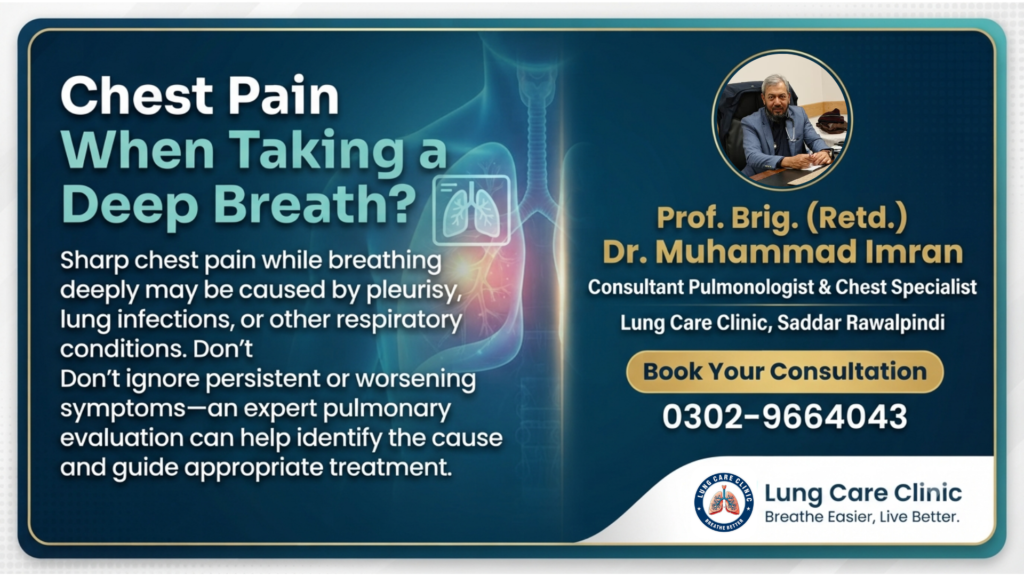
Experiencing chest pain when taking a deep breath can be frightening. While some causes are relatively minor, others require prompt medical attention. The pain may occur suddenly or develop gradually and can range from mild discomfort to sharp, stabbing pain that worsens whenever you inhale, cough, or sneeze.
One of the most common respiratory causes is pleurisy, an inflammation of the lining surrounding the lungs. However, lung infections, pulmonary embolism, pneumothorax, muscle strain, and several other conditions can also cause sharp chest pain breathing.
Understanding the possible causes and recognizing warning signs can help you seek timely medical care and prevent serious complications.
What Is Chest Pain When Taking a Deep Breath?
Chest pain that becomes worse during deep inhalation is often called pleuritic chest pain. Unlike pressure or heaviness caused by some heart conditions, pleuritic pain is usually sharp and increases whenever the lungs expand.
People often describe it as:
- Sharp pain
- Stabbing pain
- Sudden pain
- Pain on one side of the chest
- Pain that worsens while coughing or sneezing
Because many conditions can produce similar symptoms, a proper medical evaluation is essential.
Why Does Breathing Deeply Cause Chest Pain?
Every breath causes the lungs to expand and the thin membrane covering the lungs and chest wall (the pleura) to move smoothly against each other.
When this membrane becomes inflamed or irritated, the movement creates pain during inhalation.
Pain may also occur if the lungs, airways, muscles, ribs, or surrounding tissues are affected by disease or injury.
Common Causes of Chest Pain When Taking a Deep Breath
Several respiratory and non-respiratory conditions can cause breathing-related chest pain.
Common causes include:
- Pleurisy
- Pneumonia
- Viral chest infections
- Pulmonary embolism
- Pneumothorax (collapsed lung)
- Rib injury
- Muscle strain
- Costochondritis
- Chronic respiratory diseases
Identifying the exact cause requires careful assessment by a healthcare professional.
Pleurisy Symptoms
Pleurisy is one of the most common reasons for chest pain when taking a deep breath.
It occurs when the pleura become inflamed due to infection, autoimmune disease, or other lung conditions.
Common pleurisy symptoms include:
- Sharp chest pain during breathing
- Pain that worsens while coughing
- Pain during sneezing
- Pain when laughing
- Shortness of breath caused by pain
- Dry cough
- Fever if infection is present
The pain is often located on one side of the chest and may improve when breathing becomes shallow.
Pneumonia
Pneumonia is an infection of the lungs that may also cause breathing-related chest pain.
In addition to chest discomfort, symptoms often include:
- Fever
- Productive cough
- Chills
- Fatigue
- Breathlessness
- Thick mucus
Prompt diagnosis and treatment are important because untreated pneumonia can become serious, especially in older adults and individuals with chronic medical conditions.
Viral Chest Infections
Respiratory viruses may inflame the airways and surrounding tissues, causing temporary chest pain during deep breathing.
Symptoms commonly include:
- Dry cough
- Fever
- Body aches
- Fatigue
- Mild breathlessness
Most viral infections improve with supportive care, although persistent or worsening symptoms should be evaluated.
Pulmonary Embolism
A pulmonary embolism occurs when a blood clot blocks one of the arteries supplying the lungs.
This is a medical emergency.
Possible symptoms include:
- Sudden sharp chest pain
- Shortness of breath
- Rapid heartbeat
- Cough, sometimes with blood
- Lightheadedness
- Fainting
Immediate medical attention is required if pulmonary embolism is suspected.
Pneumothorax (Collapsed Lung)
A collapsed lung occurs when air enters the space between the lung and chest wall.
Symptoms may include:
- Sudden severe chest pain
- Sharp pain during breathing
- Sudden breathlessness
- Rapid breathing
A pneumothorax often requires urgent medical evaluation.
Other Lung Conditions
Several chronic lung diseases may also contribute to sharp chest pain breathing, particularly during flare-ups.
These include:
- Asthma
- Chronic Obstructive Pulmonary Disease (COPD)
- Interstitial Lung Disease (ILD)
- Lung infections
- Bronchiectasis
Although chest pain is not always the primary symptom, inflammation associated with these conditions may occasionally cause discomfort during deep breathing.
Symptoms That Should Not Be Ignored
Seek medical evaluation if chest pain is accompanied by:
- Persistent shortness of breath
- High fever
- Persistent cough
- Coughing up blood
- Severe chest pain
- Bluish lips or fingertips
- Dizziness or fainting
- Rapid worsening of symptoms
Early diagnosis helps identify the underlying cause and allows appropriate treatment before complications develop.
Non-Respiratory Causes of Chest Pain During Deep Breathing
Not all chest pain while breathing deeply originates from the lungs. Several non-respiratory conditions can produce similar symptoms.
Muscle Strain
Heavy lifting, vigorous exercise, or prolonged coughing may strain the chest wall muscles.
Symptoms often include:
- Localized chest pain
- Pain that worsens with movement
- Tenderness over the affected muscles
- Discomfort when taking a deep breath
Costochondritis
Costochondritis is inflammation of the cartilage connecting the ribs to the breastbone.
Common symptoms include:
- Sharp chest pain
- Tenderness when pressing the chest
- Pain that increases with deep breathing or certain movements
Although painful, this condition is generally not related to heart disease.
Rib Injury
A fall, accident, or direct blow to the chest may bruise or fracture a rib.
Symptoms include:
- Pain during breathing
- Pain while coughing
- Tenderness over the injured rib
- Difficulty taking deep breaths
Medical evaluation helps determine the extent of the injury and guides appropriate treatment.
When Chest Pain Is a Medical Emergency
While many causes are not life-threatening, certain symptoms require immediate medical attention.
Seek emergency care if chest pain is associated with:
- Severe or sudden shortness of breath
- Coughing up blood
- Crushing or heavy chest pressure
- Pain spreading to the arm, jaw, neck, or back
- Bluish lips or fingertips
- Rapid heartbeat
- Dizziness or fainting
- Sudden collapse
These symptoms may indicate serious conditions such as pulmonary embolism, pneumothorax, or a heart-related emergency.
How Is Chest Pain When Taking a Deep Breath Diagnosed?
A pulmonologist will begin by discussing your symptoms, medical history, recent illnesses, injuries, and risk factors.
Depending on the findings, further investigations may include:
- Physical examination
- Chest X-ray
- High-Resolution CT (HRCT) Chest, when indicated
- Spirometry (Pulmonary Function Test)
- Blood tests
- Electrocardiogram (ECG), if heart disease is suspected
- Ultrasound or additional imaging when appropriate
These investigations help identify whether the pain is related to pleurisy, pneumonia, lung disease, chest wall problems, or another underlying condition.
Treatment Options
Treatment depends entirely on the underlying cause.
Possible management may include:
- Antibiotics for bacterial infections
- Antiviral or supportive care for viral illnesses
- Anti-inflammatory medicines for pleurisy or costochondritis
- Bronchodilators for asthma or Chronic Obstructive Pulmonary Disease (COPD)
- Oxygen therapy when necessary
- Procedures for conditions such as pneumothorax or pleural effusion
- Pain relief and rest for muscle or rib injuries
Self-medicating without identifying the cause may delay appropriate treatment, especially if the condition is serious.
Can Chest Pain While Breathing Be Prevented?
Although not every cause can be prevented, the following measures may reduce your risk:
- Avoid smoking and secondhand smoke
- Stay up to date with recommended vaccinations
- Treat respiratory infections promptly
- Practice good hand hygiene
- Wear protective equipment in dusty or hazardous workplaces
- Maintain regular physical activity within your limits
- Seek medical advice for persistent respiratory symptoms
Protecting your lung health also helps reduce the risk of several breathing-related conditions.
When Should You Consult a Pulmonologist?
Arrange a specialist respiratory evaluation if you experience:
- Chest pain when taking a deep breath that persists or recurs
- Sharp chest pain while breathing
- Pleurisy symptoms
- Persistent cough
- Wheezing
- Breathlessness
- Fever with chest pain
- Chest pain following a respiratory infection
Early assessment helps determine the exact cause and allows timely treatment before complications develop.
Chest pain when taking a deep breath should never be ignored, particularly when it is severe, persistent, or associated with shortness of breath, fever, or coughing up blood. While pleurisy symptoms are a common cause of sharp chest pain breathing, several other respiratory and non-respiratory conditions can produce similar symptoms.
A timely evaluation by a pulmonologist can identify the underlying cause, provide appropriate treatment, and help protect your long-term lung health.
If you are experiencing ongoing chest pain during breathing or other respiratory symptoms, schedule a consultation for a comprehensive pulmonary assessment.
Prof. Brig. (Retd.) Dr. Muhammad Imran
Consultant Pulmonologist & Chest Specialist
Lung Care Clinic, Saddar Rawalpindi
0302-9664043