Chemical cleaning products are commonly used in homes, hospitals, factories, offices, restaurants, and industrial workplaces. While these products help maintain cleanliness and hygiene, many release fumes that may irritate or damage the respiratory system when inhaled repeatedly or in high concentrations.
Understanding Chemical Fumes Lung Damage is important because long-term exposure to chemical vapors can affect both healthy individuals and those with existing lung diseases. Without proper protection, repeated inhalation of cleaning chemicals and industrial fumes may contribute to chronic respiratory problems, reduced lung function, and occupational lung diseases.
Recognizing the risks early allows individuals to protect their airways and seek timely medical care if symptoms develop.
What Are Chemical Fumes?
Chemical fumes are gases or vapors released from cleaning products, industrial chemicals, disinfectants, solvents, paints, and other substances used in homes and workplaces.
Common sources include:
- Household cleaning sprays
- Bleach
- Ammonia-based cleaners
- Disinfectants
- Floor cleaners
- Paints and thinners
- Industrial solvents
- Adhesives
- Laboratory chemicals
When these chemicals evaporate into the air, they can be inhaled deep into the respiratory tract.
How Do Chemical Cleaners Affect the Lungs?
Many cleaning products contain substances that irritate the lining of the nose, throat, and lungs.
After inhalation, these chemicals may cause:
- Airway irritation
- Inflammation
- Increased mucus production
- Bronchial narrowing
- Reduced airflow
The severity of symptoms depends on:
- The type of chemical
- Duration of exposure
- Concentration of fumes
- Ventilation of the area
- Individual lung health
People with asthma or Chronic Obstructive Pulmonary Disease (COPD) often experience more severe reactions.
Chemical Fumes Lung Damage
Repeated exposure to chemical fumes can gradually damage the respiratory system.
Chemical Fumes Lung Damage may develop after years of workplace exposure or repeated use of cleaning chemicals in poorly ventilated environments.
Possible effects include:
- Chronic airway inflammation
- Persistent cough
- Reduced lung function
- Increased airway sensitivity
- Aggravation of asthma
- Higher susceptibility to respiratory infections
In severe cases, exposure to highly concentrated fumes may result in acute lung injury requiring immediate medical attention.
Common Symptoms of Chemical Fume Exposure
Symptoms may appear immediately after exposure or gradually with repeated inhalation.
Common symptoms include:
- Persistent cough
- Burning sensation in the nose or throat
- Wheezing
- Chest tightness
- Shortness of breath
- Difficulty taking a deep breath
- Excess mucus production
- Eye irritation
- Headache associated with chemical exposure
Symptoms often improve after leaving the exposure area but may return with repeated contact.
Occupational Lung Hazards
Many occupations involve regular exposure to chemical fumes.
Workers at increased risk include:
- Cleaners and janitorial staff
- Healthcare workers
- Laboratory personnel
- Factory workers
- Painters
- Hairdressers
- Construction workers
- Industrial chemical handlers
Without appropriate protective equipment and ventilation, repeated exposure increases the likelihood of chronic respiratory disease.
Who Is Most at Risk?
Although anyone can develop respiratory symptoms after inhaling chemical fumes, certain individuals are particularly vulnerable.
These include:
- People with asthma
- Patients with Chronic Obstructive Pulmonary Disease (COPD)
- Older adults
- Workers exposed to chemicals daily
- Individuals working in poorly ventilated areas
- People with previous lung disease
Children may also develop respiratory irritation if exposed to strong cleaning products inside the home.
Warning Signs That Require Medical Attention
Seek medical evaluation if you experience:
- Persistent cough after chemical exposure
- Wheezing
- Shortness of breath
- Chest tightness
- Difficulty breathing
- Recurrent respiratory symptoms while working
- Symptoms that continue after leaving the exposure area
Early assessment can help identify chemical-related lung injury before permanent damage develops.
What Is an Inhalation Injury?
An inhalation injury occurs when harmful gases, vapors, smoke, or chemical fumes are breathed into the respiratory system and damage the airways or lung tissue.
The severity of injury depends on:
- The type of chemical
- Concentration of the fumes
- Duration of exposure
- Whether the exposure occurred in a confined space
- The person’s underlying lung health
Some inhalation injuries cause only temporary irritation, while others may result in permanent respiratory damage if not treated promptly.
Long-Term Effects of Chemical Fume Exposure
Repeated exposure to chemical cleaners and industrial fumes can have lasting effects on respiratory health.
Possible long-term complications include:
- Chronic bronchitis
- Occupational asthma
- Persistent airway inflammation
- Reduced lung capacity
- Chronic cough
- Increased sensitivity to airborne irritants
- Recurrent chest infections
- Worsening of existing respiratory diseases
Workers with continuous exposure over many years have a greater risk of developing chronic occupational lung diseases.
How Is Chemical Fume-Related Lung Damage Diagnosed?
If your respiratory symptoms are associated with chemical exposure at home or work, a pulmonologist may recommend a comprehensive evaluation.
Investigations may include:
- Detailed occupational and exposure history
- Physical examination
- Spirometry (Pulmonary Function Test)
- Chest X-ray
- High-Resolution CT (HRCT) Chest, when indicated
- Oxygen saturation assessment
- Blood tests
- Additional investigations depending on your symptoms
These tests help determine whether your breathing problems are related to chemical exposure, asthma, occupational lung disease, or another respiratory condition.
Preventing Chemical Fumes Lung Damage
The best way to protect your lungs is to reduce exposure to harmful chemicals whenever possible.
Practical preventive measures include:
- Working in well-ventilated areas
- Opening windows and using exhaust fans while cleaning
- Wearing appropriate respiratory protective equipment when required
- Reading and following product safety instructions
- Never mixing bleach with ammonia or other cleaning agents
- Using less-toxic cleaning products whenever possible
- Taking regular breaks from areas with strong fumes
- Following workplace safety guidelines for chemical handling
These simple precautions can significantly reduce the risk of respiratory irritation and long-term lung damage.
Treatment for Chemical Fume Exposure
Treatment depends on the severity of symptoms and the extent of lung involvement.
Your pulmonologist may recommend:
- Immediate removal from the source of exposure
- Oxygen therapy for severe breathing difficulty
- Bronchodilators to improve airflow
- Medicines to reduce airway inflammation
- Treatment for respiratory infections, when present
- Ongoing monitoring for patients with occupational lung disease
Equally important is avoiding further exposure to the chemicals responsible for the symptoms.
When Should You Consult a Pulmonologist?
Arrange a respiratory evaluation if you experience:
- Persistent cough after chemical exposure
- Wheezing
- Breathlessness
- Chest tightness
- Repeated respiratory symptoms at work
- Difficulty breathing after using cleaning products
- Symptoms that continue despite avoiding chemical exposure
Early diagnosis allows appropriate treatment before chronic lung damage develops.
Chemical Fumes Lung Damage is a preventable but often overlooked cause of respiratory disease. Repeated exposure to household cleaning chemicals, industrial fumes, disinfectants, and workplace chemicals can irritate the airways, reduce lung function, and increase the risk of chronic respiratory conditions.
Recognizing early symptoms, improving ventilation, using appropriate protective equipment, and reducing exposure are essential steps in protecting your respiratory health.
If you develop persistent cough, wheezing, chest tightness, or breathing difficulties after exposure to chemical fumes, consult a pulmonologist for a comprehensive respiratory assessment and personalized treatment plan.
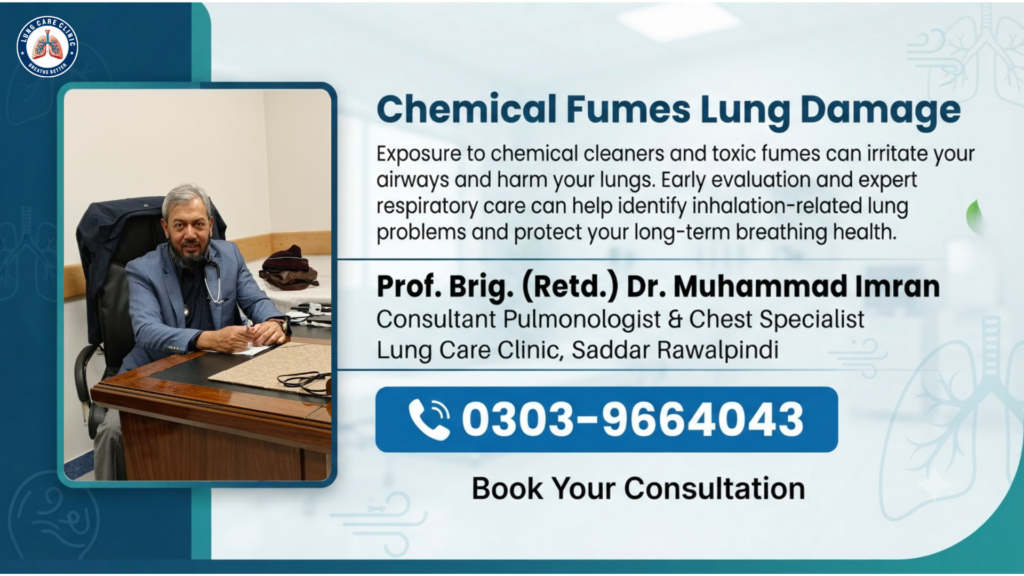
Prof. Brig. (Retd.) Dr. Muhammad Imran
Consultant Pulmonologist & Chest Specialist
Lung Care Clinic, Saddar Rawalpindi
0302-9664043